The Science of Strength: Why Your Soft Shackle Strategy Matters
The Ultimate Stress Test for Performance Rigging
Victory on the water isn't just about how you handle the helm; it's about the integrity of the gear you trust to hold your rig together under pressure. We are looking at a brutal, data-driven evaluation of Soft Shackles constructed from Marlow D12 Dyneema. By destroying 55 individual units across seven distinct types, this analysis strips away the guesswork. If you want to build a resilient team and a winning boat, you must understand where your equipment fails before the clock starts ticking.
Anatomy of a High-Performance Link
Every piece of gear has a breaking point. A soft shackle consists of the head, the neck, the strands, and the noose. While simple math suggests four strands should quadruple your strength, the reality of tight bend radiuses and knots creates a 50% efficiency loss. You are playing a game of percentages. The best-engineered shackles achieve roughly 200% of the single-strand minimum break load. Understanding these mechanics is the difference between a calculated risk and a catastrophic failure during a race.
The Critical Error: Cutting Too Close
Precision usually wins, but in knot-tying, over-trimming is a liability. Testing reveals that the common Diamond Knot suffers significantly when the "ears" or tails are cut flush. Leaving a mere 5mm tail increases the breaking load from 1,056kg to 1,440kg. That is a massive 400kg gain in mental resilience and physical reliability just by allowing for natural slippage. Pre-tensioning is vital for hitting specific lengths on halyards, but the tail is your insurance policy.
Defensive Strategy: The Role of Chafe Covers
Wear and tear are the silent killers of momentum. Shackles subjected to abrasive testing without protection failed at the wear point every single time. Conversely, those equipped with a wear cover failed at the knot or noose, meaning the cover successfully defended the structural integrity of the rope. In salty, sandy environments, a chafe cover isn't an accessory; it's a fundamental part of your defensive game plan.
The Final Verdict
While the Overhand Eye Splice with buried tails took the crown for raw strength—surpassing 2,000kg—it remains bulky and difficult to execute consistently. For most dinghy applications, the standard Diamond Knot remains the most versatile player on the field, provided you stop trimming the tails too short. Trust the data, protect your lines, and never trade reliability for aesthetics.
- Allen Brothers
- 13%· companies
- Button Knot
- 13%· products
- Diamond Knot
- 13%· products
- Dog Bone
- 13%· products
- Marlow D12 Dyneema
- 13%· products
- Other topics
- 38%
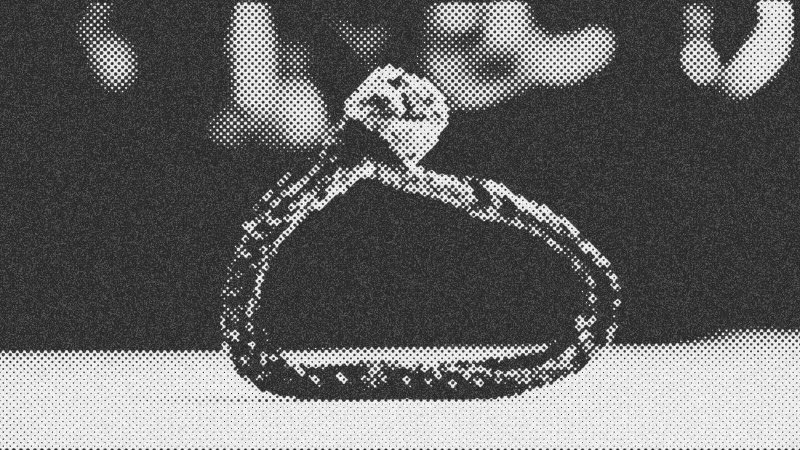
What I learnt from Breaking 55 Soft Shackles
WatchTHE FOIL // 14:22

The Foil is a new wave of racing media. We are a fresh, all-new, proudly independent digital media brand dedicated to the sport of sail racing. Our focus is centred around the major peaks of the international sport: SailGP, the America’s Cup and the Olympic Games, plus offshore classes and events, and the diverse wider world of sailing competitions that take place around the globe. Become a member now: https://www.youtube.com/@WeAreTheFoil/join