The Engineering of Victory: Decoding the America's Cup Sail Area Loopholes
The Strategic Measurement Game
Winning the Americas Cup requires more than elite athletes; it demands a relentless exploitation of the rulebook. While most classes use sail area limits to maintain parity, the AC75 class rules contain mathematical vulnerabilities. Teams don't just design sails for wind; they design them to defeat the measurement formula. If you aren't searching for every millimeter of advantage, you've already lost the race.
The Batwing Maneuver
Standard rules use five girth measurements to prevent "batwing" sails—oversized sails with massive roaches. However, in heavy air, AC75 teams face the opposite problem: they are frequently overpowered. They have turned the "hollows" rule on its head. By cutting deep, scalloped hollows into the leech, teams hit the minimum girth requirements on paper while drastically reducing actual sail area. This creates a stable, high-wind wing that avoids the drag of a standard sail plan.
The Simpson’s Rule Trap
The measurement formula relies on Simpsons Rule, a mathematical method for calculating the area under a curve. The class rule assumes a fixed multiplier of 26.5 meters—roughly the standard mast height—to convert girth measurements into a theoretical area. Crucially, the rule calculates a value but never specifies it as "square meters." This distinction allows clever engineers to manipulate the physical geometry of the boat to gain "free" surface area that the formula simply ignores.
Emirates Team New Zealand’s Masterstroke
Emirates Team New Zealand executed a brilliant tactical play by extending their mast below the mast ball. Because the Simpsons Rule calculation uses the static 26.5 multiplier, any sail area added through this vertical extension effectively does not exist in the eyes of the measurers. This gives the Kiwis a massive power advantage in light winds and a higher righting moment when the breeze picks up. They aren't just faster; they are mathematically superior.
Visual Indicators of Performance
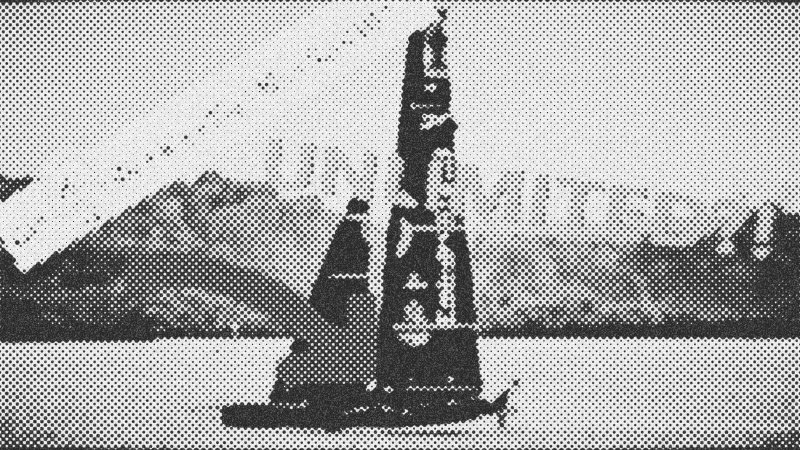
Spectators can identify these strategic choices by observing the head height of the jibs—ranging from J1 for light air to J6 for heavy gales. On the mainsail, the position of the event sponsor logo reveals the game plan. When chunks of the logo are missing or the leech is heavily scalloped, the team is running a batwing configuration to survive high-velocity conditions. Victory in this arena belongs to those who see the rules not as boundaries, but as blueprints for innovation.
- AC75
- 22%· products
- America's Cup
- 11%· tv shows
- Emirates Team New Zealand
- 11%· companies
- Ineos
- 11%· companies
- Luna Rossa
- 11%· companies
- Other topics
- 33%
Batwing Main and the UNLIMITED sail area loophole: A guide to America's Cup Sail Plans (Part 1)
WatchTHE FOIL // 11:23

The Foil is a new wave of racing media. We are a fresh, all-new, proudly independent digital media brand dedicated to the sport of sail racing. Our focus is centred around the major peaks of the international sport: SailGP, the America’s Cup and the Olympic Games, plus offshore classes and events, and the diverse wider world of sailing competitions that take place around the globe. Become a member now: https://www.youtube.com/@WeAreTheFoil/join