The Anatomy of a Capsize: A Tactical Breakdown of Skiff Failure
Overview of the High-Stakes Jibe
Success in high-performance skiff racing, specifically the RS 800, requires a surgical level of coordination. A recent analysis involving Tom Partington and Rob Gullen highlights a catastrophic failure during a downwind jibe in heavy sea states. What begins as a routine maneuver quickly devolves into a masterclass in how small technical lapses trigger a cascade of irrecoverable errors. In skiff sailing, the margin between a perfect turn and a total capsize is measured in milliseconds and millimeters of tiller movement.
The Critical Error: Tiller Management
The genesis of this failure occurs at the 0:52 mark. The helm momentarily drops the tiller before entering the jibe. This single lapse in contact results in a loss of directional control while the helm remains "dangling on the wire." Without the ability to steer for balance, the boat loses its reference for heel. The analysis reveals a recurring flaw: looking at the tiller extension instead of forward. When a sailor fails to maintain a forward-looking reference, they lose the ability to instinctively react to the boat's heel and the incoming wave rhythm, leading to the erratic overcorrections that follow.
Performance Breakdown and Momentum Shifts
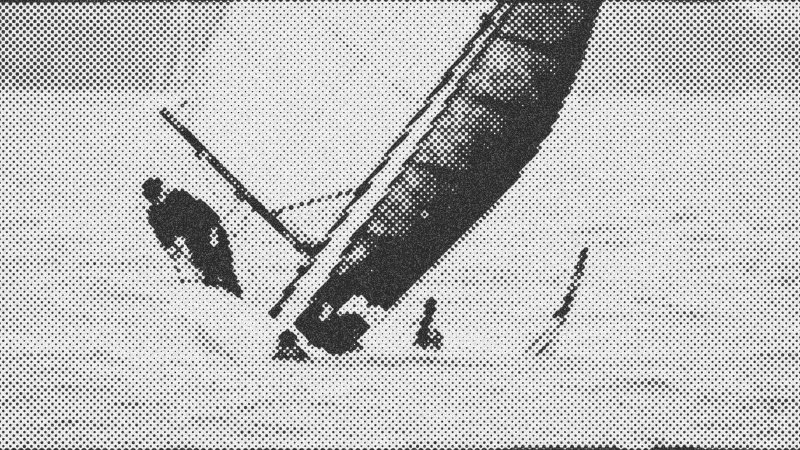
At 1:09, the window for recovery slams shut. As the helm attempts to regain control, the steering is too fast and too harsh. This creates massive windward heel, followed by an aggressive correction to leeward. The momentum of the rig coming back over to windward is so violent that it lifts the trapeze wires out of the water. The bow digs in—a classic "nose dive"—and once the hull loads up with water at the knee-level, the physics of the crash become inevitable. The separation between helm and crew during this chaos ensures no recovery is possible.
Future Implications: The Psychology of Responsibility
The final takeaway focuses on team dynamics and environmental awareness. Whether it is a failed jibe or a grounding, the hierarchy of responsibility is clear. While the crew is tasked with spotting depth, the helm must own the steering failures. For any competitive team, the lesson is simple: maintain physical connection to the boat's controls and trust the forward-looking instincts rather than the equipment in your hand. Victory is maintained through steady steering and synchronized movement, not desperate, last-second lunges.
- Rob Gullen
- 33%· people
- RS 800
- 33%· products
- Tom Partington
- 33%· people
Capsize Review // Terrible Boat Chat Ep6
WatchTHE FOIL // 12:43

The Foil is a new wave of racing media. We are a fresh, all-new, proudly independent digital media brand dedicated to the sport of sail racing. Our focus is centred around the major peaks of the international sport: SailGP, the America’s Cup and the Olympic Games, plus offshore classes and events, and the diverse wider world of sailing competitions that take place around the globe. Become a member now: https://www.youtube.com/@WeAreTheFoil/join