Tactical Analysis: Emirates Team New Zealand's High-Stakes Foil Gamble
Overview of the Foil Testing Maneuver
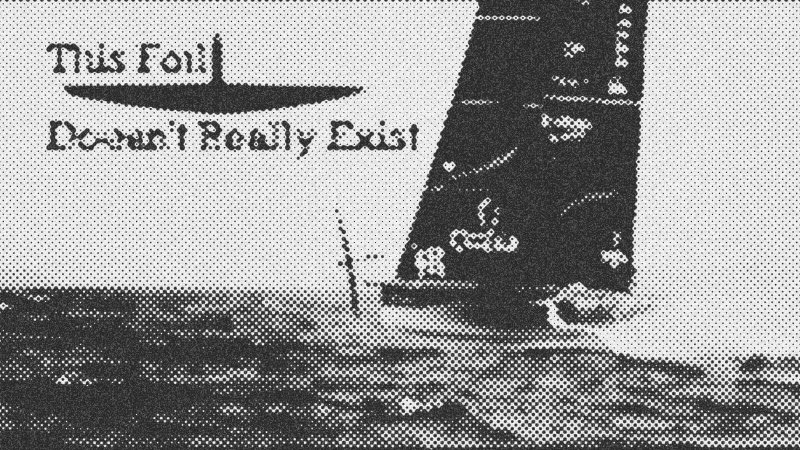
Emirates Team New Zealand recently ignited media confusion by appearing to launch two new foils in five days. In reality, the team executed a calculated logistical move: they swapped a single asymmetrical foil from the starboard to the port side of their test boat. This maneuver remains within the strict four-foil testing quota while maximizing data collection for the America's Cup. The strategy highlights the team's ability to operate at the edge of the regulations to find a competitive advantage.
Strategic Asymmetry: The Dual-Concept Wing
By designing a wing with two distinct tips—a sweeping port tip and an abrupt starboard tip—the Kiwis are effectively testing two concepts simultaneously. This asymmetry allows them to analyze how one tip handles surface piercing while the other maintains the main loading force deep underwater. While race rules require symmetrical final foils, this 'two-in-one' approach provides a critical shortcut in the development cycle. It proves that Emirates Team New Zealand values conceptual variety over the simplicity of early-stage data attribution.
Performance Breakdown and Design Evolution
The fourth foil marks a radical departure from previous iterations. It features a straight leading edge paired with an elliptical forward-swept trailing edge—a 'Spitfire' plan shape rarely seen in previous cups. This design likely targets aerodynamic efficiency similar to glider aircraft, potentially accepting minor ventilation risks in exchange for lower drag. The evolution from blended bulbs to a streamlined 'torpedo' shape suggests a refinement of the AC75 platform's performance envelope, shifting focus toward pure hydrodynamics over radical stability experiments.
Critical Moments and Data Attribution
To combat 'environmental noise' in their metrics, Emirates Team New Zealand has increased the use of external cameras and visual flow stripes. This shift indicates that raw speed data often fails to tell the full story. By visually mapping flow separation, they validate their digital models against real-world physics. This 'old school' visual methodology, combined with high-tech sensors, ensures that the final race foil design is based on proven flow characteristics rather than just theoretical simulations.
Future Implications for the Race Boat
This final development phase is likely a 'closed-door' innovation period. Because other teams like Alinghi Red Bull Racing and Luna Rossa Prada Pirelli have already moved to manufacturing their race foils, they cannot easily copy these late-stage Kiwi refinements. Emirates Team New Zealand is betting that this 'Spitfire' shape will provide the winning edge in Barcelona, leaving their competitors with no time to react.
- Emirates Team New Zealand
- 40%· companies
- AC40
- 10%· products
- AC75
- 10%· products
- Alinghi Red Bull Racing
- 10%· companies
- America's Cup
- 10%· events
- Other topics
- 20%
Confusion Surrounds ETNZ Final Development
WatchTHE FOIL // 11:53

The Foil is a new wave of racing media. We are a fresh, all-new, proudly independent digital media brand dedicated to the sport of sail racing. Our focus is centred around the major peaks of the international sport: SailGP, the America’s Cup and the Olympic Games, plus offshore classes and events, and the diverse wider world of sailing competitions that take place around the globe. Become a member now: https://www.youtube.com/@WeAreTheFoil/join