The Razor's Edge: Strategic Foil Geometry in the America’s Cup
Hydrodynamic Pressure Separation
Victory in the Americas Cup is a game of millimeters and fluid dynamics. One of the most aggressive tactical designs belongs to Luna Rossa. By positioning their foil leading edge forward of the vertical arm, they effectively separate peak pressure zones. This geometric offset prevents air from migrating down the vertical strut and out toward the foil root—a process known as ventilation. By isolating these high-pressure areas, they maintain a cleaner flow over the lifting surfaces, reducing the risk of sudden lift loss that could compromise a high-speed maneuver.
The Longitudinal Stability Gambit
Strategic weight distribution defines a boat's mental and physical resilience on the water. On the AC75, the rule dictates that the center of gravity must sit behind the primary lifting surface. This makes the rudder an essential lifting component rather than a passive stabilizer. Team New Zealand pushes this to the extreme, positioning their foil flaps far aft of the arms. This tightens the distance between the center of gravity and the center of pressure. While this configuration creates a boat that is notoriously difficult to handle due to longitudinal instability, it offers a performance ceiling that more stable setups cannot reach.
Trim Drag and Righting Moment
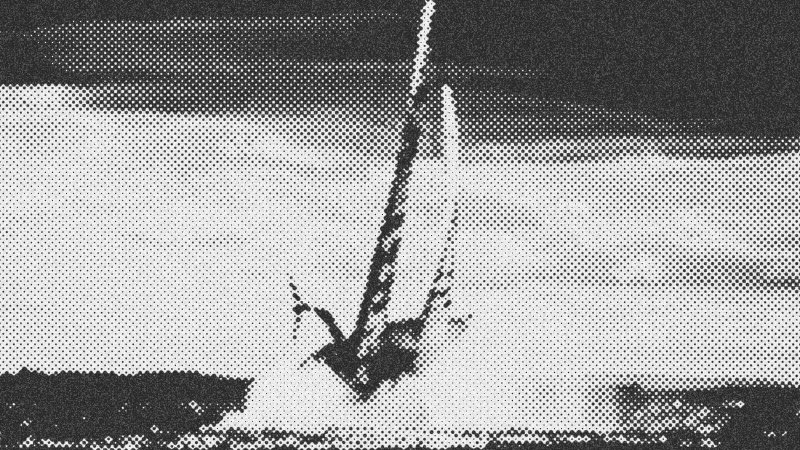
Coaches often speak about "free" gains. In foiling, righting moment from hull weight is free; using the rudder to generate downforce is not. This "trim drag" is the tax you pay for stability. If a team like American Magic sets their gravity too far forward, the rudder must pull the transom down prematurely, inducing drag across the entire system. You want to maximize gravity-assisted righting moment before relying on hydrodynamic forces that slow you down.
The Cost of Vibration
Instability manifests physically. The severe vibration observed in the American Magic helm suggests they are trapped in a destructive cycle between lift and downforce. When the rudder fluctuates between these two states, it creates a rattle that disrupts the pilot's focus and signals a failure in longitudinal balance. In high-stakes racing, a vibrating wheel is a sign that the team is behind the design curve, fighting the boat instead of commanding it.
- American Magic
- 20%· companies
- AC75
- 10%· products
- America's Cup
- 10%· tv shows
- Ben Ainslie
- 10%· people
- Dean Barker
- 10%· people
- Other topics
- 40%
AC75 Pitch Instability: The Hidden Power that Teams Won't Discuss
WatchTHE FOIL // 12:32

The Foil is a new wave of racing media. We are a fresh, all-new, proudly independent digital media brand dedicated to the sport of sail racing. Our focus is centred around the major peaks of the international sport: SailGP, the America’s Cup and the Olympic Games, plus offshore classes and events, and the diverse wider world of sailing competitions that take place around the globe. Become a member now: https://www.youtube.com/@WeAreTheFoil/join