Uber and Microsoft slash AI spending as costs outpace human labor
The Trillion-Dollar ROI Reality Check
The honeymoon phase of the artificial intelligence boom is hitting a brutal wall of fiscal reality. For the past year, the narrative suggested that AI would effortlessly replace high-cost human capital, driving margins to the moon. However, the data emerging from the front lines tells a different story. Scott Galloway points out a staggering paradox: Uber incinerated its entire 2026 AI budget in a mere four months, while Microsoft is actively cancelling Claude code licenses because they’ve become too expensive to maintain.
When Nvidia executives admit the cost of compute is now 'far beyond' the cost of employees, the entire substitution thesis collapses. We are seeing a 1999-style intoxication where companies feel forced to mention AI in every earnings call, yet a recent MIT study reveals that only 5% of projects using tokens can be linked to a tangible return by CFOs. The market is waiting for the first major Fortune 500 CEO to break rank and admit that procurement is scaling back because the math simply doesn't work.
Hollywood Rejects the Replacement Narrative
While Silicon Valley obsessives fear a total displacement of creatives, Netflix co-CEO Ted Sarandos argues that the industry is overestimating the threat. AI is fundamentally built to provide the most predictable outcome—a mathematical average of what has already been done. In storytelling, predictability is the enemy. Sarandos highlights that writers are already using Claude not as a replacement, but as a high-speed sparring partner to bounce ideas off of.
In production, the technology is driving efficiency in 'previs' and safety-critical stunt planning, but it isn't writing the next hit series. When the cost of a script is only 1% of a production budget, the incentive to automate the 'soul' of a project for a marginal saving is non-existent. The real value lies in the human capacity for the original and the unexpected, something no LLM is designed to replicate.
GLP-1s Outpace the Silicon Hype
While AI struggles with ROI, a different disruption is delivering universal results. David Ricks, CEO of Eli Lilly, highlights that GLP-1 drugs like Zepbound are achieving something rare in medicine: universal efficacy. Unlike most drugs that work on averages, these products are fundamentally altering the biological baseline for obesity, a nodal condition for over 200 chronic diseases. This isn't just about weight loss; it's about a structural shift in longevity and healthcare costs that could prove far more transformative to the global economy than a chatbot.
The Strategic Failure in Iran
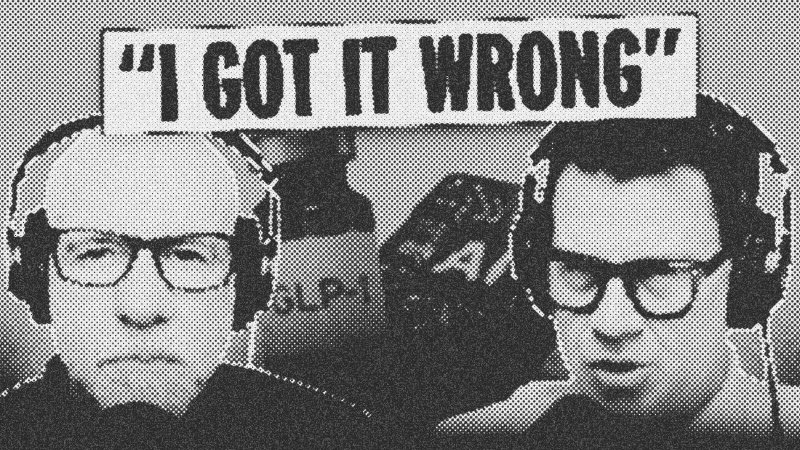
Four months into the Iran War, the strategic 'precision' promised at the outset has dissolved into a quagmire of Iraq-like proportions. Scott Galloway, who initially supported military action, has publicly reversed his stance, labeling the intervention a national disaster. The failure to disrupt oil supplies or force a deal has left the IRGC emboldened, sensing a complete victory as leadership fails to own the tactical errors of a campaign that has fueled global inflation and squandered international goodwill.
- Claude
- 11%· products
- Scott Galloway
- 11%· people
- AI
- 5%· products
- David Ricks
- 5%· people
- Eli Lilly
- 5%· companies
- Other topics
- 63%
AI, GLP-1s, and Scott's Iran War Reversal | The Week
WatchThe Prof G Pod – Scott Galloway // 20:17

NYU Professor, best-selling author, business leader and serial entrepreneur Scott Galloway cuts through the biggest stories in tech, business, and investing with unfiltered insights, bold predictions and thoughtful advice. Podcasts include Prof G Markets with co-host Ed Elson, Prof G Conversations and Office Hours with Prof G.