The Trillion-Dollar Pivot: China's Export Hegemony and the M&A Siege of Hollywood
The Great Reorientation of Global Trade
China has shattered economic records by posting a $1 trillion trade surplus, a figure unprecedented in peacetime history. While domestic consumption in China remains tepid, the nation's industrial machine has shifted into an aggressive export overdrive. This surplus serves as more than just a balance sheet victory; it functions as a geopolitical war chest. With over $3 trillion in foreign exchange reserves, Beijing possesses the liquidity to bail out distressed nations, invest in critical global infrastructure, and solidify its influence across the Global South.
The data reveals a sharp divergence in trade patterns. Shipments to the United States plummeted by 29% in November, marking the eighth consecutive month of double-digit declines. This suggests that the decoupling narrative is no longer theoretical—it is a measurable reality. However, China is not retreating; it is reorienting. Exports to Africa surged by 28%, and trade with Southeast Asia remains robust. We are witnessing the birth of a secondary global trade circuit that bypasses Western gatekeepers entirely.
The European Dilemma and Tariff Fatigue
Europe now finds itself caught between United States's hawkishness and its own industrial dependencies. Emmanuel Macron has characterized the current trade imbalance as unbearable, yet Europe hesitates to pull the trigger on broad-scale tariffs. The complexity lies in the corporate structure of European industry. Many of the continent’s largest firms maintain extensive manufacturing footprints within China. Beijing has successfully leveraged this proximity, using these corporations as domestic lobbyists to discourage European Union officials from following the Donald Trump administration's protectionist lead.
Donald Trump's strategy has yielded mixed results. Despite high-profile rhetoric regarding 145% tariffs, average rates have moderated to approximately 45%. The efficacy of these measures remains under scrutiny as China utilizes export controls on rare earth elements to counter-pressure American policy. This tit-for-tat escalation indicates that the trade war has entered a phase of grinding attrition rather than a decisive victory for either side.
The Antitrust Arena: Netflix vs. Paramount
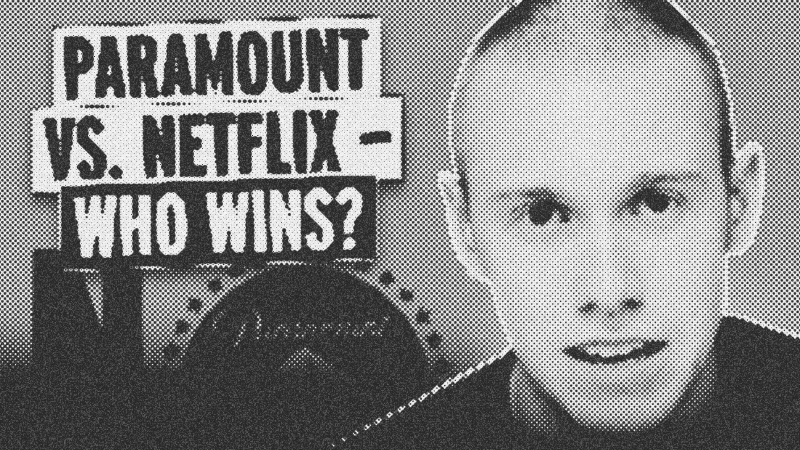
The entertainment sector is experiencing its own seismic shift as Paramount Global launched a hostile $108 billion all-cash bid for Warner Bros. Discovery. This move directly challenges the $72 billion offer from Netflix, turning the M&A landscape into a high-stakes proxy for antitrust philosophy. The bid from Paramount Global, backed by interests including Jared Kushner, positions itself as the regulator-friendly alternative.
Jonathan Kanter, former head of the United States Department of Justice Antitrust Division, identifies clear red flags in both proposals. A Netflix acquisition would merge the number one and number three players in streaming, creating a monopsony that could suppress wages for creators and hike prices for consumers. Conversely, a Paramount Global deal presents significant library overlaps and news concentration issues. The central question is whether the current regulatory environment still possesses the teeth to block such massive consolidation.
The Trump Factor and Regulatory Certainty
Donald Trump has already interjected himself into the merger discussions, suggesting the Netflix deal could be a problem while simultaneously praising CEO Ted Sarandos. This creates a volatile environment where political favor may outweigh traditional legal merits. For Warner Bros. Discovery shareholders, the primary metric is no longer just the headline price but the certainty of closing.
Netflix has signaled its confidence by offering a staggering $6 billion breakup fee. This aggressive stance suggests that Big Tech believes the era of aggressive antitrust enforcement is waning. Following recent legal victories for Meta and Google, the prevailing sentiment among tech executives is that monopolization—or at least massive horizontal integration—is once again permissible.
Economic Implications for the Consumer
Consolidation at this scale rarely benefits the end-user. As streaming services mature, they shift from a growth mindset—characterized by heavy investment in original, innovative content—to a retention mindset. This leads to "content decay," where expensive scripted dramas are replaced by cheaper reality TV and library recycling. If Warner Bros. Discovery, which owns the crown jewel HBO, is considered too small to survive independently, it signals a fundamental market failure. The requirement for "hyper-scale" suggests that innovation is being sacrificed at the altar of defensive size, leaving consumers with higher subscription fees and fewer creative choices.
A New Era of Market Dominance
The dual narratives of China’s trade surplus and the Hollywood merger wars point toward a common theme: the pursuit of unassailable scale. China is scaling its export dominance to insulate its economy from Western pressure, while tech and media giants are scaling to eliminate competition. Whether these strategies succeed depends on the resilience of international trade alliances and the willingness of regulators to defend market competition against the gravitational pull of absolute size.
- Netflix
- 11%· companies
- China
- 8%· places
- Donald Trump
- 8%· people
- Paramount Global
- 8%· companies
- Warner Bros. Discovery
- 8%· companies
- Other topics
- 56%
Paramount Goes Hostile With $108B Bid for Warner Bros. | Prof G Markets
WatchThe Prof G Pod – Scott Galloway // 32:33

NYU Professor, best-selling author, business leader and serial entrepreneur Scott Galloway cuts through the biggest stories in tech, business, and investing with unfiltered insights, bold predictions and thoughtful advice. Podcasts include Prof G Markets with co-host Ed Elson, Prof G Conversations and Office Hours with Prof G.