The Eastern Pivot: Beijing’s Strategic Patience and the Erosion of Western Dominance
The Strategic Paradox of the Middle East Conflict
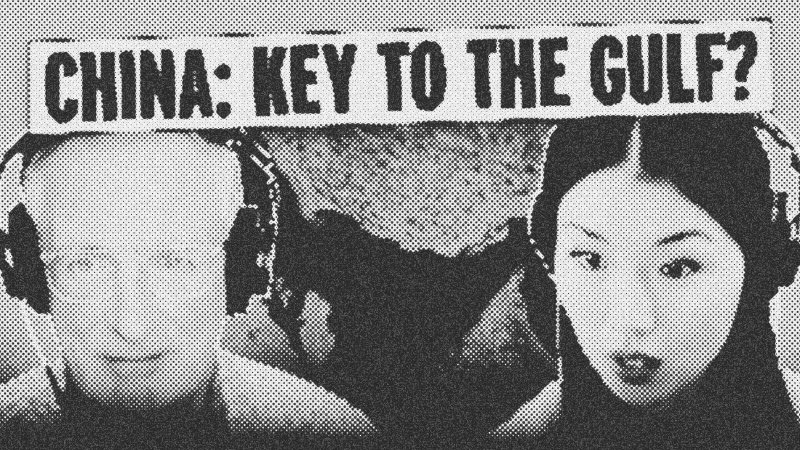
The escalation of conflict involving Iran creates a profound geopolitical shift that reverberates far beyond the Strait of Hormuz. For years, the United States signaled a strategic pivot toward the Indo-Pacific, identifying China as its primary systemic competitor. However, as the Pentagon redeploys missile defenses and carrier groups back to the Middle East, the reality of a multi-theater engagement becomes clear. This forced return to the region is not merely a tactical adjustment; it represents a significant disruption of long-term American strategic focus.
While Washington is pulled back into the complexities of regime change and regional stabilization, Beijing maintains a disciplined distance. This is a classic manifestation of the "long game." China is not seeking to replace the U.S. as the regional security guarantor—a role fraught with risk and diminishing returns—but is instead entrenching its commercial and diplomatic influence. When Western firms hesitate due to instability, Chinese state-backed enterprises remain, building infrastructure and securing energy routes. This divergence in approach highlights a critical macroeconomic reality: the U.S. pays the high security premiums of the Middle East, while China harvests the commercial rewards.
Energy Security and the New Oil Realities
The vulnerability of global oil markets often centers on the Strait of Hormuz, yet the current landscape differs radically from previous decades. The U.S. has achieved a level of energy self-reliance that was once unthinkable, largely through the shale revolution, making it a major exporter. Conversely, China remains the world’s largest importer of crude, with roughly 38% of its supply transiting through the Strait. Despite this exposure, Beijing is operating from a position of relative strength.
John Sfakianakis notes that China has successfully stockpiled between three to four months of crude reserves and possesses the infrastructure to pivot energy consumption from natural gas to coal if necessary. Furthermore, the relationship between Iran and China is characterized by a high degree of mutual dependence. Tehran, isolated by Western sanctions, relies on Beijing as its primary customer, ensuring that Chinese vessels often receive preferential treatment or "safe passage" even during periods of heightened tension. This strategic alignment allows China to mitigate the risks of a spike in oil prices that would have devastated its economy twenty years ago.
The Academic Displacement: Research Dominance Shifts East
The most durable indicator of a nation’s future economic trajectory is its investment in human capital and fundamental research. For the first time in the modern era, the historical dominance of American and British universities is facing a credible systemic challenge. Recent data from the CWTS Leiden Ranking indicates that Chinese institutions now occupy eight of the top ten spots globally for scientific output. Harvard University, long the undisputed leader, has slipped to third, while Stanford University and MIT have fallen further down the list.
This rise is not accidental. It is the result of a concerted, state-led effort by the Chinese Communist Party to scale up scientific and technological capacity. China now produces approximately 870,000 journal articles annually, compared to 500,000 from the U.S. In the critical field of Artificial Intelligence, China’s publication output exceeds the combined totals of the U.S., UK, and EU. While critics argue that these rankings emphasize the quantity of papers over the quality of breakthrough discoveries, the sheer scale of the output creates a gravitational pull on global talent. The "brain drain" is reversing; high-profile academics, such as biologist Nieng Yan and consumer scientist Sun Chun Ju, are increasingly leaving top-tier American institutions to return to the mainland.
Formula One and the Global Branding War
In the high-stakes world of international commerce, soft power and brand perception are as vital as hardware. BYD, which recently surpassed Tesla in global EV sales, is now targeting the elite echelon of motorsports. By exploring an entry into Formula 1, BYD is attempting a radical rebranding. They are moving away from the image of a "mass-market budget" manufacturer toward a high-end luxury innovator.
The technological synergy between EV development and Formula 1 is tightening. BYD’s Yangwang U9 has already set speed records that rival or exceed current F1 cars on straightaways. Entering a sport historically dominated by Ferrari and Mercedes-Benz would provide a definitive signal that Chinese automotive engineering has reached parity with the West. This ambition is mirrored by a surge in domestic interest; the Shanghai F1 Grand Prix recently saw record-breaking attendance, indicating that the Chinese consumer is primed for the "glitz and glamour" associated with elite racing. For BYD, Formula 1 is not just a race; it is a global marketing platform to validate its high-end Denza and Yangwang models.
Conclusion: Navigating an Unstable Equilibrium
The global economy is entering a period of fragmented stability. In the Middle East, the prospect of regime change in Iran or the creation of a "Jerusalem-led" security architecture threatens to create long-term volatility. This instability is a double-edged sword for Beijing: while it provides a strategic distraction for the U.S., it risks the ROI of Chinese construction firms and the safety of its workers abroad.
Looking ahead, the "Eastern Pivot" is no longer a forecast—it is a current reality. Whether through the rise of academic institutions that now rival the Ivy League or the emergence of automotive giants ready to disrupt legacy sports, China is asserting its influence across every macro pillar. The challenge for Western policymakers and investors is to recognize that the old paradigms of dominance are eroding. The future Middle East will be more fragmented, the future of research will be centered in Asia, and the next generation of luxury technology will likely carry a Chinese badge. Navigating this shift requires an unsentimental look at the data: the long game is being won by those who wait while others react.
- BYD
- 13%· organizations
- China
- 9%· places
- Iran
- 9%· places
- Strait of Hormuz
- 6%· places
- Alice Han
- 3%· people
- Other topics
- 59%
Will China Decide the Future of the Persian Gulf? | China Decode
WatchThe Prof G Pod – Scott Galloway // 49:40

NYU Professor, best-selling author, business leader and serial entrepreneur Scott Galloway cuts through the biggest stories in tech, business, and investing with unfiltered insights, bold predictions and thoughtful advice. Podcasts include Prof G Markets with co-host Ed Elson, Prof G Conversations and Office Hours with Prof G.