The Great Paradox: Analyzing the Divergence of Economic Progress and Human Wellbeing
The Divergence of Metrics and Morale
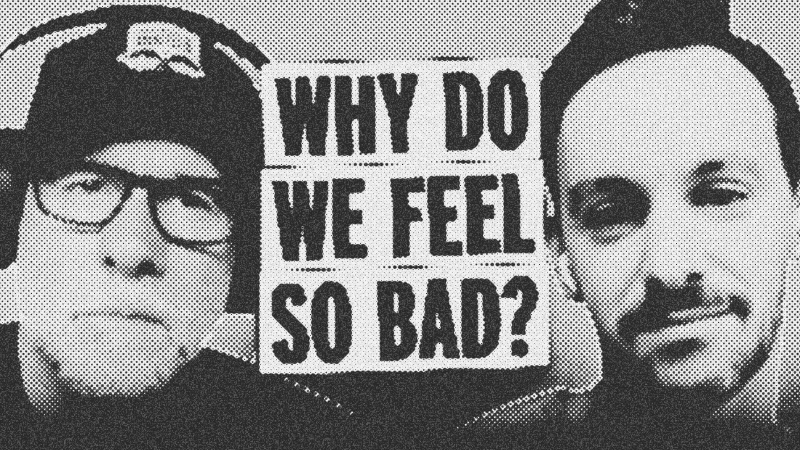
Global macroeconomics currently presents a baffling contradiction. If we examine the raw data of human survival, we are witnessing a civilizational peak. Derek Thompson points out that we are living through a unique historical window where violent crime, traffic fatalities, drug overdoses, and even suicides are simultaneously declining. In the aggregate, the "business of living" has never been more efficient. Yet, the psychological sentiment of the American consumer remains in a deep, structural depression. This suggests that our traditional economic indicators—GDP, unemployment, and even life expectancy—are no longer sufficient to measure the health of a nation.
We are operating in an environment where the objective quality of life is soaring, but the subjective experience of that life is deteriorating. This divergence isn't accidental; it's a byproduct of how we've structured our digital and economic incentives. We have optimized for efficiency and survival while inadvertently engineering a crisis of comparison and isolation. The "Golden Age of Living" is being masked by a "Dark Age of Politics" and social fragmentation.
The Architecture of Digital Unhappiness
The primary culprit in this sentiment depression is the systematic intermediation of life through screens. Scott Galloway and Thompson argue that we have built "machines of comparison" that function as a perpetual tax on joy. Instagram and TikTok do not just facilitate communication; they enforce a relentless, high-definition comparison against the curated highlights of others. In economic terms, this creates a state of perpetual perceived scarcity, regardless of one's actual wealth or status.
Furthermore, the algorithms governing these platforms have discovered that negativity is the most potent fuel for engagement. There is a profound bias toward catastrophe in modern media. Content that triggers a threat response—fear of an out-group, fear of economic collapse, or fear of a fascist takeover—receives exponentially more distribution than solutions-oriented journalism. When Derek Thompson tested this by publishing competing articles on whether AI is a bubble, the pessimistic take outperformed the balanced view by sevenfold. We are feeding our collective consciousness a diet of highly processed rage-bait, which has become the "junk food" of the information economy.
GLP-1 and the Biological Correction
While AI captures the headlines of the tech world, the true macroeconomic shift may come from biotechnology, specifically GLP-1 drugs like those produced by Eli Lilly. These receptor agonists represent more than just a weight-loss trend; they are a fundamental technology for biological moderation. By addressing the "food deserts" of our internal chemistry, these drugs have the potential to collapse the massive economic burden of chronic disease.
Scott Galloway proposes a radical fiscal intervention: the federal government should issue a massive RFP for GLP-1 doses to provide them free to every household. The logic is purely data-driven. Obesity-related complications are a primary driver of the U.S. healthcare deficit. By artificially "catching up" our ancient biological instincts to a world of industrial food abundance, we could theoretically prune hundreds of billions of dollars from Medicare and Medicaid spending. However, Thompson notes a complicating factor: the "final boss" of healthcare economics is end-of-life care. While GLP-1 extends the healthy middle of life, it doesn't necessarily solve the astronomical costs associated with the final six months of human existence.
AI and the K-Shaped Labor Force
The labor market is currently being reshaped by AI in a manner that mirrors the invention of Excel. In the 1980s, digital spreadsheets didn't eliminate accountants; they turned every white-collar worker into a spreadsheet manager. Claude Code and similar generative tools are doing the same for knowledge work. The danger here is not total job replacement, but a radical deepening of inequality.
We are moving toward a K-shaped workforce where the "AI-literate"—those who treat LLMs as a force multiplier—ascend, while those who remain constitutionally averse to the technology see their value proposition collapse. This isn't just happening at the individual level; it's visible in the stock market. The capital flow is almost entirely concentrated in firms with a direct AI hook, while the "non-AI" economy stagnates. This concentration of wealth and productivity could lead to a social friction that our current political systems are ill-equipped to handle.
The New Media Flywheel and Career Sovereignty
In the face of these shifts, the structure of influence is moving from institutions to individuals. The traditional media model, where an editor at The Atlantic or a producer at MSNBC captures the lion's share of value, is being upended by platforms like Substack. Derek Thompson describes his own career as a four-pillar flywheel: writing, podcasting (Plain English), books (Abundance), and public speaking.
This "direct-to-consumer" model of journalism allows creators to capture 80-90% of their economic value rather than the 5-10% typical of legacy media. It also creates a more intimate, familial bond with the audience. Scott Galloway notes that while articles are ephemeral, books possess a "timeless immortality" that grants a writer a different category of authority. The successful professional of the 2026 economy will be someone who owns their distribution channel and builds a multi-format ecosystem that turns raw ideas into enduring intellectual property.
Conclusion: The Path Toward Social Fitness
The ultimate takeaway from the current global landscape is that we are suffering from a crisis of "social fitness." We have optimized our environments for comfort—big TVs, comfortable couches, and addictive phones—at the expense of the friction-filled social interactions that actually protect our mental health. There is a strong macroeconomic argument for "liquid courage" and social connection; the risks of social isolation for a 25-year-old are far more dangerous to their long-term health and memory than the moderate consumption of alcohol at a social gathering.
To navigate the next decade, we must consciously balance the technological leaps of AI and GLP-1 with an intentional return to physical, unmediated community. Economic survival is no longer the challenge for the modern American; the challenge is finding meaning in an age of automated abundance and digital noise.
- GLP-1
- 17%· products
- Derek Thompson
- 13%· people
- Scott Galloway
- 13%· people
- Abundance
- 4%· books
- Claude Code
- 4%· products
- Other topics
- 50%
Why America Feels So Unhappy — with Derek Thompson
WatchThe Prof G Pod – Scott Galloway // 1:06:39

NYU Professor, best-selling author, business leader and serial entrepreneur Scott Galloway cuts through the biggest stories in tech, business, and investing with unfiltered insights, bold predictions and thoughtful advice. Podcasts include Prof G Markets with co-host Ed Elson, Prof G Conversations and Office Hours with Prof G.