The Affordability Crisis: Deconstructing the Macroeconomic Toll of Protectionism and Regulatory Decay
The Failure of Economic Containment
Global markets are currently grappling with a fundamental shift in American fiscal and trade strategy that threatens to undermine long-term stability. The current administration has pivoted toward a cornerstone policy of aggressive tariffs, a move that functions as a regressive sales tax on the American consumer. These trade barriers do not merely penalize foreign adversaries; they systematically raise the cost of goods for small businesses and working-class families who lack the capital cushions to absorb price shocks. When a government prioritizes protectionist signaling over the logistical reality of supply chains, it creates a self-inflicted inflationary environment that is difficult to reverse.
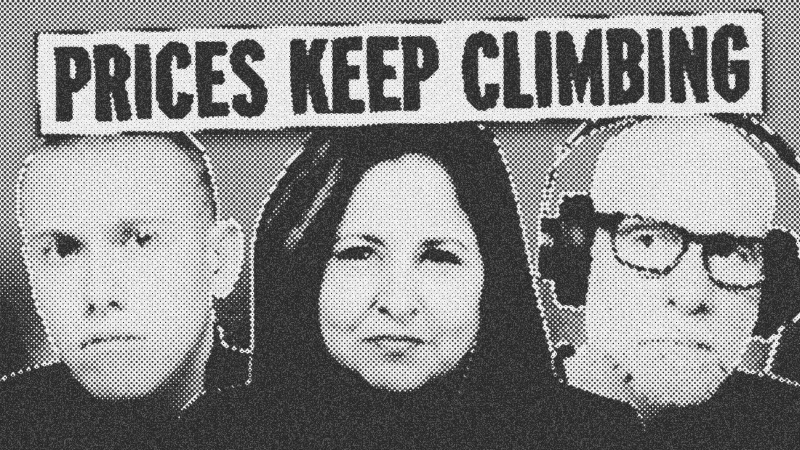
Neera Tanden, President and CEO of the Center for American Progress, argues that the administration has failed the most basic test of governance: to do no harm. By implementing broad-based tariffs, the state effectively transfers the cost of geopolitical posturing onto the balance sheets of its own citizens. This fiscal approach ignores the interconnectedness of the modern economy, where a tax on an imported component becomes a price hike on a finished domestic product.
The Housing Paradox: Wealth Preservation vs. Upward Mobility
American housing policy has reached a critical inflection point where the interests of asset-owning incumbents are in direct conflict with the economic viability of the next generation. The average age of a first-time homebuyer has climbed to 40, a staggering statistic that reflects a market squeezed by a 30% rent surge between 2020 and 2023. This is not merely a supply-side failure but a deliberate policy choice by those in power to protect the equity of current homeowners at the expense of market entry for everyone else.
Donald Trump recently articulated a desire to see housing prices continue their ascent, a stance that aligns with the wealthiest Americans but abandons the working class. This philosophy treats housing as a speculative asset rather than a fundamental infrastructure for labor mobility. When leadership favors "mom and pop" landlords owning a dozen homes over the construction of high-density, mixed-income developments, it freezes the gears of social mobility. To fix this, the nation requires a radical re-integration of suburban housing, breaking the exclusionary zoning laws that have historically cordoned off opportunity from those who need it most.
The Opaque Machinery of Healthcare Inflation
The American healthcare system remains a fractured, inflationary landscape defined by a lack of radical transparency. Unlike European models that utilize collective bargaining power to discipline costs, the United States allows a constellation of hospitals, insurers, and Pharmacy Benefit Managers (PBMs) to operate in a shadow of complexity. This opacity allows for massive per-unit cost discrepancies; a surgery or medical device in the U.S. frequently costs multiples of its equivalent in other developed nations.
Tanden notes that the system is designed to facilitate cost-shifting rather than cost-reduction. Without a centralized negotiating force—such as a more robust Medicare drug price negotiation mandate—individual consumers and employers are outmatched by the market power of near-monopoly providers. The solution involves moving toward a public option that forces private insurers to compete on efficiency rather than their ability to navigate bureaucratic loopholes. Until the government utilizes its market power to match the scale of pharmaceutical and hospital conglomerates, healthcare will remain a primary driver of domestic insolvency.
Taxing Labor While Subsidizing Capital
Over the last three decades, the American tax code has been methodically rigged to favor capital over labor. We have created a system where those who invest for a living pay significantly less in taxes than those who work for a living. This differential is not just an accounting quirk; it is a corrosive force in a democracy. It creates a spiritual crisis where the majority of citizens no longer believe a fair shot is possible. The U.S. now exhibits less economic mobility than Canada or much of Western Europe, a reversal of the historical American value proposition.
Correcting this requires more than just a debate over wealth taxes, which face significant legal hurdles in the Supreme Court of the United States. A more effective and immediate strategy involves unrigging existing structures: eliminating the stepped-up basis that allows heirs to avoid capital gains, raising the estate tax, and equalizing the tax rates for dividends and traditional income. In the 1990s, the U.S. maintained higher tax rates during a period of massive technological growth and a budget surplus. History proves that fiscal responsibility and high growth are not mutually exclusive; they require a tax code that rewards merit rather than the mere possession of existing assets.
Conclusion: The Path Toward Economic Integration
The future of the American economy depends on a return to integration—both in terms of housing and opportunity. The path forward requires a transition from protectionism to pragmatism. This includes the mass distribution of life-altering GLP-1 drugs to improve public health and the implementation of mandatory national service to bridge the growing cultural and economic divides. We must move away from a system that protects the status quo for the few and toward one that prioritizes the upward mobility of the many. If the state continues to prioritize the wealth of incumbents over the productivity of the workforce, the American affordability crisis will evolve from a temporary market strain into a permanent structural decline.
- Canada
- 7%· places
- Center for American Progress
- 7%· organizations
- Donald Trump
- 7%· people
- Ed Elson
- 7%· people
- Europe
- 7%· places
- Other topics
- 67%
The American Affordability Crisis — ft. Neera Tanden | Prof G Markets
WatchThe Prof G Pod – Scott Galloway // 37:44

NYU Professor, best-selling author, business leader and serial entrepreneur Scott Galloway cuts through the biggest stories in tech, business, and investing with unfiltered insights, bold predictions and thoughtful advice. Podcasts include Prof G Markets with co-host Ed Elson, Prof G Conversations and Office Hours with Prof G.