Sam Altman attacks reveal deep public distrust of AI industrial complex
The Luddite Blueprint for AI Resistance
Public hostility toward artificial intelligence is transitioning from online discourse to physical confrontation. The recent attacks on Sam Altman’s residence serve as a violent manifestation of a broader societal friction. This phenomenon mirrors the 19th-century Luddite movement movement, which was not a blind hatred of technology but a sophisticated resistance against factory owners who centralized power without community consent. Today, Brian Merchant argues that the same dynamic is at play: a handful of industrialists are imposing radical economic shifts that threaten to strip workers of their agency and livelihood.
Economic Friction and the Data Center Revolt
Beyond existential fears, tangible economic grievances are fueling the backlash. Hyperscalers are increasingly clashing with local municipalities over energy infrastructure. In many regions, the massive energy demands of AI data centers threaten to drive residential electricity bills up by 30-40%. This creates a regressive subsidy where ordinary citizens bear the infrastructure costs for tech titans like Jensen Huang to accumulate trillions. This local opposition represents a rare moment of bipartisan alignment, as elected officials move to protect constituents from being cannibalized by the computational needs of Silicon Valley.
The Paradoxical Communication Strategy of Tech Titans
A bizarre dissonance exists in the communication strategies of CEOs like Sam Altman and Dario Amodei. By framing AI as a potentially catastrophic "existential risk," they serve two strategic purposes. First, they attract top-tier talent who believe they are working on a mission to save humanity. Second, they signal to investors that their product is so powerful it will inevitably replace vast swaths of the labor market. However, this "doomsday" marketing is backfiring. By validating the public's worst fears, these leaders have inadvertently radicalized the opposition, making the resistance appear not just emotional, but entirely rational.
- Sam Altman
- 18%· people
- AI
- 9%· products
- Anthropic
- 9%· companies
- Bradley Tusk
- 9%· people
- Brian Merchant
- 9%· people
- Other topics
- 45%
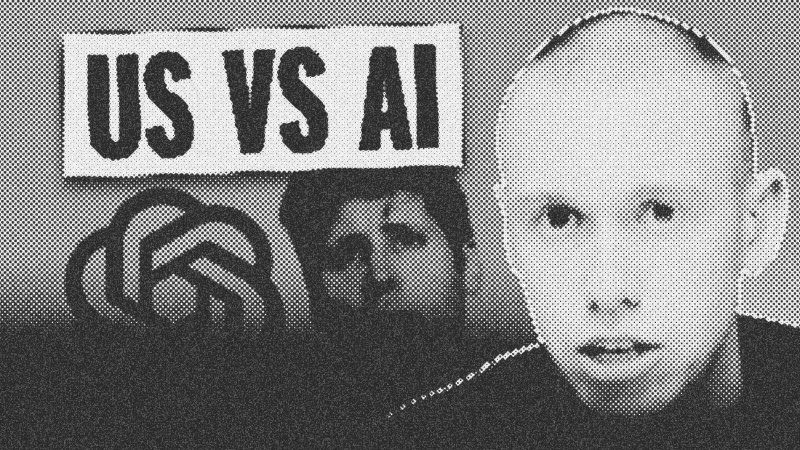
Why America Is Turning Against AI | Prof G Markets
WatchThe Prof G Pod – Scott Galloway // 10:15

NYU Professor, best-selling author, business leader and serial entrepreneur Scott Galloway cuts through the biggest stories in tech, business, and investing with unfiltered insights, bold predictions and thoughtful advice. Podcasts include Prof G Markets with co-host Ed Elson, Prof G Conversations and Office Hours with Prof G.