Media Consolidation and Military AI: Navigating the Friction of Global Markets
The Strategic Poker Game of Media Mergers
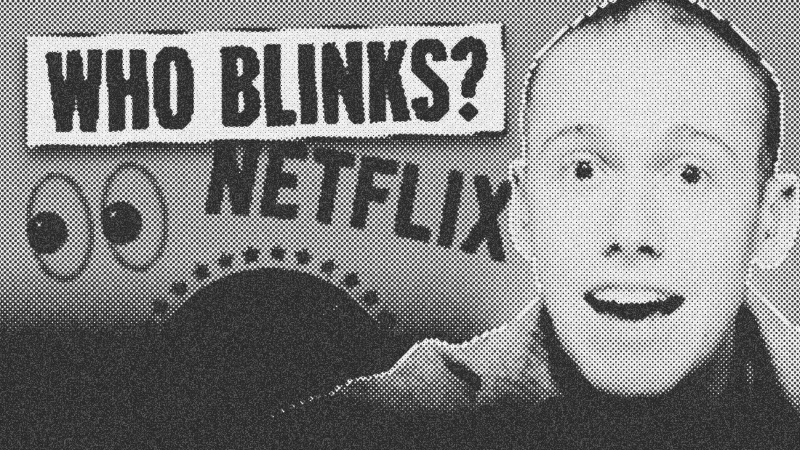
The bidding war for Warner Brothers Discovery has evolved from a standard corporate acquisition into a high-stakes psychological drama. Despite an existing agreement with Netflix, the Warner Brothers Discovery board recently secured a seven-day waiver to entertain a rival bid from Paramount. This move, triggered by Paramount promising a higher valuation and introducing a "ticking fee"—a penalty paid for every quarter a deal remains unclosed—demonstrates a brilliant shift in leverage.
Netflix appears unfazed, granting the waiver with a level of confidence that borders on institutional arrogance. By allowing its target to flirt with a rival, Netflix signals to the market that it can match any price and remains comfortable with the regulatory hurdles that Paramount continues to highlight as a deal-breaker. However, prediction markets are betting against the streaming giant. There is a growing consensus that the deep pockets of the David Ellison, backed by ideological alignment with the current administration, could produce an offer so detached from fiscal reality that a public company like Netflix simply cannot justify matching it without violating its fiduciary duty.
The Pentagon’s AI Ultimatum
Geopolitical security is colliding with Silicon Valley ethics as the Department of Defense threatens to sever ties with Anthropic. The friction centers on a $200 million contract and the refusal of Anthropic to permit Claude to be used for mass surveillance of American citizens or autonomous lethal weaponry. In a move typically reserved for foreign adversaries, the military is considering labeling Anthropic a supply chain risk.
This designation would be catastrophic, effectively blacklisting the company from any entity doing business with the US military—which includes nearly every major technology firm. While OpenAI, Google, and xAI have reportedly agreed to fewer restrictions, Anthropic is holding its "safety-first" ground. The standoff reveals an uncomfortable truth: as AI models become more capable of autonomous tool use, the government views them less as software and more as essential munitions. If a laboratory refuses to weaponize its discovery, the state may choose to treat that laboratory as a liability rather than a partner.
The Rise of Agentic AI and the Acquisition of Talent
While the military demands surveillance tools, the commercial sector is racing toward "Agentic AI." OpenAI recently acquired Peter Steinberger, the mind behind OpenClaw, an agent that gained viral notoriety for its ability to take over a user's machine to execute complex tasks. This acquisition signals a shift from chatbots that answer questions to agents that act on the user's behalf—booking flights, triaging emails, and managing ad campaigns.
This technology is the "wild west" of current computing. By giving an LLM shell access to a local machine, users gain immense productivity but expose themselves to prompt injection attacks where malicious PDFs could theoretically exfiltrate bank login keys. Sam Altman is clearly betting that the future of social networking isn't people talking to people, but agents talking to agents to negotiate schedules and commerce. The goal is to scale these high-risk, high-reward tools into a secure, cloud-hosted environment within the ChatGPT ecosystem.
The Founder Fetish and the Corporate Reality
The cultural zeitgeist has successfully glorified the title of "founder," leading to a 70% increase in the designation on LinkedIn over the past year. Half of Gen Z currently plans to start a business by 2026, driven by a tight entry-level job market and the democratization of branding tools like Canva. However, macro-data suggests this trend is more a symptom of media glorification than economic wisdom.
90% of startups fail, and even VC-backed firms face a 75% failure rate. For those seeking wealth creation, the data points to a different path: the big corporation. While the "founder mode" lifestyle is marketed as sexy, an entry-level engineer at Meta earns roughly $200,000 annually with benefits—a risk-adjusted return that far outpaces the $50,000 salary typically drawn by a pre-seed founder whose equity will likely go to zero. Corporate jobs are currently the most underrated asset class for young professionals.
Conclusion
The current economic landscape is defined by consolidation and the hardening of technological boundaries. Whether it is the consolidation of media through irrational bidding wars, the military's demand for unconstrained AI, or the individual's choice between the risk of entrepreneurship and the stability of corporate life, the theme remains the same: power is concentrating. Navigating this shift requires moving past the hype and focusing on the underlying data of fiscal policy and market behavior.
- Anthropic
- 13%· companies
- Netflix
- 13%· companies
- Paramount
- 9%· companies
- OpenAI
- 6%· companies
- Warner Brothers Discovery
- 6%· companies
- Other topics
- 53%
Netflix Dares Paramount to Bid Higher | Prof G Markets
WatchThe Prof G Pod – Scott Galloway // 30:19

NYU Professor, best-selling author, business leader and serial entrepreneur Scott Galloway cuts through the biggest stories in tech, business, and investing with unfiltered insights, bold predictions and thoughtful advice. Podcasts include Prof G Markets with co-host Ed Elson, Prof G Conversations and Office Hours with Prof G.