Economic Artillery: Reclaiming Leverage in the Age of Volatility
The Fragility of Global Interdependence
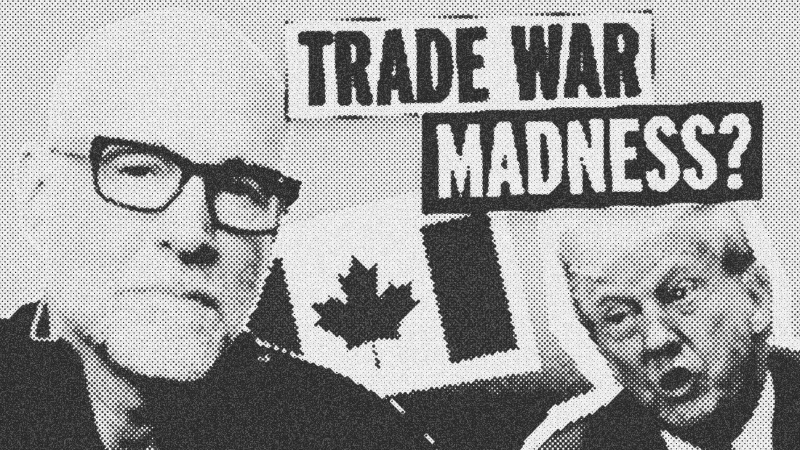
Recent geopolitical shifts reveal a troubling trend: the weaponization of trade against historically stable allies. The escalating rhetoric regarding Canada highlights a fundamental misunderstanding of modern value chains. When Donald Trump targets our largest trading partner, he ignores the sophisticated asymmetry that favors the United States. We import raw materials and low-margin goods—oil, timber, and steel—while exporting high-margin intellectual property, chips, and digital services. Disrupting this flow isn't just a political maneuver; it is a direct assault on the American middle class. We have effectively swapped out non-competitive, low-wage industries for high-shareholder-value sectors. Undermining this "operating system" of global trade risks a regression that no amount of manufacturing nostalgia can fix.
Big Tech’s Frictionless Tax
Big Tech has mastered a predatory playbook: underprice to consolidate the market, then hike rates faster than inflation. Companies like Uber and Amazon create such frictionless experiences that consumers lose track of the "subscription tax" leaking from their bank accounts. When an individual spends $35,000 annually on a single ride-sharing app, the convenience has clearly eclipsed economic logic. These platforms have become so integrated into our lives that they feel inescapable. However, their vulnerability lies in their high price-to-earnings ratios. Because a dollar of revenue at OpenAI or Apple translates to exponentially more in market capitalization than a dollar at a traditional grocer, selective unsubscription is the most potent economic lever available to the modern citizen.
Actionable Steps for Market Resistance
To reclaim your financial and political agency, you must perform a ruthless audit of your digital overhead. Start by identifying every recurring charge. If you subscribe to multiple AI platforms or half a dozen streaming services, consolidate immediately. The goal is to send a signal through the only channel the current administration and corporate boards respect: the S&P 500. Beyond consumption, evaluate your brokerage account. Holding stocks in companies whose values you no longer align with creates a moral and strategic dissonance. While selling winners incurs capital gains, the long-term cost of financing firms that remain silent during democratic erosion may be far higher.
The Professional Power of Focus
In an era of "side hustles," the most undervalued asset is focus. True economic power doesn't come from dancing at every party; it comes from being in the top 1% of a single, high-value function. If your main hustle doesn't excite you, find one that does, then double down. Whether it is storytelling, engineering, or logistics, success is a series of small, disciplined acts performed daily. You must get comfortable with the word "no." Every project that doesn't advance your core objective is an allocation of human capital that could have been used to sharpen your primary edge. Stop trying to be a polymath and start trying to be indispensable.
Concluding Empowerment
You possess more leverage than you realize. By aligning your spending, your investing, and your professional focus, you stop being a passive observer of the global economy and start becoming an architect of it. The markets respond to capital flow, and you control the faucet. Turn it off where it causes harm, and flood the zones that build the future you actually want to inhabit.
Scott Galloway on Trump vs. Canada and Whether He’ll Sell His Big Tech Stocks | Office Hours
WatchThe Prof G Pod – Scott Galloway // 20:41

NYU Professor, best-selling author, business leader and serial entrepreneur Scott Galloway cuts through the biggest stories in tech, business, and investing with unfiltered insights, bold predictions and thoughtful advice. Podcasts include Prof G Markets with co-host Ed Elson, Prof G Conversations and Office Hours with Prof G.