Trump executes 3,700 stock trades as global rules of engagement shift
Trading on the Oval Office edge
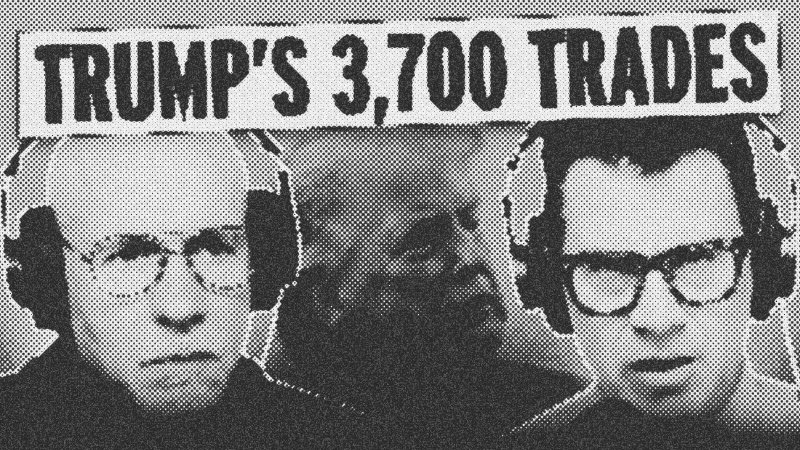
Donald Trump executed over 3,700 stock trades in the first quarter of 2026, averaging 40 transactions daily. The timing suggests more than just market intuition; it hints at the systematic exploitation of material non-public information. For instance, Nvidia stock purchases immediately preceded executive approvals for chip sales to China. Similar patterns emerged with Oracle and Boeing, where administrative decisions directly mirrored the President’s personal portfolio moves. While Anthony Scaramucci notes these maneuvers often hide within legal loopholes created by the political class, the sheer scale—up to $750 million—signals a breakdown in the ethical firewalls meant to separate private gain from public policy. This isn't just about one man; it reflects a bipartisan erosion of market integrity.
The $1.8 billion slush fund for loyalty
A new DOJ-administered fund ostensibly designed to compensate victims of political targeting has effectively become a $1.8 billion war chest for executive patronage. Stemming from a settlement over leaked tax returns, this "loyalty fund" operates under an Attorney General-appointed commission whose decisions are shielded from judicial review and public disclosure. This lack of transparency allows for the rewarding of allies and the potential incentivizing of future political interference. If citizens believe the state will financially bail them out for crimes committed in the name of the executive, the guardrails of the 2026 and 2028 election cycles are functionally dismantled.
China leverages the rare earth chokehold
The strategic balance between Washington and Beijing has shifted. During the recent Trump-Xi Summit, Xi Jinping appeared to hold the upper hand, navigating a "constructive relationship of strategic stability." This diplomatic pivot is fueled by China’s enduring dominance over rare earth elements and critical minerals. These materials are the lifeblood of the modern economy, from defense systems to consumer tech. Donald Trump’s uncharacteristic flattery toward Xi underscores a realization that American leverage is waning in a world where resource security dictates political strength.
Wall Street prices the true cost of war
While the Pentagon estimates the war in Iran at $29 billion, Wall Street analysts and economists like Justin Wolfers argue the real figure is tenfold higher. Official tallies capture only the "narrow slice" of immediate kinetic costs—missiles and fuel. They ignore the long-tail liabilities: veteran care, oil price volatility, and the massive inflationary pressure of sustained regional instability. Conflict is an economic waste born from a failure to negotiate and a chronic tendency to underestimate the opponent. When the true bill arrives, it hits every household through suppressed GDP and eroded purchasing power, far outlasting any single administration.
- Donald Trump
- 11%· people
- Anthony Scaramucci
- 6%· people
- Boeing
- 6%· companies
- China
- 6%· places
- Elon Musk
- 6%· people
- Other topics
- 67%
Trump's Trades Exposed a Bigger Problem
WatchThe Prof G Pod – Scott Galloway // 19:07

NYU Professor, best-selling author, business leader and serial entrepreneur Scott Galloway cuts through the biggest stories in tech, business, and investing with unfiltered insights, bold predictions and thoughtful advice. Podcasts include Prof G Markets with co-host Ed Elson, Prof G Conversations and Office Hours with Prof G.