Kevin O'Leary reveals $13 million Jordan-Kobe card and new investment rules
The shift toward high-alpha alternative assets
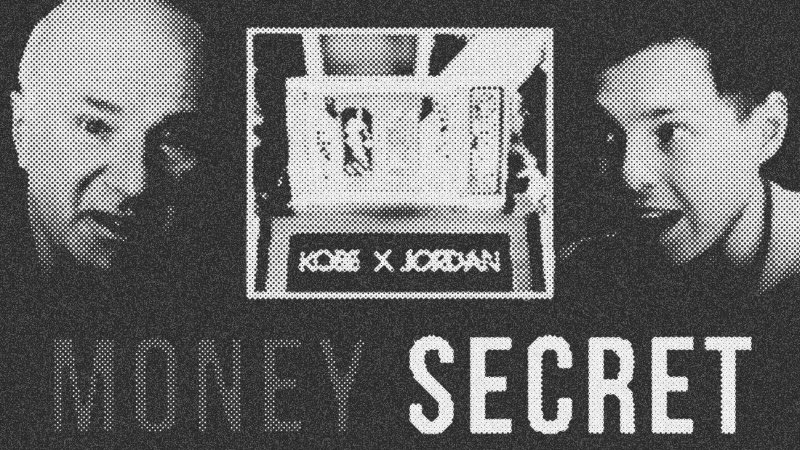
Prudence in wealth management often dictates a focus on standardized equities and debt. However, Kevin O'Leary is currently demonstrating how ultra-rare collectibles—specifically "piece uniques"—can serve as a powerful hedge and growth engine. His recent acquisition of a Jordan-Kobe Dual Logoman Card card for $12.93 million highlights a sophisticated shift. This isn't merely a hobby; it is a calculated bet on the extreme scarcity of cultural artifacts. By treating these assets as "wearable art" and integrating them into high-profile public appearances, investors can actually drive the "story premium" that increases an asset's market value beyond its baseline appraisal.
Diversification as the only free lunch
A resilient portfolio requires rigid boundaries to survive market volatility. The standard "O'Leary Rule" follows a 5% maximum allocation to any single stock or bond and a 20% cap on any individual sector. Currently, the S&P 500 remains a core component, but the real alpha is found in breaking the rules selectively. For instance, Kevin O'Leary maintains a 32% allocation to Real Estate, specifically targeting data centers in Alberta and Utah. This focus on the infrastructure required for the AI revolution—land, power, and water—represents a strategic pivot toward tangible assets that support the digital future.
The brutal consolidation of the crypto market
The era of the "speculative altcoin" is effectively over. Market data suggests that Bitcoin and Ethereum capture approximately 98% of the meaningful crypto market returns. Sovereign wealth funds and institutional players are no longer distracted by what O'Leary characterizes as "poo poo coins." The strategy now is one of consolidation: selling off minor positions and reallocating into the two dominant protocols or stablecoins like USDC. This movement mirrors the fine art market, where a tiny fraction of artists—the Picassos and Warhols—generate the lion's share of historical returns.
AI disruption and the financial sector
We are approaching a period of significant displacement in financial services. Artificial Intelligence is no longer a theoretical threat; it is an operational reality that allows companies to maintain or grow market caps while drastically reducing headcount. The recent layoffs at Jack Dorsey's Block serve as a harbinger of things to come. Within the next year, we should expect more sectors to face 80% corrections in labor or valuation as AI-driven efficiency redefines traditional business models. Sustainable growth in this environment requires staying on the right side of the disruption curve, investing in the "hyperscalers" rather than the legacy systems being replaced.
- Kevin O'Leary
- 11%· people
- Abu Dhabi
- 5%· places
- Alberta
- 5%· places
- Artificial Intelligence
- 5%· products
- Bitcoin
- 5%· products
- Other topics
- 68%
Why RICH People Are Suddenly Buying Collectibles | Kevin O'Leary
WatchThe Iced Coffee Hour Clips // 16:47

Official Clips Channel of the Iced Coffee Hour Podcast. All of the Iced Coffee Hour Clips are posted here for your enjoyment! Podcast hosted by Graham Stephan and Jack Selby. Jack Selby: https://www.instagram.com/jlsselby/ Graham Stephan: https://www.instagram.com/gpstephan/