Kevin O’Leary bets on data centers while dumping 'poo poo' crypto coins
The 5/20 Rule for Portfolio Resilience
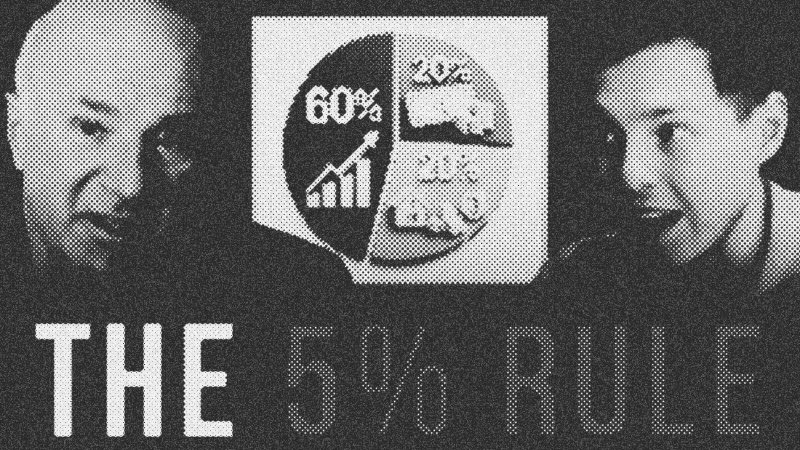
Asset protection begins with strict concentration limits. Kevin O'Leary maintains a rigid framework for his traditional holdings: no more than 20% of a portfolio should reside in a single economic sector, and no more than 5% in any individual stock or bond. This "free lunch" of diversification ensures that even if a specific company or industry collapses, the overall capital remains intact. By spreading risk across the 11 sectors of the S&P 500, investors create a safety net that survives market volatility and individual corporate failures.
Data Centers Drive Real Estate Expansion
While O'Leary typically adheres to his 20% sector cap, he has intentionally overweighted Real Estate to 32%. This shift isn't a bet on traditional offices, but a play on the infrastructure required for the digital age. He is aggressively acquiring land in regions like Alberta, Canada and Utah specifically for data centers. The demand for hyperscale computing currently outstrips supply by a staggering margin; with 45 gigawatts of demand and only 5 under construction, land equipped with power, fiber, and permits represents a generational cash-flow opportunity.
Trimming the Fat in Digital Assets
In the digital asset space, the era of speculative "altcoins" is effectively over. Institutional researchers have found that owning Bitcoin and Ethereum captures roughly 98% of the total crypto market's movement. O'Leary has liquidated 27 smaller positions, which he labels "poo poo coins," to consolidate into these two dominant assets and USDC. This move reflects a broader trend toward institutional clarity and the rejection of assets that lack marketing scale or functional utility.
AI Disruption and Market Variance
Artificial Intelligence is poised to gut employment numbers in sectors like financial services, even if stock prices remain buoyant. O'Leary monitors these shifts through a proprietary dashboard that flags any position with a variance greater than 3% in a single session. This high-frequency tracking allows him to capitalize on sudden moves—such as a 35% surge in Circle—while his gold holdings provide a necessary hedge against the unpredictability of AI-driven market corrections.
- Airbnb
- 8%· companies
- Alberta, Canada
- 8%· places
- Bitcoin
- 8%· products
- Circle
- 8%· companies
- Ethereum
- 8%· products
- Other topics
- 58%
The SMARTEST Way to Invest Right Now | Kevin O’Leary
WatchThe Iced Coffee Hour Clips // 10:15

Official Clips Channel of the Iced Coffee Hour Podcast. All of the Iced Coffee Hour Clips are posted here for your enjoyment! Podcast hosted by Graham Stephan and Jack Selby. Jack Selby: https://www.instagram.com/jlsselby/ Graham Stephan: https://www.instagram.com/gpstephan/