The Minnesota Childcare Crisis: Unmasking a Multi-Million Dollar Fraud Network
The Viral Exposure of State-Level Corruption
Nick Shirley recently stepped into the national spotlight after releasing a video that allegedly uncovers the largest fraud scandal in the history of Minnesota. The investigation, which has amassed over 500 million impressions across social media platforms, centers on a network of daycare centers and healthcare providers that Shirley claims are receiving millions in government subsidies without providing actual services. What began as a local inquiry into demographic shifts and community changes in cities like Minneapolis evolved into a harrowing expose of systemic financial exploitation. Shirley’s work suggests that billions of taxpayer dollars are being funneled through shell companies and fraudulent businesses, often operating in plain sight with minimal oversight.
The scale of the virality was propelled by high-profile endorsements, most notably from Elon Musk, who interacted with Shirley’s content dozens of times in a single 24-hour period. This decentralized form of journalism has bypassed traditional media gatekeepers, forcing federal and state authorities to respond to claims that were previously dismissed as local issues. The core of the scandal involves child care assistance programs, where centers are licensed for dozens of children but appear empty upon physical inspection. Shirley reports that despite having millions in annual revenue, many of these centers lack basic operational infrastructure, such as receptionists, enrollment brochures, or even unlocked doors during business hours.
The Mechanics of the Childcare Subsidy Scam
To understand the depth of this scandal, one must look at the flow of capital from the Minnesota Department Human Services (HHS). The state sets up welfare funds—comprising both state and federal money—intended to support low-income families by covering daycare costs. Shirley explains that fraudsters exploit this by opening centers and claiming to serve a specific number of children. Because the audit process is allegedly porous, these businesses can bill for maximum capacity while the actual attendance is near zero. In some cases, centers licensed for 99 children receive nearly $2 million in annual funding while maintaining blacked-out windows and locked doors.
This exploitation isn't limited to childcare. Shirley’s investigation points to a broader ecosystem of fraud that includes home healthcare, assisted living facilities, and non-emergency medical transportation. These entities work in tandem to create a paper trail of legitimate activity. For instance, a transportation company might bill the state for moving an elderly patient from an adult daycare to a clinic, even if no patient is in the vehicle. This "ghost billing" creates the illusion of service delivery, making it difficult for automated systems to flag the activity as fraudulent. The sheer volume of these businesses is staggering; Shirley found single office buildings housing over 20 distinct home healthcare companies, many sharing the same ownership or inactive shell company roots.
Political Implications and Public Reaction
The political fallout from these revelations has been significant. Shirley points to Tim Walz as a central figure who has allegedly enabled this environment through negligence or political calculation. While Walz has claimed to be fighting fraud since 2019, critics argue that the state’s transition from a $16 billion surplus to a multi-billion dollar deficit suggests a catastrophic failure in fiscal management. Furthermore, the demographic sensitivity surrounding the Somali community in Minnesota—who Shirley notes run a high percentage of the investigated centers—has created a shield against scrutiny. Shirley contends that state officials are often paralyzed by the fear of being labeled racist or Islamophobic, allowing bad actors to operate with impunity.
Figures like Ilhan Omar have also come under the microscope during this discussion. While no direct link to the daycare fraud has been proven in a court of law, her meteoric rise in net worth from debt to millions has fueled public skepticism regarding the financial transparency of Minnesota’s political elite. The reaction from the public has been one of outrage, leading to calls for a "tax strike." The argument is simple: if the government cannot prevent billions in blatant waste and fraud, why should the average citizen continue to fund the system? This sentiment is bolstered by reports of the California high-speed rail project, which has spent $15 billion without laying a single track, illustrating that the problem of government waste is a national, rather than purely local, phenomenon.
The Future of Independent Investigative Journalism
Shirley’s experience highlights a growing rift between independent creators and mainstream media outlets like CNN or local news affiliates. While traditional outlets have attempted to debunk Shirley’s claims by visiting centers that suddenly have children present after the viral video, Shirley argues that these are choreographed attempts to save face. He maintains that the "new media" model—where a single person with a GoPro and a platform like X can reach hundreds of millions—is more effective at prompting immediate government action than decades of legacy reporting. Within hours of his video, the HHS reportedly froze payments to several suspect entities, a move that the state government had failed to make for years.
However, this type of work comes with extreme personal risk. Shirley now operates with a security detail and wears body armor in public after receiving numerous threats and experiencing physical altercases during his filming. He describes the current climate as one where journalists are investigated more thoroughly than the criminals they expose. Despite these challenges, Shirley intends to continue his work, moving toward a "decentralized DOGE" model where public tips and local investigations can bypass bureaucratic bottlenecks. His mission is to use common-sense inquiry to demand accountability, proving that the eyes of the public are often more sharp than the audits of the state.
- Andrew Callahan
- 6%· people
- California
- 6%· places
- CNN
- 6%· organizations
- Donald Trump
- 6%· people
- Elon Musk
- 6%· people
- Other topics
- 69%
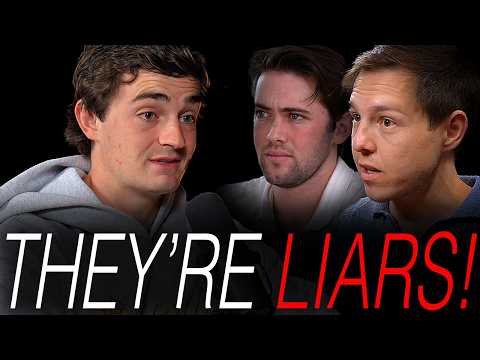
The Minnesota Fraud Scandal | An Unfiltered Conversation with Nick Shirley
WatchThe Iced Coffee Hour // 1:35:41

All of the Iced Coffee Hour episodes posted here for your enjoyment! Podcast hosted by Graham Stephan and Jack Selby. Jack Selby: https://www.instagram.com/jlsselby/ Graham Stephan: https://www.instagram.com/gpstephan/