Benware leaves replica X-Wing unpainted to spotlight historic donor kit parts
Unveiling the Archeology of Sci-Fi Effects
At WonderFest 2026, a peculiar masterpiece stood out among the sea of finished cinema replicas. Model maker Chris Benware of the Nerf Herder's Workshop showcased his studio scale replica of the Red 2 X-Wing Model. Unlike most replicas that mimic the iconic dirty-white paint and colored squadron stripes seen on screen, Benware chose to leave this piece completely "naked." It remains a multi-colored patchwork of bare styrene, brass, and vintage plastic. This radical decision reveals the meticulous archaeological process of "kitbashing" that defined the visual language of the original Star Wars Episode IV: A New Hope.
Decoding the Masterpieces of Kitbashing
When Industrial Light & Magic (Industrial Light & Magic) rushed to build the Star Wars Episode IV: A New Hope universe in the late 1970s, they did not have the luxury of 3D printing. Instead, model makers relied on "greeblies"—individual plastic pieces harvested from commercial model kits of battleships, tanks, and aircraft.
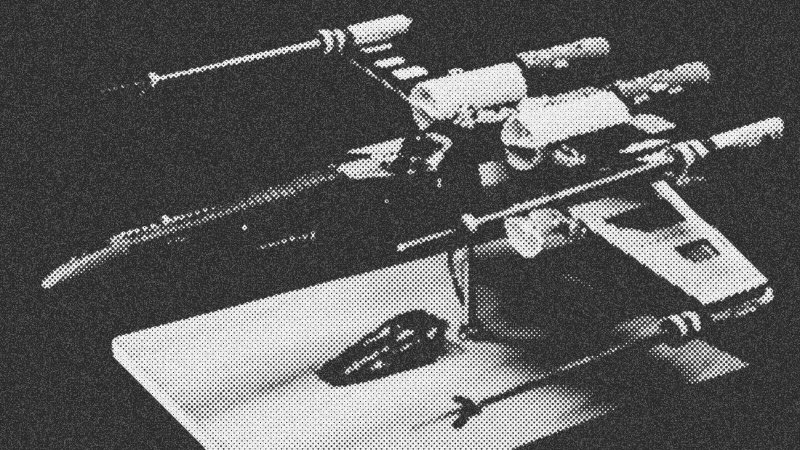
Benware built his model using the exact vintage donor parts salvaged from those same 1960s and 70s kits. The engines feature parts from the famous Aurora C-lab Model Kit oceanography kit, recognizable by its distinct golden-orange plastic. Other details originate from ancient Messerschmitt Model Kit fighter planes, Bandai Hummels, and a highly obscure 1/1200th scale Japanese battleship kit only sourced out of England. Every single piece is an original donor part; Benware used absolutely no resin castings or 3D prints for the detailing.
The Engineering Under the Hood
While the fuselage is a high-quality casting, the wings are custom-crafted from layers of acrylic and etched styrene sheet. They are hollowed out to hide internal wiring, mimicking the structural engineering of the original filming miniatures. The "droid strip" running along the top of the hull—designed to conceal the metal armature mounts that allowed the model to be rigged for filming—is a mosaic of parts harvested from ten distinct donor kits. Crucially, the model highlights the differences of the Red 2 hero miniature, which featured an entirely different engine detail pattern than other X-Wings used in the film.
Preserving the Raw Medium
Benware initially planned to apply a screen-accurate paint job. However, the raw beauty of the multi-colored plastics, brass torpedo tubes, and exposed solder joints convinced him to leave it bare. It offers a rare, physical document of filmmaking history that is usually buried under layers of primer and gray paint. By leaving the materials exposed, Benware preserves the direct, tactile connection to the frantic, brilliant artistry of the original ILM model makers.
- Star Wars Episode IV: A New Hope
- 18%· movies
- Aurora C-lab Model Kit
- 9%· products
- Bandai
- 9%· companies
- Chris Benware
- 9%· people
- Industrial Light & Magic
- 9%· companies
- Other topics
- 45%
How the original Star Wars X-Wing models were made
WatchAdam Savage’s Tested // 16:51

Adam Savage’s Tested is a content platform and community playground for makers and curious minds. On Tested.com, the highly- engaged Tested YouTube channel, and at conventions and events, dynamic makers share ideas and inspire each other to build their obsessions. Led by Adam Savage, the Tested team explores the intersection of science, popular culture, and emerging technology, showing how we are all makers. Adam also takes viewers behind the scenes of films, TV shows, theater, and museums, shining a spotlight on the craftspeople and artists who make the magic we all enjoy. Tested is also: Norman Chan, Joey Fameli, Josh Self, Kristen Lomasney and Thomas Crenshaw.