Gravity's Illusion: The Manual Engineering Behind Project Hail Mary's Spacewalks
The Architecture of Weightlessness
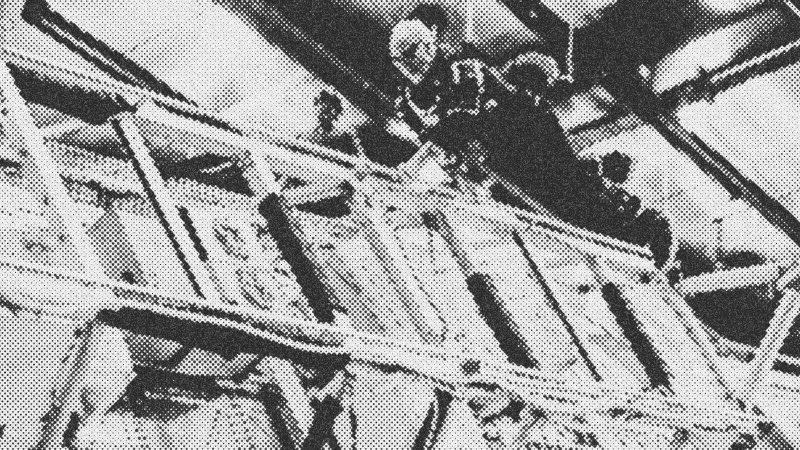
Cinema is a thousand tiny decisions. When portraying the vacuum of space, those decisions shift from creative to highly technical. On the set of Project Hail Mary, the production team faced a monumental challenge: simulating the floating, three-dimensional movement of an astronaut traversing a ship's exterior. While modern blockbuster filmmaking often leans on digital doubles, this production prioritized a massive, practical stunt rig to ground the performance in reality.
The Spinner Rig Revolution
Stunt coordinator Eunice Huthart describes this production as the most technical of her thirty-year career. The centerpiece is a custom-designed spinner rig and gantry system that grants the actor access to all X, Y, and Z space. Unlike standard motorized winches that can feel clinical or rigid, this system operates on a manual basis. This allows the stunt team to react instantly to the actor's physical impulses. If Ryan Gosling decides to flip or somersault mid-take, the operators adjust the tension and position in real-time, creating a fluid, organic motion that motors simply cannot replicate.
The Physics of Performance
Authenticity in zero-gravity stunts requires more than just hanging from wires. Andy Lister, a key member of the stunt team, emphasizes the "point of contact" rule. An astronaut never lets go of the ship. Consequently, the stunt team must maintain a delicate balance where the rig provides the lift while the actor provides the leverage against the hull. Long legs act as a counterbalance; tucking them in causes the torso to tip. It is a constant physical negotiation between the performer and the rope operators.
The Autonomic Dance
Filmmaking is often a collaborative dance, but here it becomes literal. The rope team—including TJ and Kieran—must remain in perfect sync with the performer. One operator controls height while another manages lateral travel. This synergy allows the stunt double or actor to focus on story beats and emotional performance rather than the mechanics of the harness. The result is a convincing illusion of weightlessness that feels heavy with the stakes of the mission.
- Adam%20Savage
- 13%· people
- Amazon%20MGM%20Studios
- 13%· companies
- Andy%20Lister
- 13%· people
- Eunice%20Huthart
- 13%· people
- Kieran
- 13%· people
- Other topics
- 38%
How Zero Gravity Spacewalks Are Filmed in Movies
WatchAdam Savage’s Tested // 13:42

Adam Savage’s Tested is a content platform and community playground for makers and curious minds. On Tested.com, the highly- engaged Tested YouTube channel, and at conventions and events, dynamic makers share ideas and inspire each other to build their obsessions. Led by Adam Savage, the Tested team explores the intersection of science, popular culture, and emerging technology, showing how we are all makers. Adam also takes viewers behind the scenes of films, TV shows, theater, and museums, shining a spotlight on the craftspeople and artists who make the magic we all enjoy. Tested is also: Norman Chan, Joey Fameli, Josh Self, Kristen Lomasney and Thomas Crenshaw.