Ancient Aviators: The Precision Engineering of the Dragonfly
The First to Fly: A 350-Million-Year Legacy
Long before the first pterosaurs took to the skies or the ancestors of modern birds sprouted feathers, the Odonata order—comprising dragonflies and damselflies—pioneered aerial locomotion. These insects represent nature’s first successful attempt at winged flight. While the mammals we see today count roughly 6,500 species, Jessica Ware of the American Museum of Natural History notes that dragonflies match that diversity almost exactly. They are living fossils, but calling them "primitive" is a mistake of the highest order. They are apex predators that have refined their biological hardware over hundreds of millions of years to achieve near-perfect efficiency.
During the Carboniferous period, about 350 million years ago, giant proto-dragonflies known as griffin flies patrolled the atmosphere. With wingspans reaching nearly two feet, these behemoths thrived in an oxygen-rich environment. Unlike their modern descendants, these early flyers were likely clumsy, swimming through a viscous atmosphere with little competition. Evolution eventually favored the smaller, more agile designs we see today, particularly after the rise of birds forced dragonflies to prioritize extreme maneuverability and speed to survive.
The Head-Arrestor System: Nature’s Gimbal
One of the most startling mechanical features of a dragonfly is its head attachment—or lack thereof. A dragonfly’s head consists almost entirely of eyes, shaped with a specific concavity on the posterior side. This head sits precariously on a tiny nubbin of a neck. To prevent their heads from spinning wildly during high-G aerial maneuvers, dragonflies utilize a "head-arrestor system." This consists of microscopic hooks on the back of the eyes that lock into corresponding hooks on the prothorax.
When the insect lands, it unclasps this system, allowing the head to rotate freely. This enables the dragonfly to scan for mates, territory, and prey with a range of motion that mimics a fighter pilot scanning the horizon. This decoupled design is so delicate that in museum specimens, the head often falls off, forcing researchers like Jessica Ware to store them in specialized triangular envelopes rather than traditional pins to keep the body parts associated.
Corrugation and Resilin: The Physics of the Wing
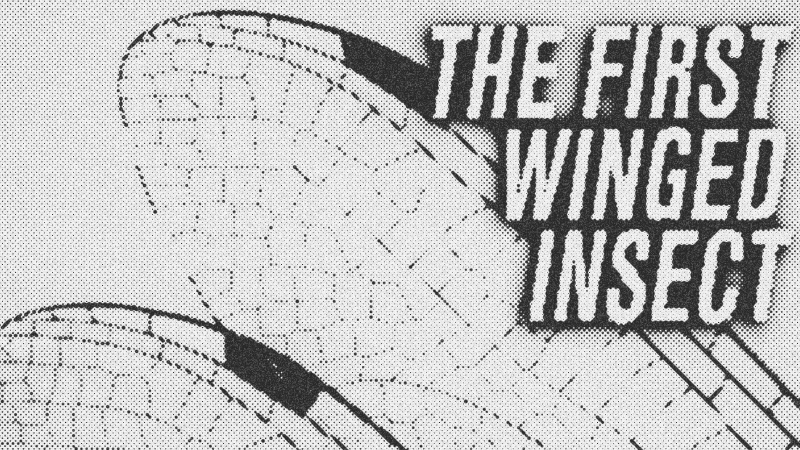
A dragonfly wing appears flat to the naked eye, but under magnification, it reveals a complex corrugated geometry. These "up-and-down" folds provide immense structural rigidity without adding weight, functioning much like the ridges in a piece of cardboard or a shipping container. The leading edge of the wing is particularly stiff, lined with serrated teeth and spines that may reduce noise and direct airflow, allowing the dragonfly to strike with silence.
However, a purely rigid wing would shatter under the stress of flight. The secret to their durability is Resilin, a spongy, elastic protein located at a juncture called the node. This material allows the wing to bend and twist during the power stroke, absorbing energy and providing the flexibility required for the dragonfly’s signature acrobatic flight. Furthermore, many species possess a Pterostigma, a heavy, colored cell near the wingtip that acts as a counterbalance. Much like the dampening systems in modern bridges, this weight prevents high-speed flutter and wing-twisting that could lead to structural failure.
Chemical Preservation and Structural Color
For centuries, insect collectors were frustrated by the fact that vibrant dragonflies turned a dull, muddy brown after death. This happens because most dragonfly colors are pigment-based, held within epithelial cells. In life, the insect can migrate these pigment granules up or down to change its vibrancy for thermoregulation or camouflage. Upon death, these granules sink to the bottom of the cell, leaving the specimen permanently dull. Modern researchers discovered that soaking specimens in acetone—essentially nail polish remover—freezes these granules at the top of the cell, preserving their "living" colors for decades.
Not all color is chemical, however. Some dragonflies utilize structural color, where microscopic ridges on the cuticle reflect specific wavelengths of light. This creates the metallic greens, blues, and purples that never fade. These structures are so resilient they have been found preserved in fossils, reflecting the same iridescent hues they did millions of years ago.
Digital Frontiers in Invertebrate Zoology
The American Museum of Natural History is currently engaged in a Herculean effort to digitize its collection of over 23 million invertebrate specimens. This isn't just about taking photos; it involves high-resolution imaging, CT scans to map internal anatomy, and the use of AI to transcribe labels written in 19th-century cursive. By creating these digital twins, scientists worldwide can study wing venation patterns and morphology without needing to travel to New York. This data is critical for tracking how species respond to modern climate shifts, positioning these ancient insects as sentinels for our changing world.
- American Museum of Natural History
- 22%· organizations
- Jessica Ware
- 22%· people
- Adam Savage
- 11%· people
- AI
- 11%· products
- Odonata
- 11%· products
- Other topics
- 22%
Dragonfly Facts That STUNNED Adam Savage
WatchAdam Savage’s Tested // 30:51

Adam Savage’s Tested is a content platform and community playground for makers and curious minds. On Tested.com, the highly- engaged Tested YouTube channel, and at conventions and events, dynamic makers share ideas and inspire each other to build their obsessions. Led by Adam Savage, the Tested team explores the intersection of science, popular culture, and emerging technology, showing how we are all makers. Adam also takes viewers behind the scenes of films, TV shows, theater, and museums, shining a spotlight on the craftspeople and artists who make the magic we all enjoy. Tested is also: Norman Chan, Joey Fameli, Josh Self, Kristen Lomasney and Thomas Crenshaw.