Baffling the Air: The Engineering Secrets of Custom Inflatable Costumes
The High-Pressure World of Soft Fabrication
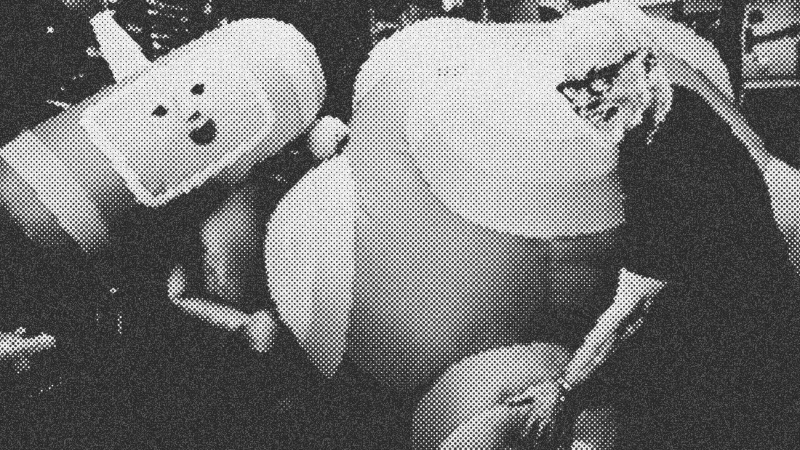
Forget the flimsy, store-bought dinosaur suits you see at every Halloween party. The real magic happens when you treat air not just as a filler, but as a structural material. Most builders look at inflatable costumes and see a novelty; experts like Megan Gardner and Taylor Pope of Devising Delight see a complex engineering problem involving fluid dynamics, material science, and digital fabrication. Building a machine that lives and breathes through a constant-flow fan system requires a deep understanding of how pressure interacts with soft boundaries.
When Adam Savage invited these two into his cave, the conversation immediately bypassed the fluff and went straight to the hardware. The satisfaction of building these machines by hand lies in the unique constraints: you are creating a shape that only exists when under tension. If your seams aren't perfect or your fabric choice is wrong, the entire project literally collapses. It is a high-stakes version of sewing where every stitch must account for the invisible force of air trying to escape.
Material Science: Beyond the Generic Ripstop
The foundation of any high-performance inflatable is the skin. While beginners might grab a bolt of standard ripstop nylon from a local craft store, seasoned builders know that untreated nylon is essentially a sieve. Air molecules are small and relentless; they will find their way through the weave of most fabrics unless there is a physical barrier. This led the team to silicon impregnated ripstop nylon, often referred to as silnylon.
This material is a double-edged sword for the maker. On one hand, it is incredibly lightweight, allowing a massive 18-foot dragon to pack down into a single carry-on bag. On the other hand, its impregnated surface makes it notoriously difficult to handle. It is slippery, resists traditional adhesives, and cannot be ironed. You can't use heat-transfer vinyl for eyes or details because the silicone coating prevents any bond. Furthermore, because it doesn't stretch like traditional fabrics, your patterning must be exact. Any "easing in" of seams leads to unsightly puckering and bumps that are magnified once the suit is pressurized. This is where the hardware enthusiast's mindset takes over—you don't fight the material; you optimize your process to accommodate its quirks.
Digital Precision and Laser-Cut Patterns
To manage the uncompromising nature of silnylon, Taylor Pope integrated a digital-first workflow. Instead of hand-cutting massive swaths of fabric, he uses a custom-built gantry diode laser to cut pieces with sub-millimeter precision. The brilliance of using a laser on synthetic fabric is that the heat melts the edge of the material as it cuts, effectively sealing the fray-prone nylon in a single pass.
Scaling and Registration
Iteration is the soul of any build. By digitizing their patterns in Inkscape, the team can scale designs with a level of granularity that's impossible with paper. They often create quarter-scale paper mock-ups to test seam logic before committing to a full-scale build. One of the biggest hurdles in this process is registration. When you are sewing a curved seam that might be ten feet long, losing your place by even a fraction of an inch results in a twisted, dysfunctional shape. The laser allows for the inclusion of hundreds of tiny registration notches. These notches act like the tabs on a plastic model kit, ensuring that the physical assembly perfectly matches the digital intent.
The DIY Gantry Solution
You don't need a hundred-thousand-dollar industrial machine to achieve professional results. Taylor's solution involves a 1-meter by 1-meter laser kit from AliExpress mounted over a simple plywood and foil bed. It’s a pragmatic, resourceful setup that proves the quality of the output depends more on the builder's calibration than the price tag of the tool. They are already planning a move to a 1.5-meter by 2-meter gantry to accommodate full rolls of fabric, illustrating the inevitable "bigger is better" trajectory of any dedicated hardware shop.
Overcoming the Concavity Crisis
One of the most profound technical challenges in inflatable design is the concept of concavity. Air pressure wants to turn everything into a sphere. It pushes outward equally in all directions, which means making an "inward" curve—like the hollow of an ear or the neck of Coochie Kopi—is a battle against physics. If you simply sew two pieces of fabric in a concave shape and blow air into them, the pressure will force them to pop outward into a convex "audi" belly button.
To solve this, you have to build an internal skeleton. This is done through baffling. Internal tethers of fabric are sewn between the front and back panels, physically restraining the air from pushing the surfaces too far apart. These tethers must be perforated to allow air to flow through the entire suit while still maintaining the tension required to hold a specific shape. It is hidden engineering that the viewer never sees, but it’s the difference between a blob and a character. This technical hurdle is what separates Devising Delight from mass-produced costumes; they are willing to solve the "impossible" geometry of concavity through meticulous internal structure.
Electronics and the Future of Active Inflation
Current inflatable technology relies on a "dumb" system: a fan runs at a constant speed, and the builder hopes it provides enough pressure to keep the head from flopping over. But the next frontier lies in active feedback loops. The team is already conceptualizing a system utilizing an Arduino or Raspberry Pi paired with a pressure sensor.
Imagine a suit that senses a drop in internal pressure—perhaps when the wearer bends over or a gust of wind hits—and automatically ramps up the fan RPM to compensate. This would allow for even more delicate structures and larger scales without the need for massive, ear-splitting blowers. Using the Venturi effect with specialized bags for initial inflation is a clever manual workaround, but the integration of smart sensors into the hardware stack will be the real paradigm shift for the medium.
Conclusion: The Magic of the Machine
There is a specific kind of joy in bringing a massive, 18-foot creature to life using nothing but a tiny fan and some cleverly sewn nylon. It’s the ultimate DIY triumph—turning a flat, lifeless material into a 3D entity that can dance, move, and interact. While the technical challenges of UV degradation, silicone-induced seam slippage, and concave geometry are significant, they are what make the process rewarding. As builders like Megan and Taylor continue to refine their digital workflows and explore smart electronics, the line between "costume" and "soft robot" continues to blur. For the hardware enthusiast, the message is clear: if you can't find the creature you want to see in the world, you have the tools and the air to build it yourself.
- Devising Delight
- 14%· companies
- Taylor Pope
- 14%· people
- Adam Savage
- 7%· people
- AliExpress
- 7%· companies
- Arduino
- 7%· products
- Other topics
- 50%
Adam Savage Learns How Inflatable Costumes Are Made!
WatchAdam Savage’s Tested // 48:03

Adam Savage’s Tested is a content platform and community playground for makers and curious minds. On Tested.com, the highly- engaged Tested YouTube channel, and at conventions and events, dynamic makers share ideas and inspire each other to build their obsessions. Led by Adam Savage, the Tested team explores the intersection of science, popular culture, and emerging technology, showing how we are all makers. Adam also takes viewers behind the scenes of films, TV shows, theater, and museums, shining a spotlight on the craftspeople and artists who make the magic we all enjoy. Tested is also: Norman Chan, Joey Fameli, Josh Self, Kristen Lomasney and Thomas Crenshaw.