Project Hail Mary prop builders bring Andy Weir's functional ideas to life
Translating Conceptual Worlds Into Physical Reality
Filmmaking lives in the tension between what an author writes and what a camera can capture. When Andy Weir wrote the science-fiction novel Project Hail Mary, he did not envision a detailed visual aesthetic. He built a system of concepts, math, and mechanical functions. Translating those concepts into tangible objects falls to the unsung heroes of the art department: the prop makers.
Behind the scenes of the film adaptation, prop master Steve runs a highly mobilized, self-contained workshop designed to build ninety-five percent of the production's hardware in-house. This collaborative environment serves as the bridge between theoretical physics and the physical lens of the camera. It is a world where heavy-duty manufacturing meets delicate artistic precision.
The Anatomy of a Beetle: Metallized Paints and Serpentine Colors
One of the centerpieces of the production's model shop is the "Beetle" probe. This small, crucial craft carries humanity's last hope back to Earth. To construct this object, supervisor prop modeler Rob started with 3D prints, but plastic does not read like space-ready alloy on screen.
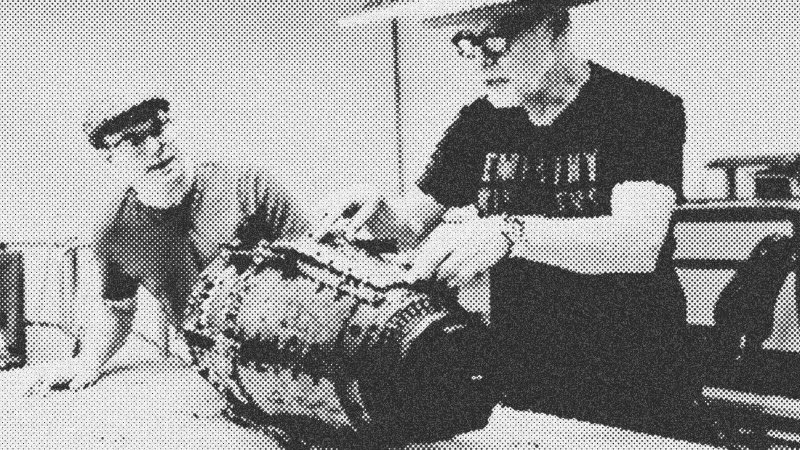
Instead of machining raw aluminum, the shop utilizes metallized paint. This two-part chemical coating is infused with actual metal powders. Once cured, technicians polish the surface by hand until it gains a realistic sheen.
To honor the source material, the design team integrated subtle nods to The Beatles. Each of the four probes features color-coded accents reflecting the suits worn by the band members on the iconic Sergeant Pepper's Lonely Hearts Club Band album cover. Ringo's probe, for instance, sports a pink stripe. These micro-details give the props a sense of history and reality before they ever step foot onto a stage.
Perfecting Rocky’s Ball and the Physics of Crystal Resin
Creating alien hardware is notoriously difficult because there are no real-world reference points. For Rocky's structural environment, the team built a spherical habitat known as "Rocky’s Ball." It is a complex modular shell built to accommodate puppeteers, cameras, and visual effects markers.
To achieve the specific, cloudy "lensed" texture of the alien containment sphere, the crew went through fifteen separate material iterations. They eventually devised a process where individual polycarbonate panels were cut, coated with crystal-clear resin inside a clean spray booth to prevent dust contamination, and baked instantly. The result is a gorgeous, organic depth that looks functional yet deeply unfamiliar.
Advanced Mold Making and the Science of the Cut
Deep in the mold room, mold maker Nico wrestles with the physical fluid dynamics of casting liquid plastics. Unlike standard hobby shops, this professional department uses incredibly stiff, clear silicone. While more difficult to demold, this high-density material eliminates seam lines and "flash"—the thin plastic overflow that occurs when molds separate.
Clear silicone allows mold makers to see exactly where they are cutting when slicing open a cured block. Technicians draw strategic guidelines on the outside, then slide a straight scalpel through the translucent rubber. Nico uses a specialized undulating cut that transitions into a perfectly flat plane near the master model. Combined with custom registration pins, this wave pattern locks the two halves of the mold together with micron-level accuracy.
To make casting even faster, the shop practices "barrier coating." They brush metallic powders directly into the silicone cavity before pouring the liquid urethane. When the cured part is pulled out, the metal finish is chemically bonded into the top layer of the plastic. This creates a surface that is far more resistant to scratching and wear during grueling shooting schedules.
The Value of Practical Filmmaking
Ultimately, the scale of this prop shop highlights a growing trend in modern cinema: a return to physical, in-camera effects. By physically constructing the interior of the ship, the tools, and the alien containment vessels, the crew gives the actors real weight to pull against. In an era dominated by green screens, the meticulous efforts of these mold makers, painters, and CAD designers ground the science fiction of the film in a tactile, undeniable reality.
- Adam Savage
- 11%· people
- Andy Weir
- 11%· people
- Nico
- 11%· people
- Project Hail Mary
- 11%· movies
- Project Hail Mary
- 11%· books
- Other topics
- 44%
Adam Savage Visits Project Hail Mary's Props Department!
WatchAdam Savage’s Tested // 25:42

Adam Savage’s Tested is a content platform and community playground for makers and curious minds. On Tested.com, the highly- engaged Tested YouTube channel, and at conventions and events, dynamic makers share ideas and inspire each other to build their obsessions. Led by Adam Savage, the Tested team explores the intersection of science, popular culture, and emerging technology, showing how we are all makers. Adam also takes viewers behind the scenes of films, TV shows, theater, and museums, shining a spotlight on the craftspeople and artists who make the magic we all enjoy. Tested is also: Norman Chan, Joey Fameli, Josh Self, Kristen Lomasney and Thomas Crenshaw.