Vintage Cool Shade costs thousands as TIE Fighter modelers shun 3D printing
The technical pursuit of studio-scale perfection
In the world of professional model making, "studio scale" represents the pinnacle of historical accuracy. It requires recreating the filming miniatures used by Industrial Light & Magic (ILM) in the 1970s using the exact materials and "kit-bashing" techniques of that era. Jonathan Faber and Kevin Hoppert are leaders in this discipline, specifically regarding the TIE Fighter and Y-Wing replicas showcased at WonderFest 2026. This isn't just hobbyism; it's industrial archeology.
Sourcing the elusive brass Cool Shade
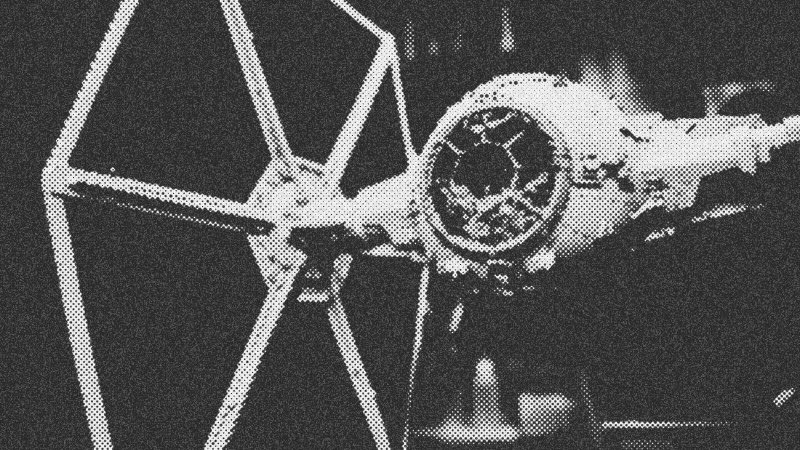
The most daunting challenge for TIE Fighter builders is the wing panels. Originally, Industrial Light & Magic used a window treatment called Cool Shade, a manufactured product consisting of tiny brass louvers braided together with wire. Modern versions of this material exist, but they utilize a tighter spacing—19 louvers per inch—which differs from the 1970s tooling. Finding vintage Cool Shade is now an expensive, competitive endeavor for purists who refuse to use 3D-printed substitutes. The physical property of how light interacts with real metal louvers creates a visual depth that resin cannot replicate.
Engineering the cockpit and structural integrity
Jonathan Faber describes a meticulous construction process starting with a 5.25-inch acrylic ball for the cockpit. Unlike modern digital workflows, this requires manual scribing of panel lines into the sphere. To add surface detail, Faber utilizes vacuum-formed styrene panels molded directly over the ball, allowing for test-fitting before permanent adhesion. For the wings, Faber integrated a .015-inch stainless steel core. This hidden structural element ensures the wings remain perfectly straight and can support the model's significant weight without the "wobble" often found in purely plastic replicas.
Decoding the Y-Wing's kit-bashed history
While TIE Fighter focus on sleek, mechanical repetition, the Y-Wing is a masterclass in organized chaos. Kevin Hoppert explains how builders identify specific ships through nicknames like "Tiger Sprocket" or "Triangles," based on the unique "found parts" glued to the hull. These models frequently reused components; for instance, the back end of one ship might be a cutout from another's master mold. Recreating these ships requires a deep knowledge of 1970s model kits—from Ferrari engines to MACI tanks—to ensure every "greebly" matches the original hero props.
Embracing historical inaccuracy
A fascinating aspect of this craft is the intentional replication of errors. Faber notes that original ILM castings were often asymmetrical or contained offset hatches. He purposefully builds these flaws into his replicas to capture the "soul" of the handmade originals. The only line he draws is at air bubbles in the resin; while the original Star Wars models were riddled with casting defects due to tight production schedules, modern masters like Faber prefer a technically cleaner finish while maintaining the geometric quirks of the 1976 originals.
- TIE Fighter
- 19%· products
- Cool Shade
- 13%· products
- Industrial Light & Magic
- 13%· companies
- Jonathan Faber
- 13%· people
- Kevin Hoppert
- 13%· people
- Other topics
- 31%
This is the Most Expensive Part of a TIE Fighter
WatchAdam Savage’s Tested // 14:43

Adam Savage’s Tested is a content platform and community playground for makers and curious minds. On Tested.com, the highly- engaged Tested YouTube channel, and at conventions and events, dynamic makers share ideas and inspire each other to build their obsessions. Led by Adam Savage, the Tested team explores the intersection of science, popular culture, and emerging technology, showing how we are all makers. Adam also takes viewers behind the scenes of films, TV shows, theater, and museums, shining a spotlight on the craftspeople and artists who make the magic we all enjoy. Tested is also: Norman Chan, Joey Fameli, Josh Self, Kristen Lomasney and Thomas Crenshaw.