Inside the Fossil Prep Lab: The High-Tech Craft of Excavating History
The Inner Sanctum of Paleontology
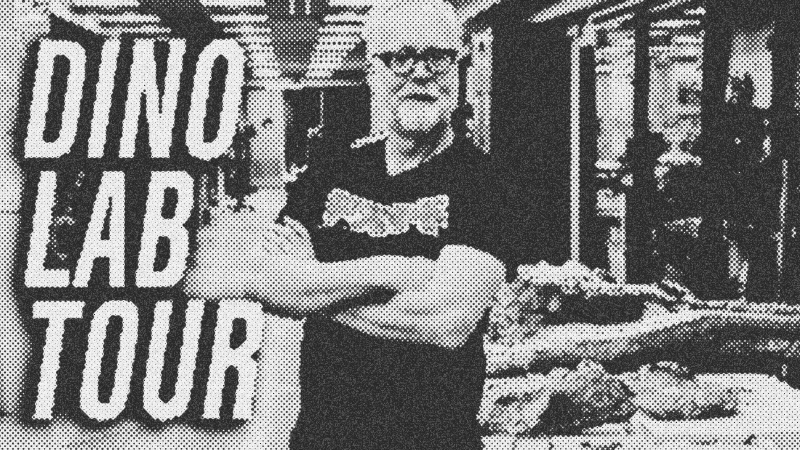
Most museum visitors only see the polished, articulated skeletons standing in grand halls. But the real magic happens in the American Museum of Natural History at the American Museum of Natural History. This isn't just a cleaning station; it is a research hub where discovery continues long after the field team leaves the dig site. Roger Benson, the Macaulay Curator, explains that fossils often arrive as mysterious lumps of rock. The process of extracting them is a slow-motion reveal that combines mechanical precision with modern imaging.
The Art of the Field Jacket
When paleontologists find a bone in the wild, they don't simply pull it out. They leave it encased in its original rock, known as matrix, to ensure structural integrity during transport. To keep everything together, they create field jackets using a time-tested DIY method: plaster of Paris and burlap. These structures act as protective exoskeletons. Opening one back at the lab is like a scientific Christmas morning. You might think you're opening a jacket for a specific herbivore, only to find the jaw of a small predatory dinosaur tucked inside the same rock.
Scanning Before the Sledgehammer
Technology has radically changed the preparation workflow. Before a preparator even touches a chisel, many specimens undergo CT scanning. This non-destructive 3D X-ray allows the team to look through the plaster and rock to see exactly what lies beneath. It is a vital safety measure for fragile specimens. If you know a bone is paper-thin before you start digging, you can plan your approach to avoid shattering it. While digital models are incredible tools, Roger Benson notes that they cannot fully replace the tactile experience of handling the physical specimen to understand its anatomy.
Biological Clocks and Bone Microstructure
Modern paleontology goes beyond just looking at the shape of a bone. By removing small samples and examining the microstructure, scientists can read a dinosaur's life story like the rings of a tree. This research has debunked the old myth that dinosaurs were slow-moving, cold-blooded reptiles. The bone records show they grew incredibly fast—much faster than modern reptiles—indicating they were metabolically active and likely warm-blooded.
The DNA Barrier and Chemical Echoes
Despite what pop culture suggests, we aren't cloning Tyrannosaurus Rex anytime soon. DNA is a fragile molecule that degrades relatively quickly, with the oldest recovered samples being roughly 2 million years old—nowhere near the 66 million years needed for most dinosaurs. However, the cutting edge of the field involves more resilient biomolecules. Scientists are now finding melanosomes, or pigment cells, which are chemically tough like wood. These fragments allow us to determine the actual colors of extinct creatures, moving paleontology from guesswork to high-resolution biological reality.
- Roger Benson
- 25%· people
- Adam Savage
- 13%· people
- American Museum of Natural History
- 13%· places
- Barnum Brown
- 13%· people
- CT scanning
- 13%· products
- Other topics
- 25%
Adam Savage Tours the AMNH FOSSIL Lab!
WatchAdam Savage’s Tested // 19:24

Adam Savage’s Tested is a content platform and community playground for makers and curious minds. On Tested.com, the highly- engaged Tested YouTube channel, and at conventions and events, dynamic makers share ideas and inspire each other to build their obsessions. Led by Adam Savage, the Tested team explores the intersection of science, popular culture, and emerging technology, showing how we are all makers. Adam also takes viewers behind the scenes of films, TV shows, theater, and museums, shining a spotlight on the craftspeople and artists who make the magic we all enjoy. Tested is also: Norman Chan, Joey Fameli, Josh Self, Kristen Lomasney and Thomas Crenshaw.