The Engineering of Immortality: Preserving Battle-Scarred History
The Physics of a Close Call
Adam Savage recently visited the National Park Service Museum Conservation Lab to explore a haunting piece of history: a Civil War artillery jacket belonging to John Blair Royal. This garment isn't just a uniform; it’s a physical record of the Battle of Chancellorsville. A massive hole in the sleeve marks where an artillery shell wounded Royal and claimed the life of the soldier behind him. For a hardware enthusiast, the challenge isn't just the history—it's the structural maintenance of a 150-year-old assembly of cotton and wool that is literally pulling itself apart.
Custom Hardware for Textile Support
Textile conservation fellow Maeve O'Shea explains that displaying such an artifact is a fight against gravity. If left unsupported, the weight of the heavy fabric would cause the sleeve to sag, widening the shell hole and destroying the very narrative the museum seeks to preserve. The solution is a masterclass in custom fabrication. Using Ethofoam—a high-density polyethylene—O'Shea carved a bespoke mannequin to match Royal’s specific, "boxy" 16-inch proportions.
Modular Arm Assemblies
Standard mannequins don't work for fragile antiques. O'Shea engineered a custom "vest" harness with snap-on arms. This modular approach allows the conservator to dress the sleeves independently before attaching them to the torso, minimizing the mechanical stress placed on the brittle fibers. To achieve the correct "gesture," she utilized Fosshape, a heat-activated felt that can be molded into rigid, archival-grade structural supports.
Materials and Interface Management
Every surface interaction matters when dealing with centennial textiles. O'Shea uses Tyvek at the joints to provide a low-friction surface, ensuring the jacket slides on without snagging. Underneath the shell hole, she layered black Lycra to provide a visual "void" that highlights the damage without exposing the white foam of the mannequin.
The Tactile Ethics of Conservation
One of the most surprising takeaways for any DIYer is the lack of gloves. While metal artifacts require protection from skin oils, O'Shea handles the jacket with bare, clean hands. This provides the tactile feedback necessary to feel the fabric’s tension and prevent accidental tears. It’s a pragmatic reminder that in high-stakes engineering, sometimes the most sophisticated sensor is a human fingertip.
- Adam Savage
- 9%· people
- American Civil War Museum
- 9%· companies
- Battle of Chancellorsville
- 9%· places
- Ethofoam
- 9%· products
- Fosshape
- 9%· products
- Other topics
- 55%
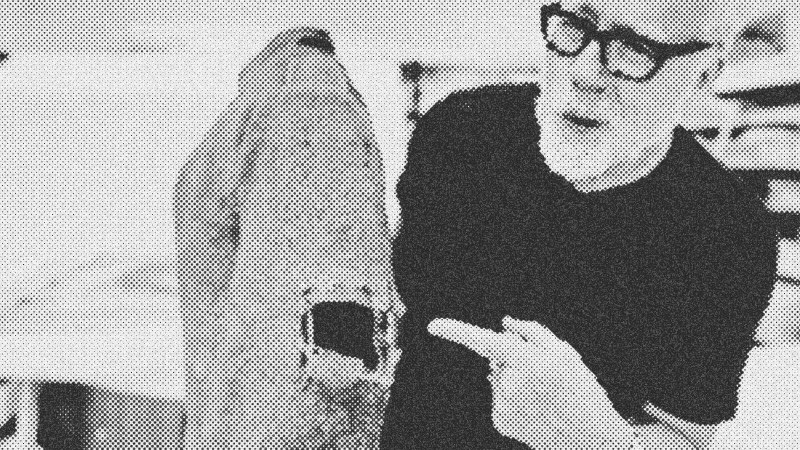
Ouch! Here's What Happened
WatchAdam Savage’s Tested // 16:00

Adam Savage’s Tested is a content platform and community playground for makers and curious minds. On Tested.com, the highly- engaged Tested YouTube channel, and at conventions and events, dynamic makers share ideas and inspire each other to build their obsessions. Led by Adam Savage, the Tested team explores the intersection of science, popular culture, and emerging technology, showing how we are all makers. Adam also takes viewers behind the scenes of films, TV shows, theater, and museums, shining a spotlight on the craftspeople and artists who make the magic we all enjoy. Tested is also: Norman Chan, Joey Fameli, Josh Self, Kristen Lomasney and Thomas Crenshaw.