The Precision Toolkit: Engineering Fossil Preparation with Adam Savage
Beyond the Toothbrush: Micro-Excavation Hardware
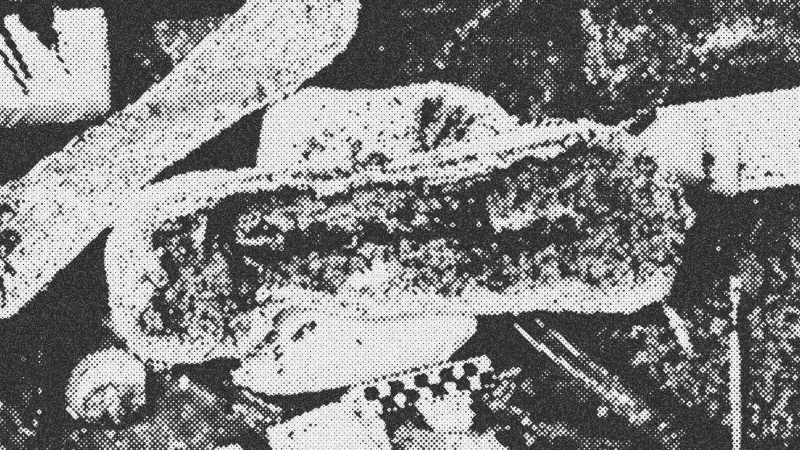
Most people imagine paleontology as a slow crawl with a dental pick. While Verne Lee confirms that grain-by-grain work is often the reality, the modern paleo lab is actually a sophisticated workshop. It's about material science and mechanical advantage. When dealing with delicate mammal specimens from the Gobi Desert, preparators utilize pin vices and carbide-tipped sharps. For ultra-fine work, they even turn to organic hardware: porcupine quills. They are "stupid sharp" and possess a specific hardness that allows for micro-flaking without marring the fossil surface. It’s the ultimate lesson in picking the right tool for the specific hardness of your workpiece.
Chemical Reinforcement and Internal Consolidation
Fossils are often more porous and fragile than the rock surrounding them. To prevent a specimen from crumbling during the vibration of excavation, the American Museum of Natural History uses a clever chemical hack. They dissolve plastic beads in acetone to create a low-viscosity consolidant. This isn't a surface glue; it’s a deep-penetrating stabilizer. Because bone is porous, the liquid wicks into the internal structure. As the acetone evaporates, the plastic crystallizes, reinforcing the bone from the inside out. This reversible process ensures that the specimen remains rigid enough to survive mechanical cleaning while preserving its integrity for future research.
Micro-Jackhammers and Pneumatic Precision
When the matrix shifts from soft clay to dense volcanic rock, hand tools fail. Preparators then scale up to pneumatic power. Tools like the Microjack 4 function as miniature jackhammers powered by compressed air. These devices allow for efficient material removal in hard matrices, such as the lava blocks found in the Andes of Chile. However, power comes with a trade-off in tactile feedback. In high-stakes zones where the bone and rock interface is blurred, preparators often revert to manual tools to feel the difference in density and avoid accidental damage.
The Revolution of the Diamond Wire Saw
For large-scale reduction, the standout technology is the Diamond Wire Saw. Unlike a traditional spinning disc saw that uses brute force and high speed, the wire saw is a slow-motion precision instrument. It uses a 0.6mm wire loop—similar to a cassette tape mechanism—to make cuts with a microscopic kerf. This minimizes material loss and significantly reduces the risk of fractures. Roger Benson explains that its gravity-driven table allows for hands-off, consistent pressure, eliminating human error during long, tedious cuts through volcanic rock. It’s a masterclass in slow, controlled engineering for high-stakes preservation.
- Adam Savage
- 10%· people
- American Museum of Natural History
- 10%· companies
- Andes
- 10%· places
- Chile
- 10%· places
- Diamond Wire Saw
- 10%· products
- Other topics
- 50%
Adam Savage Gets Tool Envy at AMNH's Fossil Lab!
WatchAdam Savage’s Tested // 18:05

Adam Savage’s Tested is a content platform and community playground for makers and curious minds. On Tested.com, the highly- engaged Tested YouTube channel, and at conventions and events, dynamic makers share ideas and inspire each other to build their obsessions. Led by Adam Savage, the Tested team explores the intersection of science, popular culture, and emerging technology, showing how we are all makers. Adam also takes viewers behind the scenes of films, TV shows, theater, and museums, shining a spotlight on the craftspeople and artists who make the magic we all enjoy. Tested is also: Norman Chan, Joey Fameli, Josh Self, Kristen Lomasney and Thomas Crenshaw.