Beyond the Mesh: The Rise of Gaussian Splatting in Digital Reconstruction
The Shift from Polygons to Splats
Traditional 3D modeling relies on the geometry of points connected by lines to form triangles, or polygons. For decades, this has been the bedrock of digital art, yet it often falls short when capturing the organic complexities of reality. Gaussian Splatting represents a fundamental departure from this methodology. Instead of rigid meshes, it uses millions of volumetric points, each carrying data regarding position, color, transparency, and a specific direction. This technique evolved from Neural Radiance Fields, offering a more efficient way to render high-fidelity, real-time assets that feel alive.
The Anatomy of a Gaussian Curve
At its core, a "splat" is a 3D representation of a Gaussian distribution—essentially a bell curve translated into three-dimensional space. Unlike a hard-edged pixel or a solid polygon, a splat has a concentrated core that softly blends outward into transparency. When millions of these translucent ellipsoids interlock, they create a cohesive, photographic image. This blending allows for the recreation of phenomena that traditionally baffle photogrammetry, such as the fine strands of hair, the translucent glint of a glass dome, or the soft specularity of metallic fabrics.
Performance and Real-World Optimization
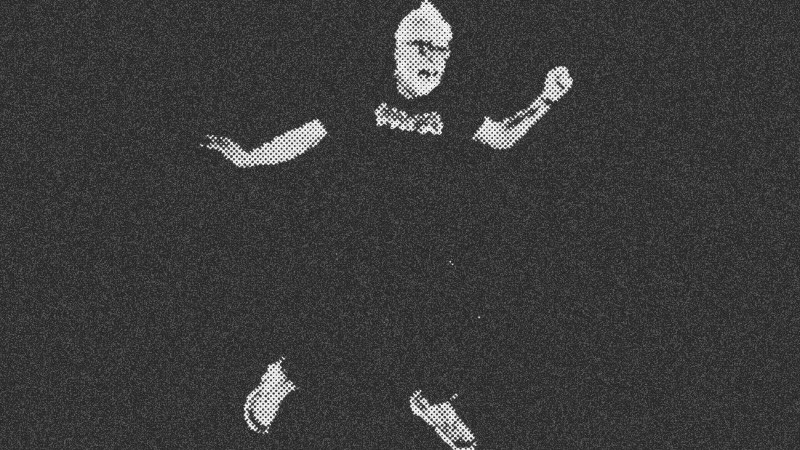
One of the most striking benefits of this technology is its lightweight nature. A high-resolution asset composed of three million polygons would likely crash a standard web browser or struggle on a home computer. Conversely, a Gaussian Splatting asset with the same point count runs smoothly at 60 frames per second in a browser environment. This accessibility changes the game for production teams. Chris Everrit of FBFX notes that this allows remote directors to inspect high-fidelity costumes or set scans without needing a high-end workstation. The lighting is "baked" into the splat, capturing reflections and highlights exactly as they appeared during the capture, which serves as a perfect reference for visual effects teams.
Transforming the Production Pipeline
The implications for film sets and cultural heritage are massive. Using drone footage, technicians can generate photorealistic environments of cathedrals or remote film locations in a fraction of the time required by traditional methods. Perhaps the most revolutionary application is in camera tracking. Since the splat is built from video frames, the 3D scene inherently contains the camera's path. This bypasses the tedious process of manual match-moving, allowing VFX artists to drop digital assets into a perfectly tracked 3D environment that matches the original footage one-to-one. As Adam Savage observed during his scan at the FBFX capture department, the ability to move during the process without ruining the data opens doors for capturing dynamic elements like fire or cloth in motion.
- FBFX
- 22%· companies
- Gaussian Splatting
- 22%· products
- Adam Savage
- 11%· people
- Apple
- 11%· companies
- Chris Everrit
- 11%· people
- Other topics
- 22%
Adam Savage Learns About Gaussian Splats!
WatchAdam Savage’s Tested // 17:34

Adam Savage’s Tested is a content platform and community playground for makers and curious minds. On Tested.com, the highly- engaged Tested YouTube channel, and at conventions and events, dynamic makers share ideas and inspire each other to build their obsessions. Led by Adam Savage, the Tested team explores the intersection of science, popular culture, and emerging technology, showing how we are all makers. Adam also takes viewers behind the scenes of films, TV shows, theater, and museums, shining a spotlight on the craftspeople and artists who make the magic we all enjoy. Tested is also: Norman Chan, Joey Fameli, Josh Self, Kristen Lomasney and Thomas Crenshaw.