Cirque du Soleil engineers 12,000-pound transforming cube for Echo show
Engineering the centerpiece of Echo
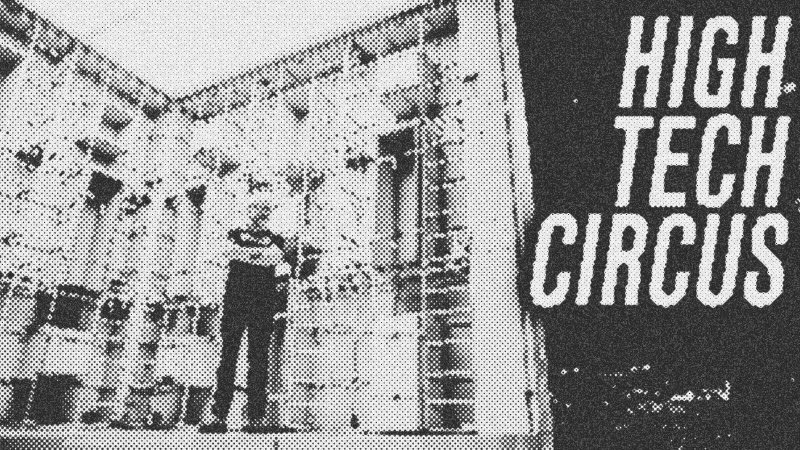
There is a special kind of magic in seeing a 30-foot, 12-ton structure vanish or transform in the blink of an eye. In Cirque du Soleil’s production Echo, that magic is powered by The Cube, a massive mechanical set piece that serves as the show’s central character. This isn't just a static box; it is a complex assembly of carbon fiber, polyurethane foam, and heavy machinery designed to be deconstructed and reconfigured while acrobats perform on its moving surfaces. For a hardware enthusiast, the sheer scale of the engineering—developed over years of iteration—is a masterclass in combining high-load mechanical capacity with the delicate precision of theatrical performance.
Modular construction and the four-truck footprint
Transporting a structure this size requires a logistical strategy that mirrors the assembly of a high-end server rack, just on a gargantuan scale. Ali Bowman, head of carpentry and props, notes that The Cube occupies four full trucks on its own. The design is modular by necessity: one truck carries the sides (the containers), another the base, a third the top, and the fourth contains the floors and facings. On-site, it takes roughly three days to move from arrival to full operational status. The base is established first, setting the spatial parameters for the entire Big Top. Because the centerpiece weighs 12,000 pounds and contains the primary electronics hub, its range of motion dictates the positioning of every other element in the show.
Powering rotation through the center hub
At the heart of the structure sits a sophisticated rotation system. Unlike a standard vehicle, The Cube stays stationary at its core while the top section spins. Riley Naughton, head of automation, explains that two large motors and gearboxes drive the rotation along an outside ring. To handle the massive electrical load required for interior lighting and wall-moving winches, the team uses a custom-built slip ring commutator. This component allows for the transfer of 100 amps of power and data from under the stage into a rotating structure without tangling cables. This is hardware optimization at its most extreme—managing high-current power distribution while maintaining 360 degrees of unrestrained rotation.
Precision tracking with optical encoders and QR codes
Precision in a 12-ton moving object isn't just about smooth motors; it's about feedback loops. The automation team utilizes dual-layered positioning systems to ensure The Cube is exactly where it needs to be. While the motors have internal encoders, the team also relies on an optical encoder that reads QR code fiducials placed along the track. This provides a resolution that allows the system to detect its position within a single degree of arc. This data isn't just for the crew; it is shared in real-time with the visuals team, who use the coordinates for dynamic projection mapping. The result is a structure that can be perfectly tracked by projectors even as it spins and traverses the stage, effectively turning a physical object into a 3D digital canvas.
Safety protocols and the human element
Operating such a heavy piece of machinery in close proximity to performers requires rigid safety interlocks. When the walls are being built or unbuilt, the winches are capped at a maximum speed of 3.5 inches per second. As the wall sections pass through critical clearances, the speed automatically throttles down to just 10%—less than half an inch per second. These technical safeguards are bolstered by a culture of "clears," where stage management and carpentry staff (some of whom are stationed inside the structure during the show) provide verbal confirmation before any high-risk movement occurs. This synergy between automated safety rules and human oversight ensures that the complexity of the machine never compromises the safety of the artists.
- The Cube
- 36%· products
- Adam Savage
- 9%· people
- Ali Bowman
- 9%· people
- Cirque du Soleil
- 9%· companies
- Echo
- 9%· products
- Other topics
- 27%
Adam Savage Steps Inside The CUBE
WatchAdam Savage’s Tested // 23:05

Adam Savage’s Tested is a content platform and community playground for makers and curious minds. On Tested.com, the highly- engaged Tested YouTube channel, and at conventions and events, dynamic makers share ideas and inspire each other to build their obsessions. Led by Adam Savage, the Tested team explores the intersection of science, popular culture, and emerging technology, showing how we are all makers. Adam also takes viewers behind the scenes of films, TV shows, theater, and museums, shining a spotlight on the craftspeople and artists who make the magic we all enjoy. Tested is also: Norman Chan, Joey Fameli, Josh Self, Kristen Lomasney and Thomas Crenshaw.