Ray Mansfield uses multispectral imaging to reveal Dwight Eisenhower’s hidden resin
Cinema is meticulously crafted magic, but museum conservation is the science that preserves the real-world artifacts that inspire it. At the National Park Service, Ray Mansfield employs multispectral imaging to pull back the curtain on history, using wavelengths far beyond the visible spectrum to detect hidden inscriptions and chemical coatings.
Three radiation bands define the invisible
While we perceive the world in visible light, Mansfield focuses on three distinct bands: visible, ultraviolet (UV), and infrared (IR). Technically, UV and IR are forms of radiation rather than light. By isolating these bands using a standard DSLR camera and a series of specialized filters, conservators can see through layers of leather or detect the chemical signature of tree resins. The process is a technical dance of blocking visible light to allow specific radiation to hit the sensor, turning a simple camera into a forensic tool.
Uncovering Eisenhower’s hidden inscriptions
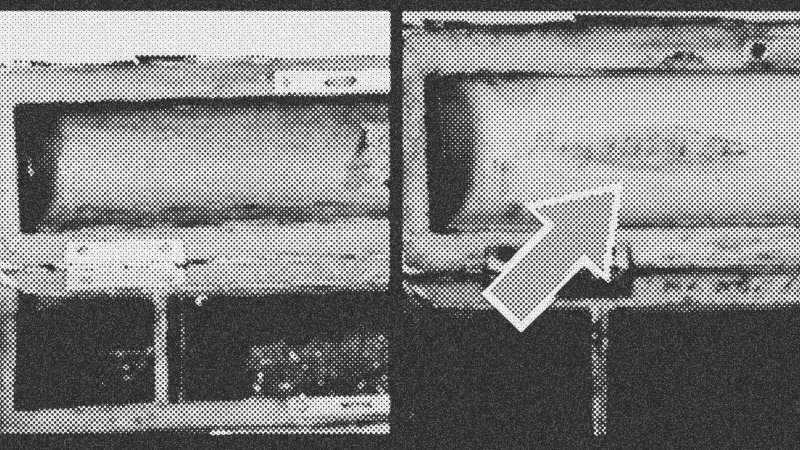
One of the most striking applications of this technology occurred during the treatment of a trunk belonging to Dwight D. Eisenhower. Visible light showed a clean surface, but UV imaging revealed a fluorescent, brushed-on tree resin. This discovery fundamentally altered the treatment plan; without this data, conservators might have inadvertently stripped away an original protective coating. Similarly, IR imaging on a leather writing desk surfaced a previously invisible inscription dated "May 30," providing a narrative breadcrumb that would otherwise remain lost to time.
The technical rigor of the invisible shot
Capturing these images requires a strict protocol. Because the camera cannot focus without visible light, Mansfield must lock the focus and settings in a well-lit environment before introducing filters that render the viewfinder pitch black. The resulting IR images are often processed into high-contrast black and white, a technique that allows faint "ghost" writing to emerge from the background noise. It is a meticulous process, reserved for objects where a secret is suspected, proving that in conservation—as in filmmaking—the most important details are often the ones you have to look for.
- Adam Savage
- 20%· people
- Dwight D. Eisenhower
- 20%· people
- Multispectral Imaging
- 20%· products
- National Park Service
- 20%· companies
- Ray Mansfield
- 20%· people
How Multispectral Imaging Uncovers Museum Secrets
WatchAdam Savage’s Tested // 9:48

Adam Savage’s Tested is a content platform and community playground for makers and curious minds. On Tested.com, the highly- engaged Tested YouTube channel, and at conventions and events, dynamic makers share ideas and inspire each other to build their obsessions. Led by Adam Savage, the Tested team explores the intersection of science, popular culture, and emerging technology, showing how we are all makers. Adam also takes viewers behind the scenes of films, TV shows, theater, and museums, shining a spotlight on the craftspeople and artists who make the magic we all enjoy. Tested is also: Norman Chan, Joey Fameli, Josh Self, Kristen Lomasney and Thomas Crenshaw.