Meta and Even Realities smart glasses aren't ready for your face
The awkward rebirth of heads-up displays
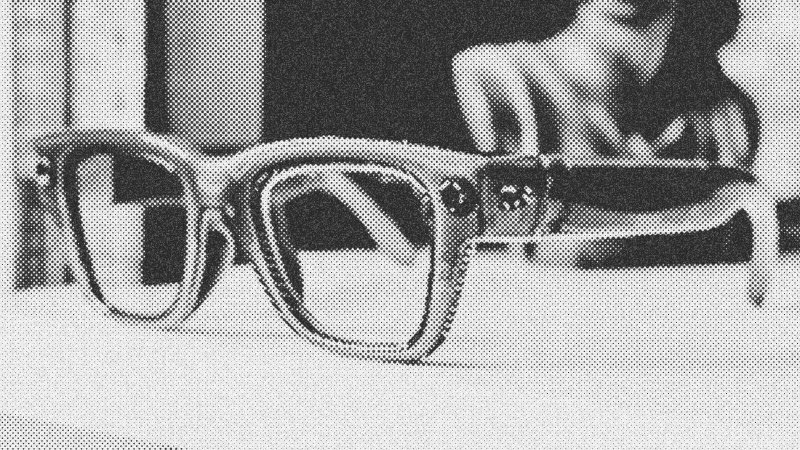
More than a decade after Google Glass became a cautionary tale of wearable tech, the industry is trying again. We aren't talking about full-blown augmented reality like the Apple Vision Pro or tethered display extensions like the Xreal Air. Instead, the Meta Ray-Ban Display and Even Realities G2 represent a new breed of "smart glasses" that prioritize looking like normal eyewear while cramming a heads-up display (HUD) into the lenses.
Both devices are high-tech tech demos rather than consumer-ready products. The Meta version sits at $800, including a neural wristband, while the G2 comes in at $600. Despite the price tags, neither delivers a seamless experience. They serve as experimental flags in the ground, showing us what giants like Apple and Google might be plotting as they prepare their own entries into the wearable market.
Waveguides and the battle of eye glow
The most critical component here is the waveguide technology used to project images onto transparent lenses. The two companies have taken radically different paths. The Even Realities G2 uses a standard waveguide system that produces significant "eye glow." This is a distracting byproduct where people looking at you can see a shimmering green or blue rectangle on the lens. It makes you look like a cyborg, which defeats the purpose of wearing subtle, everyday glasses.
Meta, conversely, utilized Lumis reflective geometric waveguides. These are more expensive and harder to manufacture, featuring tiny slanted mirrors etched into the glass. While they are monocular—meaning you only see the HUD in your right eye—they virtually eliminate eye glow in normal lighting. However, that monocular setup is a recipe for eye strain. Focusing on text with only one eye for an extended period creates a physical fatigue that the G2 avoids by offering a binocular, pre-calibrated display that supports depth and convergence.
Neural wristbands outclass smart rings
Interaction is where Meta has found its "ace up the sleeve." The Meta Neural Wristband detects electrical signals from your brain to your hand muscles, allowing for micro-gestures. You can swipe through menus or tap your fingers to select items without even having your hand in sight of the glasses. It even supports air-handwriting for responding to WhatsApp messages. It is responsive, accurate, and avoids the fatigue of reaching for your temple or looking like you're fidgeting with your face.
Even Realities attempted a similar companion device with the R1 Health Ring. For an extra $250, you get a bulky smart ring that includes a one-axis touchpad. It’s significantly more limited than Meta's neural band and adds another thing to charge. While it handles basic health tracking, it feels like a clunky solution to a problem that Meta solved with much more sophisticated engineering.
The camera controversy and weight problem
The most interesting philosophical divide is the inclusion of a camera. The Meta Ray-Ban Display keeps the camera for AI input and quick snaps, resulting in a frame that weighs a hefty 69 grams. The Even Realities G2 ditches the camera entirely, focusing on a lightweight 38-gram design. For a device meant to be worn all day as prescription glasses, weight is everything.
After two hours, the Meta frames feel heavy on the nose. Once the battery dies—which happens in as little as three to four hours of active use—you’re just wearing heavy, expensive sunglasses. The G2’s lack of a camera makes it feel like a normal pair of glasses and allows for a battery life that comfortably lasts a full day. Most users will find that a smartphone camera is always better for capturing memories anyway; using smart glasses for photography feels like a niche use case that isn't worth the ergonomic penalty.
Final verdict on the current state of smart eyewear
Neither of these devices earns a recommendation for the average consumer. They are expensive experiments that still feel like development platforms. The software on both is surprisingly limited. On the Meta side, you're locked into first-party apps like Instagram and WhatsApp, while the G2's third-party "apps" are actually just processes running on your phone with low refresh rates.
A perfect pair of glasses would combine the binocular comfort of the G2 with the full-color display and neural input of the Meta Ray-Bans—while remaining under 50 grams. Until a company can solve the physics of battery life versus weight without sacrificing a clear, binocular, color HUD, these will remain toys for early adopters rather than the future of computing.
- Meta
- 19%· companies
- Even Realities G2
- 14%· products
- Meta Ray-Ban Display
- 10%· products
- 10%· products
- Apple
- 5%· companies
- Other topics
- 43%
The Flaw with Smart Glasses Design
WatchAdam Savage’s Tested // 30:30

Adam Savage’s Tested is a content platform and community playground for makers and curious minds. On Tested.com, the highly- engaged Tested YouTube channel, and at conventions and events, dynamic makers share ideas and inspire each other to build their obsessions. Led by Adam Savage, the Tested team explores the intersection of science, popular culture, and emerging technology, showing how we are all makers. Adam also takes viewers behind the scenes of films, TV shows, theater, and museums, shining a spotlight on the craftspeople and artists who make the magic we all enjoy. Tested is also: Norman Chan, Joey Fameli, Josh Self, Kristen Lomasney and Thomas Crenshaw.