How to Build Pneumatic Dunk Boots: A High-Performance DIY Stilt Guide
Engineering Verticality from Hardware Store Basics
Forget the fancy specs sheet; it's what you build with your own hands that truly screams performance. To solve the problem of a lackluster vertical jump, we aren't just buying better sneakers—we're engineering a solution from the ground up. The foundation of this build relies on a
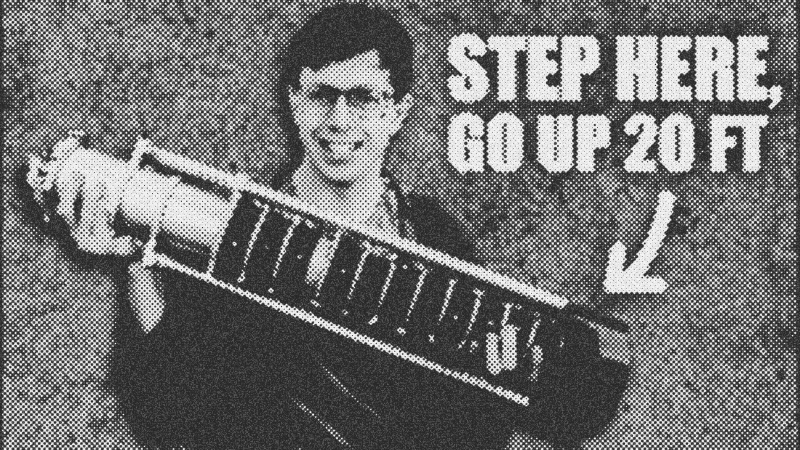
Tools and Materials Needed
To execute this build, you need more than a standard toolbox. You will require a water jet or high-end CNC machine for custom metal fittings, a 3D printer for seal housings, and a reliable source of compressed air. For materials, source a high-quality telescoping ladder, industrial
Creating Airtight Seals and Moving Joints
The biggest hurdle in this project is the "just make it airtight" fallacy. Every telescoping segment represents a potential leak point. You must design custom 3D-printed collars to hold
Managing Kinetic Force and Safety Retraints
Once pressurized, these boots become literal pipe bombs under your feet. The force generated as the tubes expand can reach 1,000 lbs, which is enough to blow the ladder segments apart if they aren't restrained. Do not rely on the stock plastic caps. Instead, manufacture steel linkage chains that connect each segment to the next, limiting their travel mechanically. To prevent the boots from "shooting" into your face if you lose balance, integrate a winch system or a reverse auto-belay to control the rate of ascent. Without these restraints, the kinetic energy is uncontrolled and extremely hazardous.
Testing, Refinement, and the Final Ascent
Before you try to balance on these like a circus performer, build a vertical guide rail (preferably steel). This allows you to test the pneumatic lift without worrying about side-to-side stability. Once the lift is reliable, transition to balancing by adding wide, size-11 base plates to mimic human feet. This adds crucial front-to-back stability. The final result is a machine capable of lifting a human to a 16-foot dunking height. It is loud, scary, and mechanically complex, but the satisfaction of standing 12 feet in the air on a DIY pneumatic system is unmatched.