The Realistic Guide to Executing a Reliable Engine Swap
Navigating the Engine Swap Challenge
Engine swaps often look like magic on the internet. You see a tired chassis enter a garage and a fire-breathing monster emerge ten minutes of edited footage later. The reality is far grittier. Performing a swap, even a "normal" one like dropping a 07K Engine into a 1998 Volkswagen Golf, is a test of patience and technical endurance. This guide focuses on achieving two primary goals: reliability and a significant power bump. While the allure of 1,000-horsepower builds is strong, the average enthusiast gains more from a reliable 200-horsepower daily driver that actually starts every morning.
Essential Tools and Preparation
Before you turn a single bolt on a car like 1998 Volkswagen Golf, you must audit your resources. You need more than just a socket set. A project of this magnitude requires an engine hoist, a sturdy engine stand, and ideally, a vehicle lift. If you are working in a home garage, ensure you have high-quality jack stands and a level surface. Beyond the heavy metal, you will need specialized equipment like a Power Probe for electrical diagnostics and a vapor honer if you plan on refreshing used components like a flywheel.
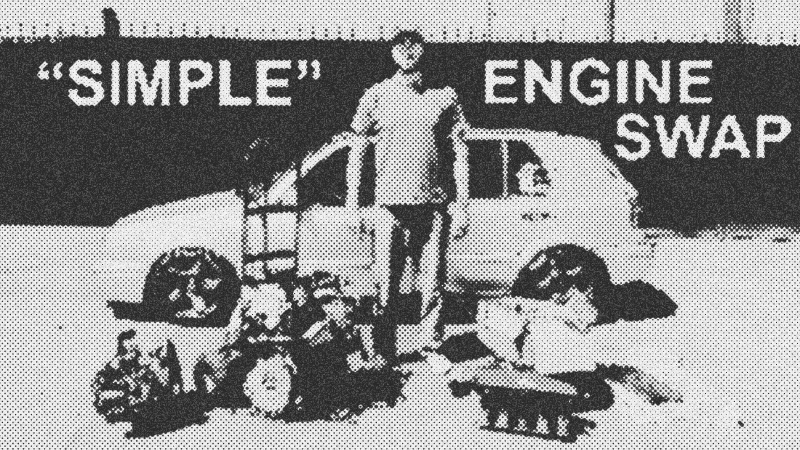
Materials extend beyond the engine itself. You must source compatible mounts, like those from Eurowise, to ensure the engine sits correctly without custom fabrication. You should also have a suite of fresh gaskets, a billet thermostat housing to replace fragile plastic factory units, and a plan for the exhaust, such as a custom system from Borla.
Phase One: Extraction and Inspection
The first step is clearing the canvas. Removing the stock engine involves disconnecting the battery, draining fluids, and unplugging the chassis harness. Once the old motor is out, you face the first major hurdle: inspecting your new power plant. Junkyard engines are notorious for hidden issues. You might find rusty water in the cylinders or shoddy sealant on the timing cover. If the engine is seized or compromised, stop immediately. It is far better to exchange a bad motor at the junkyard than to spend forty hours installing a paperweight. Check everything before it enters the engine bay.
Phase Two: Preparing the New Power Plant
Working on an engine while it sits on a stand is a luxury you should not waste. This is the time to address known failure points. Replace the oil cooler and the water pump. If your donor engine came from an automatic car but you are running a manual, you must swap the flywheel and pressure plate. During this phase, you can also install performance upgrades like an Integrated Engineering intake manifold. These components are difficult to reach once the engine is wedged against the firewall, so do the work now to save your knuckles later.
Phase Three: The Complexity of Wiring and Shifting
Mechanical installation—dropping the engine onto its three mounting points—is often the easiest part. The real battle is fought with wires and cables. When swapping a newer engine into an older chassis, you must separate the engine harness from the chassis harness. This involves tedious tracing and cutting of wires for sensors and spark plugs while preserving the circuits for your headlights and interior electronics.
Parallel to wiring is the shift linkage. High-end components like a CAE Shifter offer a tactile, mechanical feel but require precise cable lengths. If your cables are too short, you may have to pivot back to a stock shifter from a donor car like a Volkswagen Golf Mk4. These setbacks are not failures; they are the standard tax of automotive customization.
Tips and Troubleshooting
Expect the "last 20%" of the project to take 80% of your time. If the car won't fire, start with the basics: battery voltage and fuel pump prime. Often, the issue is a simple broken wire in the ignition circuit. Using a Power Probe to jump the starter directly can help determine if the engine is capable of running, narrowing your search to the wiring harness or alarm modules.
Avoid "scope creep." It is tempting to add "one more thing" while the car is apart, but every addition increases the chance of a project stalling for years. Keep the build simple and focus on getting the car roadworthy first.
Conclusion: The New Normal
Once the 07K Engine screams through a Borla exhaust, the headaches of the previous 72 hours fade. You have transformed a 100-horsepower economy car into a 200-horsepower sleeper that sounds like a vintage rally car. An engine swap is never truly "finished" in a weekend—there will always be trim pieces to secure and fluids to check—but the result is a machine that is uniquely yours, built with the help of friends and a healthy dose of realistic optimism.
- 07K Engine
- 13%· products
- 1998 Volkswagen Golf
- 13%· products
- Borla
- 13%· companies
- Power Probe
- 13%· products
- CAE Shifter
- 7%· products
- Other topics
- 40%
Doing a "Simple" Engine Swap in 48 Hours
WatchSpeeed // 30:19

Cars. Life. Technology. www.speeed.co Business Inquiries: [email protected] Other Inquiries: [email protected]