GM crushed the EV1 because it worked too well
Engineering triumphs meeting market failures
Innovation is a brutal business. In the garage, we respect a well-built engine even if the car it’s in is a total lemon. The history of technology mirrors this reality. Some of the most groundbreaking ideas ever conceived ended up in the scrap heap not because the engineering was flawed, but because the timing was off, the business model was broken, or the world simply wasn't ready to adapt. When you look under the hood of a failed project like the GM EV1 or the Apple Newton, you don't just see junk—you see the blueprints for the future we’re living in now. Understanding why these pioneers stalled is the only way to ensure the next build actually crosses the finish line.
The intentional sabotage of the first electric revolution
Long before Tesla dominated the highways, General Motors built a car that was genuinely ahead of its time: the GM EV1. This wasn't a golf cart; it was a serious piece of engineering with a dedicated fanbase. By 2003, later models featured nickel-metal hydride batteries that pushed the range to an impressive 140 miles—more than enough for the average commuter today, let alone twenty years ago. The car featured futuristic tech like keyless entry and ignition via a personal access code, a feature that still feels modern.
However, General Motors didn't just discontinue the program; they actively destroyed it. Despite lessees begging to buy their cars at the end of their terms, General Motors repossessed and crushed almost every single unit. The reasons were purely clinical and financial. Dealers hated the cars because EVs don't require the high-margin maintenance—oil changes, spark plugs, and exhaust work—that keeps service bays profitable. Furthermore, General Motors sold the battery patents to Texaco, an oil giant that used the intellectual property to block other manufacturers from developing similar technology. It was a masterclass in corporate survival at the expense of innovation.
Why the Apple Newton failed where the iPad soared
In 1993, Apple released the Apple Newton, the device that birthed the term "Personal Digital Assistant" (PDA). Under CEO John Sculley, Apple attempted to replace the paper day planner with a handheld touchscreen computer. It was a massive gamble on a future that hadn't arrived yet. The device featured handwriting recognition that was supposed to be its killer feature, but in practice, it was a glitchy mess that became a punchline in popular culture.
When Steve Jobs returned to Apple, he famously killed the Apple Newton. He hated the stylus—joking that if you see a stylus, you know they blew it—and he viewed the project as a distraction from the company's core mission. But the DNA of the Apple Newton didn't vanish. The concept of a mobile, touch-based productivity tool eventually evolved into the iPhone and the iPad. The Apple Newton failed because it was an awkward middle child: too big for a pocket, too small for real work, and burdened by a user interface that the hardware couldn't yet support.
Google Glass and the social cost of wearable tech
In 2012, Google co-founder Sergey Brin introduced Google Glass with a high-octane skydive stunt that promised a world of augmented reality. The hardware was impressive—a high-resolution display floating in your peripheral vision and a capable camera—but it lacked a clear purpose. Unlike the modern Ray-Ban Meta Smart Glasses, which disguise their tech as fashion, Google Glass looked like a prop from a low-budget sci-fi movie.
The failure here wasn't the circuit board; it was the social friction. Users were labeled "glassholes," and the device's ability to record at a moment's notice led to bans in bars and theaters. It was an invasive technology released before society had established the etiquette for it. Today, we see Meta succeeding with similar tech by stripping away the distracting display and focusing on AI integration and aesthetics. Google had the right engine, but they put it in a body that no one wanted to be seen in.
Virtual Boy and the isolation of early VR
Nintendo is usually the king of gaming ergonomics, but the Nintendo Virtual Boy was a rare total failure. Created by Gunpei Yokoi, the legend behind the Game Boy, the system was rushed to market to fill a gap in Nintendo's release schedule. The result was a monochrome red nightmare that caused headaches and required players to hunch over a table in total isolation.
In the garage, if you rush a build, you end up with a blown gasket. Nintendo rushed the Nintendo Virtual Boy, and it effectively ended Gunpei Yokoi's thirty-year career at the company. It was a "portable" system that wasn't portable and a "social" gaming machine that was inherently isolating. It took decades for the processing power and display technology of Meta and Sony to catch up to the vision Gunpei Yokoi originally had.
Innovation requires more than just good parts
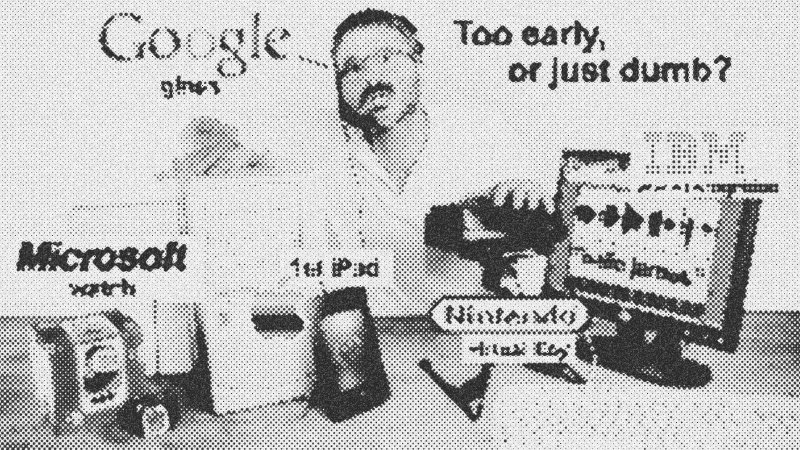
Precision under the hood only matters if the car is going somewhere people want to go. Whether it’s IBM ViaVoice predicting the rise of Siri or the Microsoft SPOT Watch setting the stage for the Apple Watch, failure is often just a delayed success. These products proved that being first is rarely as important as being right. As mechanics of progress, we have to appreciate the risk-takers who built the failures that taught us how to win. The next time you see a "bad" idea, look closer—you might just be looking at the future of the industry.
- Apple Newton
- 12%· products
- General Motors
- 10%· companies
- Apple
- 7%· companies
- Gunpei Yokoi
- 7%· people
- Nintendo
- 7%· companies
- Other topics
- 57%
Testing Technology That Was Ahead of Its Time
WatchSpeeed // 35:04

Cars. Life. Technology. www.speeed.co Business Inquiries: [email protected] Other Inquiries: [email protected]