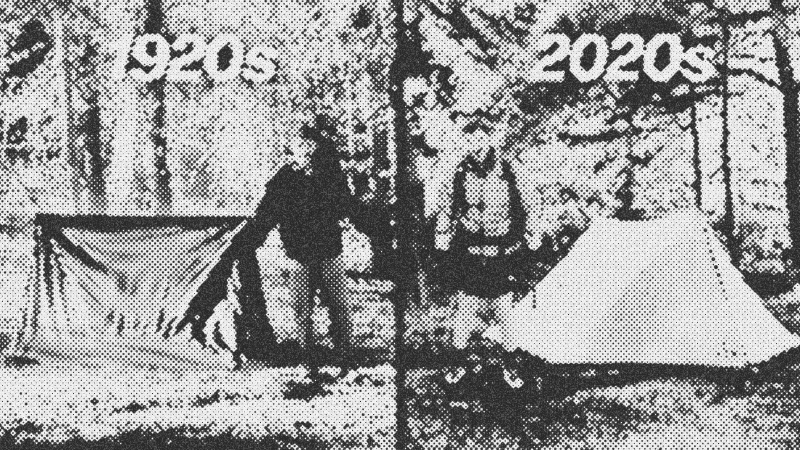
with gear from 1925 is less like a vacation and more like a historical reenactment of manual labor. In this era, outdoor recreation was a fringe concept. Most people heading into the backcountry were there for work, travel, or survival. The materials of the time reflect this grit: heavy wool, duck canvas, and thick leather. These aren't just fabrics; they are heavy burdens. A 100% wool
, a design dating back to 1882, serves as the primary load-bearer. Lacking any internal or external frame, these canvas sacks sit like dead weight against the spine. Every movement pulls the hiker backward or sideways, as there is no hip belt to distribute the 37-pound load. It is a masterclass in indifference toward human ergonomics. Without the aid of modern
or even paper maps, navigation relies on physical markers and intuition. The experience is visceral and exhausting, proving that a century ago, the outdoors was something to be endured, not enjoyed.
The Golden Age: 1975 and the Rise of Leisure
By 1975, the philosophy of the outdoors shifted from survival to recreation. Post-war innovation brought aerospace materials like aluminum and synthetic fibers like nylon into the consumer market. This is the era of the
aluminum frame backpack. The introduction of a frame is the single most significant jump in comfort across the entire century. By shifting the weight from the shoulders to the hips, these packs make a 30-plus pound load feel half as heavy as the canvas sacks of the twenties.
Technological advancements also transformed the campsite. Instead of sleeping on cold dirt inside a floorless canvas tent, hikers in 1975 utilized
nylon tents with integrated floors and lightweight aluminum poles. The introduction of closed-cell foam pads and goose-down sleeping bags meant that for the first time, a night in the woods didn't have to result in a night terror or hypothermia. While the gear still carries a certain "vintage" weight and the food is heavily processed and sugary, the 1970s represent the moment camping became accessible to the masses.
Peak Comfort: 2025 and the Ultralight Revolution
Modern gear from 2025 feels less like equipment and more like a superpower. The advancement from the seventies to today is characterized by the obsession with weight reduction and material science. Enter
packs and tents, this material allows for a total sleep system—tent, pad, and bag—that weighs a mere nine pounds. For comparison, the 1925 setup weighed 25 pounds.
Footwear has seen a similar radical transformation. Where the 1925 leather boots weighed 5.5 pounds and offered nothing but blisters, the 2025
rubber and ego-max foam. The physical toll of the trail is mitigated by technology, turning a grueling ascent into a pleasant stroll. Even the food has evolved; freeze-dried gourmet meals require only hot water from a
, providing high-calorie nutrition with zero prep time. It is a world where the friction between the human and the environment has been smoothed over by engineering.
Analysis: The Cost of Convenience
When we evaluate these three eras, the trade-offs become clear. The 1925 gear is miserable to use but incredibly sustainable. Every item—wool, wood, leather—is biodegradable. A hiker could bury their entire kit, and it would return to the earth in months. In contrast, the 2025 gear is a marvel of convenience but leaves a permanent footprint. The plastics, synthetic blends, and pressurized fuel canisters used today may last for centuries in a landfill. There is a profound irony in using indestructible synthetic materials to enjoy a fragile natural ecosystem.
However, the performance gap is too wide to ignore. The 1975 setup is the middle ground, offering a significant boost in comfort without the extreme price tag or specialized maintenance of modern ultralight gear. But if the goal is to actually enjoy the scenery rather than focusing on the pain in your shoulders, 2025 wins by a landslide. The psychological shift is perhaps the most notable: in 1925, you are a laborer; in 1975, you are a camper; in 2025, you are a guest of nature.
Final Verdict: Why the Gear Matters
It is tempting to say that the gear doesn't matter and that the spirit of the wilderness is the same regardless of what you carry. That sentiment is nice for a Hallmark card, but it is objectively false. Better gear equals a better experience. The advancements in
membranes and carbon fiber poles aren't just marketing gimmicks; they are tools that extend our ability to stay in the wild longer and go further.
We live in a unique moment where we have the luxury of choice. We can choose the nostalgia of wool and fire for a weekend to test our mettle, or we can choose the peak efficiency of a
shelter to push our physical limits. Ultimately, the evolution of camping gear over the last 100 years is a story of human ingenuity applied to the pursuit of joy. While we should revere the past and the toughness of those who came before us, there is no shame in being grateful for a sleeping pad that actually cushions your hips. Support your national parks, appreciate the tech, and get outside.