Mud, Blood, and Longbows: The Tactical Anatomy of Agincourt
The Shadow of St. Crispin
The Battle of Agincourt remains a defining moment in the English cultural psyche, a narrative of the underdog triumphant against impossible odds. When we look at the events of October 25, 1415, we are not merely examining a tactical engagement but a moment where the weight of personal leadership collided with the brutal realities of medieval warfare. The English force, led by Henry V, stood on a muddy field in northern France, hungry, disease-ridden, and facing a French host that vastly outnumbered them.
While William Shakespeare later immortalized the event through the "St. Crispin's Day Speech," the actual historical records—including the accounts of the King’s own chaplain—reveal a reality just as stirring. The English saw the French Army as a "countless swarm of locusts." They had marched 250 miles in 17 days, their supplies were exhausted, and the weather was a freezing mix of sleet and rain. To understand why this battle ended in a French catastrophe rather than an English annihilation, we must look beyond the poetry to the mud, the stakes, and the specific strategic choices made in the dead of night.
A Strategy Born of Desperation
Henry V was a commander of exceptional meticulousness. On the eve of the battle, while the French camp was loud with the sounds of dicing and boasting over future ransoms, Henry imposed a terrifying, ominous silence on his ranks. He wanted to prevent a night attack and keep the French guessing. While his men huddled under trees for shelter, Henry and his high command, including the seasoned Sir Thomas Erpingham, mapped the coordinates of the field.
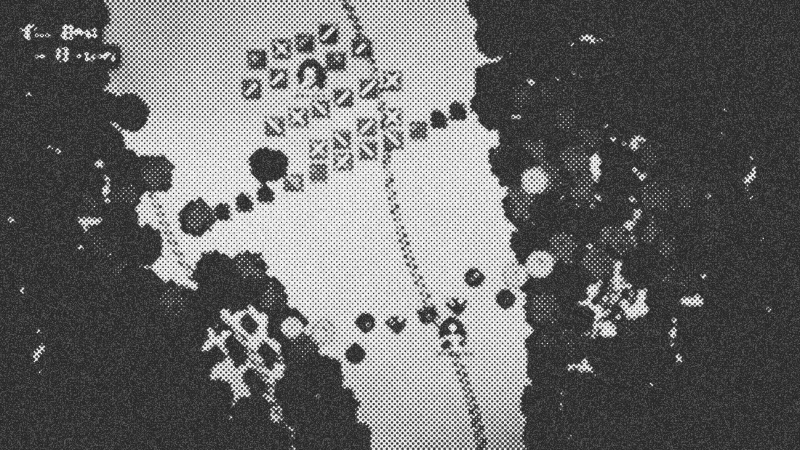
The terrain was the primary architect of the English victory. The field was bounded by dense woodland on both sides, which tapered toward the English position. This geographical funnel meant that as the massive French Army advanced, they would be forced to compress their lines, losing the advantage of their superior numbers. Furthermore, the soil was a thick, heavy clay. Recently plowed and saturated by days of rain, it had become a viscous quagmire. Henry, recognizing this, ordered his archers to prepare sharpened wooden stakes—a defensive innovation likely inspired by his traumatic experience at the Battle of Shrewsbury, where he had been struck in the face by an arrow.
The Archery Storm and the Funnel of Death
At approximately 10:00 AM, Henry made the high-stakes decision to advance his line. This was a moment of extreme peril; The Archers had to uproot their stakes and move forward, leaving them momentarily defenseless. However, the French, taken by surprise and lacking a unified command structure, failed to charge during this transition. Once the English were within range, Sir Thomas Erpingham signaled the opening volley.
In the first minute of the engagement, roughly 75,000 arrows rained down on the French lines. This was not a rain that killed every knight instantly—armor technology was too advanced for that—but it was a storm that panicked the horses and forced the French men-at-arms to keep their visors down, severely restricting their vision and breathing. As the French cavalry attempted to charge, they found themselves impaled on the English stakes or floundering in the churned-up clay. The failed cavalry charge had a secondary, more lethal effect: the retreating horses smashed back into the advancing French infantry, further disrupting their formations and turning the plowed field into a blood-soaked wreck.
The Physics of the Melee
When the French finally reached the English line, they were already exhausted. Clad in heavy steel plate, they had spent five to ten minutes struggling through knee-deep mud under a constant barrage of arrows. Because of the narrowing woods and the natural instinct to move away from the lethal arrow fire coming from the wings, the French bunched together in the center.
This created a lethal crush. Historical accounts describe a situation where the French were so tightly packed they could not even raise their arms to strike. Henry V, wearing a crown over his helmet to act as bait, stood in the center of this melee. The English line, though thin, held firm. As Frenchmen fell, they were not just killed by swords; many suffocated under the weight of their own comrades or drowned in the liquid mud. Seeing the French immobilized, the English archers dropped their bows, drew mallets and daggers, and began a systematic slaughter, targeting the eye slits and neck gaps of the fallen knights. It was no longer a battle; it was a cull.
The Controversial Order
As the English realized they had broken the flower of French chivalry, a final crisis emerged. Reports reached Henry that the French were rallying and that his baggage train was under attack. Fearing he was about to be surrounded by a second wave while his men were busy guarding thousands of prisoners, Henry issued the most controversial order of his reign: the execution of the captives.
His men were reluctant, both for moral reasons and because a dead prisoner meant a lost ransom. Yet, Henry was a man of cold, martial pragmatism. He believed that if the prisoners rose up while a new French attack commenced, his army would be obliterated. Most of the high-ranking French nobility had already been captured or killed by this point. The irony, as later discovered, was that the "rally" was a false alarm, and the attack on the baggage train was merely local peasants looting the royal treasures, including a piece of the True Cross.
Legacy of the Little Gray Horse
The Battle of Agincourt was won not just by the longbow, but by a combination of French hubris, terrible weather, and Henry’s ability to fuse Christian humility with absolute ruthlessness. He famously rode a small gray horse rather than a massive charger, a gesture of humility before God, yet he presided over one of the most brutal slaughters in medieval history. The French losses were catastrophic, with thousands of knights dead compared to a few hundred English.
This victory didn't just secure a piece of territory; it validated Henry’s claim to the French throne in the eyes of his contemporaries. It was, as he believed, a divine judgment. For the French, it was the beginning of a long period of internal collapse and soul-searching. For the English, it became the benchmark of national identity—the idea that a "happy few" could, through discipline and grit, reshape the map of Europe.
- Henry V
- 20%· people
- Battle of Agincourt
- 13%· events
- French Army
- 13%· organizations
- Sir Thomas Erpingham
- 13%· people
- Anne Curry
- 7%· people
- Other topics
- 33%
6,000 vs 30,000 - The Day Knights Met Longbows
WatchThe Rest Is History // 51:30

Take a deep dive into History’s biggest moments with Tom Holland & Dominic Sandbrook. Explore the stories of History’s most brutal rulers, deadly battles, and world-changing events. From the rise and fall of the Roman Empire, the Nazi conquest of Europe, and Hitler’s evil master plan for world domination, to the French Revolution, the sinking of the Titanic, or the Norman Conquest of England in 1066, Tom and Dominic bring the past to life with gripping storytelling and expert analysis, as they unpack the high-drama moments that shaped our world.