Collision of Worlds: The Massacre at Cajamarca
The year 1532 marks a pivot point in the story of human civilization. In the rugged highlands of the Andes, two forces—one an expansive indigenous power, the other a desperate band of European opportunists—converged on a path that would change the trajectory of the Americas forever. Francisco Pizarro, a battle-hardened and illiterate explorer in his early fifties, led a meager company of 168 Spaniards into the heart of the Inca Empire. They were not a professional army but a collection of artisans, merchants, and low-born seekers of fortune from the sun-drenched plains of Extremadura. Facing them was Atahualpa, the Sapa Inca, a man who had just emerged victorious from a grueling civil war against his brother Huascar and sat at the head of a battle-tested army numbering 80,000 warriors. The atmosphere in the town of Cajamarca was thick with a tension that only deepens when one realizes the staggering asymmetrical nature of this encounter.
The Spanish Gambit and the Incan Civil War
Pizarro and his brothers, Hernando Pizarro and Gonzalo Pizarro, alongside the dashing horseman Hernando de Soto, understood they were walking a razor's edge. They had witnessed the ravages of smallpox and the internal fractures of the empire firsthand as they marched inland from the coast. To Pizarro, the civil war between Atahualpa and Huascar was not a tragedy to be mourned but a door to be kicked open. He sought to emulate the success of his cousin, Hernan Cortes, by employing a decapitation strategy: capturing the living god at the center of the empire to paralyze the state. This wasn't just mindless aggression; it was a calculated, opportunistic militarism born of the Spanish experience in the Caribbean and Mexico. They founded a base at San Miguel de Tangarará to establish a legal veneer for their governorship, essentially claiming the land for King Charles V before even setting eyes on its ruler.
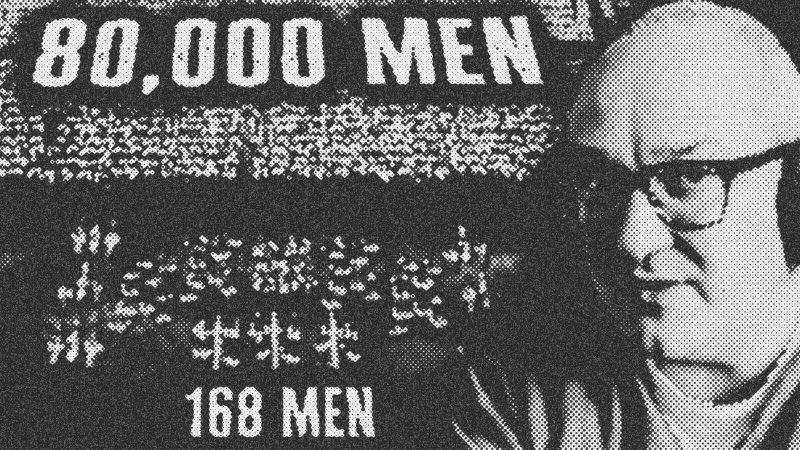
While the Spaniards trudged through the freezing mountain passes 13,000 feet above sea level, Atahualpa remained curiously unconcerned. He was recovering from the war at the hot springs of Pultumarca, now known as the Baths of the Inca. His spies, including a man the Spanish called Apoo, reported that these strangers were a disorganized rabble. Atahualpa viewed them through the lens of political pragmatism rather than religious awe. He didn't see gods; he saw potential mercenaries or curiosities to be harvested for their technology. He coveted their ability to forge steel and their mastery of the terrifying animals they rode. He allowed them to snake through the mountain roads where they were most vulnerable, confident that 168 men could never pose a threat to his thousands. It was a fatal miscalculation of European intent and the sheer lethality of their steel and horses.
A Meeting of Steel and Majesty
When the Spaniards finally descended into the valley of Cajamarca on November 15, they were greeted by a sight that chilled their blood: tens of thousands of white tents covering the hillsides like a star-studded sky. The town itself was deserted, adding a ghostly silence to the psychological pressure. Pizarro immediately dispatched De Soto and Hernando Pizarro to the Inca's camp. This first meeting was a study in theatricality and nerves. Atahualpa sat on a low stool, surrounded by his court, refusing even to look at the Spaniards. He maintained a mask of absolute indifference, even as De Soto performed a high-stakes riding demonstration, bringing his horse so close that the animal's breath stirred the tassel of the Inca's crown. Atahualpa did not flinch. When he finally spoke, it was with the cold fury of a man who knew he held all the cards. He demanded that the Spaniards return everything they had stolen and agreed to meet Pizarro in the town square the following day.
That night, sleep was a stranger to the Spanish camp. While the Inca's army celebrated the end of a ritual fast, the Spaniards prepared for a massacre. They hid their horses and infantry inside the long, low stone buildings known as kanchas that lined the central square. Pizarro, realizing they were surrounded and outnumbered nearly five hundred to one, saw no path to survival except through a sudden, violent strike. He exhorted his men, telling them that every man was now a knight in the service of God and the King. They greased their armor, tied bells to their horses' bridles to amplify the noise of a charge, and waited for the dawn with the desperate focus of the condemned.
The Requirement and the Rupture
The following afternoon, November 16, Atahualpa entered Cajamarca with a massive retinue. In a display of supreme confidence, he ordered his men to leave their heavy weapons behind. He was carried on a litter lined with parrot feathers and gold plates, held aloft by eighty noblemen in rich blue livery. Thousands of Incas filled the square, singing and sweeping the path for their emperor. The trap was set, but the pretext was still needed. Out of the silence stepped the Dominican friar Vicente de Valverde, holding a cross and a breviary. He began to recite the "Requirement," a surreal legal document explaining the history of the world and demanding Atahualpa’s submission to the Pope and the Spanish Crown. To the Inca, this was gibberish. When handed the prayer book, an object he had never seen before, he struggled to open the clasp. When he finally did, seeing only marks on paper that did not speak to him, he threw it to the ground in contempt.
This was the signal. Valverde shouted that the "dogs" had rejected the word of God, and Pizarro gave the order. Pedro de Candia, an artilleryman from Crete, fired his falconets into the dense crowd from a raised platform. Trumpets blared, and the Spanish cavalry burst from the buildings, screaming their war cry, "Santiago!" The impact was psychological as much as physical. The Incas, never having seen horses in battle, were plunged into a state of total shock. The square became a slaughterhouse. People were crushed to death in the stampede to escape or cut down by the long steel swords of the horsemen. The Spanish accounts admit that not a single Incan soldier raised a hand in defense; they were paralyzed by the sensory overload of gunpowder, flashing steel, and the thunder of hooves.
The Captive God and the Bloody Aftermath
Pizarro himself led the assault on the litter. His goal was the emperor, alive. As his men hacked at the arms of the noblemen carrying the litter, more Incas rushed forward to take their places, supporting their ruler with their shoulders even as their hands were severed. Pizarro eventually grabbed Atahualpa’s arm, shielding him from a soldier’s blade and receiving a wound to his own hand in the process. The Sapa Inca was dragged from his throne and locked in the Temple of the Sun. In just two hours, the elite of the Inca Empire had been annihilated. Estimates suggest between two and eight thousand Incas lay dead in the square and the surrounding fields. The empire had not just been defeated; it had been decapitated.
The most surreal chapter of the day occurred that evening. Pizarro, the conqueror, invited Atahualpa, the captive, to dinner. They sat at a table together—a piece of furniture foreign to Incan culture—surrounded by the blood-caked Spanish survivors. Pizarro then ordered that the emperor sleep in his own quarters, side-by-side on mattresses. This proximity between the illiterate Spanish illegitimate son and the divine ruler of twelve million people is one of history’s most jarring images. Pizarro told Atahualpa not to be ashamed of his defeat, claiming it was the will of God, while the Inca sat in the silence of a man who had lost his world in the span of a single afternoon.
Reflection: The Cost of Misunderstanding
The massacre at Cajamarca serves as a grim lesson in the power of cultural blind spots. Atahualpa’s downfall was not a lack of courage or military might, but a failure of imagination. He could not conceive of a force that prioritized total destruction and the capture of a head of state over the traditional norms of Andean warfare and diplomacy. He believed his numbers provided absolute security, forgetting that the Spanish were playing by an entirely different set of rules—rules forged in the Reconquista and the bloody conquest of Mexico. Pizarro’s success was built on the back of “theatrical terror,” a strategy designed to shatter the morale of a population by targeting its sacred center.
We are left with a story of profound human tragedy and the ruthless efficiency of technological advantage. The ruins of Cajamarca whisper a warning about the fragility of even the mightiest structures when faced with an existential threat they do not understand. The encounter was not a battle of equals but a collision of two vastly different realities. While the Spaniards viewed their victory as divine providence, history reveals it as a combination of extreme luck, Incan internal division, and a brutal, singular focus on the mechanics of power that would soon dismantle one of the world's most sophisticated societies.
- Atahualpa
- 8%· people
- Baths of the Inca
- 8%· places
- Cajamarca
- 8%· places
- Francisco Pizarro
- 8%· people
- Gonzalo Pizarro
- 8%· people
- Other topics
- 62%
The Most Unbelievable Battle In All History | Fall of the Incas EP 2
WatchThe Rest Is History // 59:50

Take a deep dive into History’s biggest moments with Tom Holland & Dominic Sandbrook. Explore the stories of History’s most brutal rulers, deadly battles, and world-changing events. From the rise and fall of the Roman Empire, the Nazi conquest of Europe, and Hitler’s evil master plan for world domination, to the French Revolution, the sinking of the Titanic, or the Norman Conquest of England in 1066, Tom and Dominic bring the past to life with gripping storytelling and expert analysis, as they unpack the high-drama moments that shaped our world.