Nelson Mandela saves South Africa from civil war using a rugby jersey
The High-Stakes Theater of Ellis Park
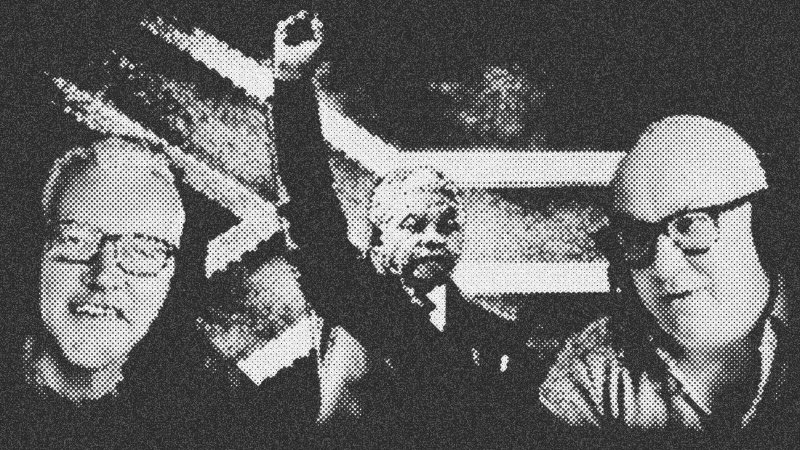
On June 24, 1995, the atmosphere inside Johannesburg's Ellis Park Stadium was thick with anxiety. Sixty-two thousand spectators packed the stands, while millions watched on televisions across the globe. The Rugby World Cup final pitted the home team, the Springboks, against the formidable All Blacks of New Zealand. On paper, it was a mismatch. The New Zealanders possessed Jonah Lomu, an athletic marvel who ran with the speed of a sprinter and the power of a locomotive. He had systematically demolished every defense in the tournament. Yet the true tension of the afternoon had nothing to do with sporting tactics. It lay in the fragile political destiny of South Africa itself.
Only a year prior, the brutal system of apartheid had officially ended. The nation had transitioned to majority rule, electing Nelson Mandela as its president. The scars of decades of state-sanctioned racial segregation remained deep and raw. Factions on both sides of the racial divide feared a descent into catastrophic civil war. Old hatreds did not vanish with an election. White citizens, particularly the Afrikaners, feared retribution. Black citizens demanded justice and the erasure of the symbols of their oppression. The stadium, historically a bastion of white Afrikaner nationalism, represented a political powder keg. If the crowd erupted in racial hostility, the dream of a unified "Rainbow Nation" would disintegrate before the eyes of the world.
How the Oval Ball Became a Weapon of Apartheid
To understand why a rugby match carried such existential weight, one must examine the deep cultural roots of the sport in the southern tip of the African continent. Introduced by British colonizers, rugby was rapidly adopted and culturally colonized by the Afrikaners. These descendants of Dutch Calvinists and French Huguenots constructed a powerful founding myth. They viewed themselves as a chosen people led by God into a promised land, drawing direct parallels to the biblical Israelites. When British imperial expansion pushed them into the interior during the Great Trek, this sense of divine covenant only hardened.
In 1948, the Afrikaner-dominated National Party came to power, instituting the policy of apartheid, which translates literally to "separateness." White minority rule was enshrined not merely as state policy, but as the expression of divine will. Every facet of life, from residential zones to marriage laws and educational opportunities, was strictly segregated by skin color. The black majority was relegated to a disenfranchised servant class.
In this regime, rugby served as a physical metaphor for Afrikaner supremacy. The Springboks built a global reputation for playing a bruising, highly physical brand of rugby designed to dominate and intimidate. For black South Africans, the green jersey and the Springbok emblem were symbols of the police state that brutalized them. While white South Africans packed stadiums to worship their rugby heroes, black citizens passionately supported whoever played against the Springboks. The international community responded with sweeping cultural, economic, and sporting boycotts. The exclusion of South Africa from the first two Rugby World Cups in 1987 and 1991 severely wounded Afrikaner self-confidence, leaving the state culturally isolated.
Nelson Mandela and the Strategy of the Gospel
By the late 1980s, the apartheid state was buckling under economic sanctions, massive internal civil disobedience, and a loss of moral confidence among its own leaders. The regime faced a choice between a bloody, unwinnable war and negotiation. That negotiation was made possible by Mandela, the imprisoned leader of the African National Congress (ANC). Convicted of sabotage in 1964 and sentenced to life imprisonment, Mandela spent twenty-seven years in brutal conditions on Robben Island.
During those decades of isolation, Mandela underwent a profound intellectual and spiritual evolution. Raised as a Methodist, he turned to the radical teachings of the Christian Gospels. He took seriously the instruction to love one's enemies and pray for one's persecutors. He realized that a future South Africa could not survive on the fuel of revenge. If the black majority simply reversed the roles of oppressor and oppressed, the country would burn.
Mandela set out to understand his captors. He studied the Afrikaans language, read Afrikaner history, and memorized their cultural mythologies. While still in prison, he befriended his guards, notably Christo Brand, who began educating him on the cultural significance of rugby. When Mandela was released in 1990, he emerged not with a sword, but with an offer of total forgiveness. He understood that to build a nation, he had to disarm the fears of the white minority. Rugby, the very symbol of his people's oppression, would become his primary instrument of reconciliation.
The Collision of Two Anthems
This grand political experiment faced its ultimate trial during the singing of the national anthems at the 1995 final. Two vastly different songs, representing two hostile histories, had to be performed back-to-back. The first was "Nkosi Sikelel' iAfrika" ("Lord Bless Africa"), a beautiful, mournful hymn composed in 1897 by Enoch Sontonga. Sontonga, a Xhosa schoolteacher at a Methodist mission school in the township that would become Soweto, wrote the song on a scrap of paper for his school choir. He died young at thirty-two from gastroenteritis, buried in an unmarked grave, entirely unaware of the legacy he left behind.
The Hymn of Resistance
"Nkosi Sikelel' iAfrika" was not a military march. It was a Pentecostal prayer asking for the Holy Spirit to descend and heal the land. In 1912, it was sung at the founding meeting of the South African Native National Congress, which later became the ANC. By 1925, it was the official anthem of the liberation movement. To black South Africans, it was a sacred song of dignity and victory through suffering. To the apartheid security forces, however, the hymn was a terrifying anthem of subversion, black power, and terrorism.
The Anthem of the State
In contrast stood "Die Stem van Suid-Afrika" ("The Call of South Africa"), the official anthem of the apartheid state. Written to celebrate the beauty of the land and the trials of the Afrikaner pioneers, its lyrics referenced the "groan of the ox-wagon." While Afrikaners sang it with patriotic fervor, black South Africans despised it as the musical accompaniment to their subjugation. Bringing these two hostile songs into the same stadium was an immense cultural risk.
The Masterstroke of the Fusion Anthem
Following his inauguration in 1994, Mandela faced intense pressure from radical factions within the ANC to abolish "Die Stem," ban the Springbok name, and discard the green jersey. Mandela adamantly refused. He warned his party that destroying the cherished symbols of the white minority would sabotage the trust needed to build a shared future.
His initial solution was highly unusual: South Africa would temporarily adopt both songs as co-national anthems. At his inauguration, the performance of both full songs, along with various translations, lasted over five minutes, prompting guest Prince Philip to dryly comment that he had nearly suffered sunstroke. Mandela realized the musical arrangement was unsustainable and appointed a committee to resolve the issue.
However, the committee had not finished its work by the summer of 1995. This meant both anthems had to be sung at the World Cup final. In the weeks leading up to the match, Mandela ensured the Springbok players, almost entirely white, were taught the words and pronunciation of "Nkosi Sikelel' iAfrika." When the team stood on the pitch at Ellis Park and sang the black liberation hymn in Xhosa, the gesture disarmed the stadium. The predominantly white crowd did not boo; instead, they joined in. The captain, Francois Pienaar, was so overwhelmed by the emotion of the moment that he could not bring himself to sing, tears streaming down his face.
When the Springboks secured a dramatic victory in extra time, Mandela walked onto the field to present the trophy. He wore the green Springbok jersey, bearing Pienaar's number six. The crowd of sixty-two thousand Afrikaners erupted, chanting "Nelson! Nelson!" in ecstatic approval of the man they had branded a terrorist just years before. Pienaar famously told reporters that the team did not have sixty-two thousand fans in the stadium, but forty-three million South Africans behind them.
Fusing Two Nations Into One Song
Two years after the historic match, the anthem committee delivered its final recommendation. Rather than choosing one song over the other, they executed a musical and political compromise. They fused "Nkosi Sikelel' iAfrika" and "Die Stem" into a single, continuous national anthem.
This hybrid song stands as a linguistic marvel, transitioning through five of South Africa's eleven official languages: Xhosa, Zulu, Sesotho, Afrikaans, and English. The song begins with Sontonga's prayer, transitions into a Sesotho plea for divine protection, shifts into the soaring Afrikaans opening of "Die Stem," and concludes with a newly written English call for unity and freedom. Musically, the two pieces blend seamlessly because both emerged from a deeply rooted Christian African culture, expressing a shared love for the land and a reliance on divine grace.
In 1996, Mandela traveled to the cemetery where Sontonga had been buried in an unmarked grave, the composer's name long erased and replaced in registry books with a crude racial epithet. Unveiling a towering granite memorial, Mandela declared that Sontonga's melody had given a struggle its voice and a nation its soul. By choosing the path of cultural integration over historical erasure, Mandela demonstrated that a nation's identity is not built by destroying the past, but by learning to sing its discordant histories in harmony.
- Enoch Sontonga
- 17%· people
- Francois Pienaar
- 17%· people
- Jonah Lomu
- 17%· people
- Nelson Mandela
- 17%· people
- South Africa
- 17%· locations
- The Rest Is History
- 17%· podcasts
Why Mandela Chose Forgiveness Over Revenge | National Anthems Final EP
WatchThe Rest Is History // 1:05:24

Take a deep dive into History’s biggest moments with Tom Holland & Dominic Sandbrook. Explore the stories of History’s most brutal rulers, deadly battles, and world-changing events. From the rise and fall of the Roman Empire, the Nazi conquest of Europe, and Hitler’s evil master plan for world domination, to the French Revolution, the sinking of the Titanic, or the Norman Conquest of England in 1066, Tom and Dominic bring the past to life with gripping storytelling and expert analysis, as they unpack the high-drama moments that shaped our world.