The Cannae Archetype: A Tactical Autopsy of Hannibal’s Masterpiece
Overview of the Bloodiest Day in Antiquity
The Battle of Cannae, fought on August 2, 216 BC, remains the most haunting specter in the Roman historical consciousness. It is the absolute archetype of a vastly outnumbered force annihilating a numerically superior enemy. In the sun-drenched plains of Apulia, the Carthage general Hannibal Barca orchestrated a tactical perfection that military academies from West Point to the German General Staff still dissect with religious fervor. This was not merely a defeat for Rome; it was a process of industrial-scale slaughter in a pre-industrial age. Historians such as Gregory Daly and Adrian Goldsworthy have contextualized the carnage by noting that more Romans died in a single day at Cannae than Americans during the entire Vietnam War.
The scenario was born from Roman impatience. After the humiliating losses at the Battle of the Trebia and Battle of Lake Trasimene, the Roman Republic briefly adopted the delaying tactics of Fabius Maximus. However, the Roman political climate demanded a decisive resolution. They raised the largest army in their history—approximately 80,000 infantry and 6,000 cavalry—believing that the sheer weight of their manpower would steamroll the Carthaginian invader. They walked into a trap of terrifying elegance, where their own strength was transmuted into a lethal liability.
Key Strategic Decisions: The Geometry of Encirclement
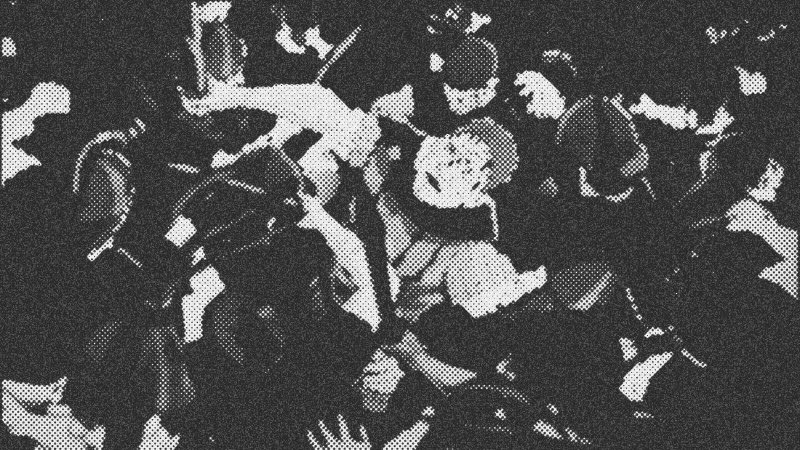
Hannibal’s primary strategic move was the abandonment of the traditional linear battle formation in favor of a revolutionary crescent. While the Romans sought to leverage their depth, stacking their maniples 70 ranks deep to create a massive, blunt-force battering ram, Hannibal anticipated this move. He stationed himself and his brother Mago Barca in the center of the line with his Spanish and Gallic infantry. This center was intentionally thin, designed to bulge outward toward the Romans and then slowly buckle under pressure. This was not a failure of the line; it was a controlled retreat.
Contrasting this, the Romans made the fatal decision to compress their ranks. By narrowing the frontage of their maniples to add depth, they sacrificed lateral flexibility. They intended to punch through the Carthaginian center, unaware that they were being funneled into a killing zone. Hannibal’s most brilliant decision was holding his elite African (Libyan) infantry in reserve on the flanks. These troops, fresh and armed with captured Roman equipment, were the pincers of the trap. While the Romans celebrated their apparent breakthrough of the Gallic center, the Libyans remained stationary, waiting for the moment the Roman flanks were exposed by their own forward momentum.
Performance Breakdown: Leadership and Discipline
The Roman command structure suffered from a lack of unity and an excess of political ego. The two consuls, Gaius Terentius Varro and Lucius Aemilius Paullus, alternated command daily. Gaius Terentius Varro, often cast as the rash populist, and Lucius Aemilius Paullus, the cautious aristocrat, failed to adapt to the shifting battlefield conditions. The Roman infantry performed with their characteristic grit, but their lack of seasoned training made them a "muscle-bound" force. They could execute a straight advance, but once the order of their maniples was lost in the excitement of a perceived victory, they became a disorganized mob.
Conversely, Hannibal’s army functioned like a precision instrument. The Carthaginian cavalry, led by Hasdrubal (cavalry commander) (not the brother), demonstrated incredible discipline. Unlike many ancient cavalry units that would chase a routed enemy off the field, Hasdrubal’s heavy horse swept away the Roman cavalry, reformed, and then struck the Roman rear. The Balearic Slingers provided lethal fire support, their accuracy and range outclassing the Roman light skirmishers. This level of coordination across diverse ethnic units—Gauls, Spaniards, and Africans—highlights Hannibal's genius as a leader who could command absolute loyalty and execute complex maneuvers under extreme duress.
Critical Moments and Tactical Impact
The pivot point of the battle occurred when the Roman center pushed so far into the Carthaginian crescent that it effectively turned inside out. At this exact moment, the Libyan infantry wheeled inward, crashing into the Roman flanks. The Roman soldiers, previously cheering for victory, suddenly found themselves unable to even raise their sword arms due to the density of the crowd. This was the "terrifying perfection" of the double envelopment. The Roman strength—their numbers—became their executioner as they were crushed together into a helpless mass.
The final blow was delivered by Hasdrubal’s cavalry returning from their route of the Italian allies to strike the Roman rear. This completed the 360-degree encirclement. From this point on, the battle ceased to be a tactical engagement and became a systematic slaughter. For hours, the Carthaginian forces worked inward, killing tens of thousands of trapped men. The physical impact was visceral; the ground became a slippery mire of blood and viscera, and the dust blown by the southern winds blinded the Romans as they were cut down.
Future Implications and Historical Learnings
The tactical legacy of Cannae is unparalleled. It established the "Cannae Model" for the battle of annihilation, which haunted the minds of 20th-century strategists like Alfred von Schlieffen. The Schlieffen Plan and the armored blitzkriegs of Heinz Guderian were direct intellectual descendants of Hannibal’s maneuvers. Even in modern warfare, the concept of the "pincer movement" and the total encirclement of an enemy force is evaluated against this 216 BC standard.
For Rome, the defeat forced a fundamental shift in their approach to war. It highlighted the danger of predictable, rigid formations and the necessity of a professional, rather than a citizen, cavalry. However, the most profound learning from Cannae was not tactical but psychological. Despite losing nearly 20% of their male population of military age in a single day, the Roman Republic refused to sue for peace. Hannibal had won the most perfect battle in history, but he had failed to understand the Roman character. A refusal to submit was the essence of being Roman. While the ruins of Cannae whisper of tactical brilliance, they also speak to the limits of military genius when faced with a society that views annihilation as a mere temporary setback on the road to ultimate empire.
- Gaius Terentius Varro
- 10%· people
- Lucius Aemilius Paullus
- 10%· people
- Adrian Goldsworthy
- 5%· people
- Alfred von Schlieffen
- 5%· people
- Balearic Slingers
- 5%· organizations
- Other topics
- 65%
Rome Vs Carthage: Rome's Poor-Form at Cannae
WatchThe Rest Is History // 53:38

Take a deep dive into History’s biggest moments with Tom Holland & Dominic Sandbrook. Explore the stories of History’s most brutal rulers, deadly battles, and world-changing events. From the rise and fall of the Roman Empire, the Nazi conquest of Europe, and Hitler’s evil master plan for world domination, to the French Revolution, the sinking of the Titanic, or the Norman Conquest of England in 1066, Tom and Dominic bring the past to life with gripping storytelling and expert analysis, as they unpack the high-drama moments that shaped our world.