The Echoes of Ruin: Classifying Economic Dislocations Through the Lens of History
The terror of collapse, sudden and overwhelming, grips societies across the millennia. We witness cities fall, empires fragment, and, in our modern lexicon, markets shatter. While the immediate panic often blurs distinctions, careful examination reveals patterns, archetypes of disintegration and recovery, much like the stratigraphic layers of an ancient ruin. A superficial understanding sees only chaos; a deeper inquiry uncovers a classification, a method to discern the fleeting tremor from the epochal cataclysm. We categorize these economic dislocations into three distinct phenomena, each demanding a unique historical interpretation.
Ephemeral Tremors: The Summer Storms
These are the 'flash' or 'technical' crashes, akin to the sudden, violent summer storms that sweep through ancient agricultural societies. They disrupt, certainly, but leave the underlying structures largely intact. The winds howl, the rains lash down, fields flood, yet the foundations of the village remain sound. Recovery is swift, often within weeks or a few months. Such events, though unsettling in their moment, register as mere blips on the grand timeline of a civilization's economic life. They test resilience, yes, but do not fundamentally reshape the societal fabric. These are the market corrections born of transient technical glitches, localized panic, or minor regulatory shifts, quickly absorbed and often forgotten in the sweep of generations.
Cyclical Tempests: The Hurricane's Recurrence
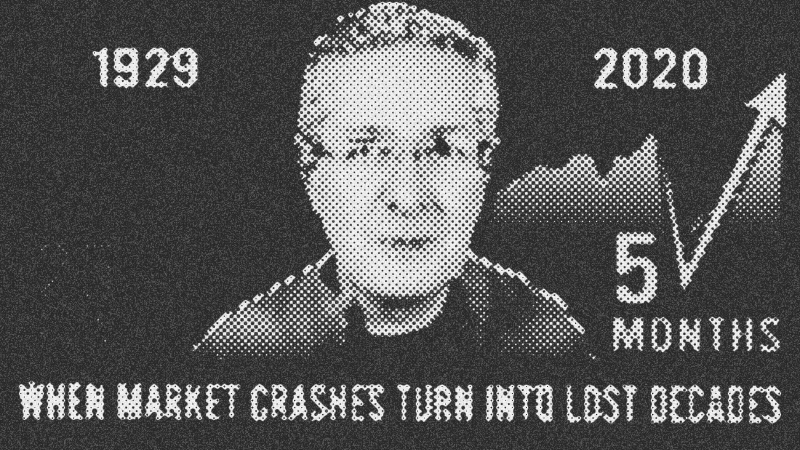
A more profound disruption manifests as the 'cyclical hurricane.' Here, the storm's fury lasts longer, its reach is wider, and its impact demands significant rebuilding. Imagine the recurring droughts or devastating floods that afflicted ancient river civilizations, forcing mass migrations, crop failures over seasons, and sustained periods of hardship. Society endures, but only through a concerted, often arduous, process of reconstruction and adaptation. These are not ephemeral events; their recovery spans years, perhaps half a decade, demanding sustained effort and policy shifts. They represent the deeper economic cycles, often tied to overextension, speculative excess, or shifts in commodity availability that require more than a mere 'bounce back.' The scars remain, informing future generations of the dangers of unchecked growth or resource depletion.
The Winter of Civilizations: Systemic Ice Ages
And then, there are the 'systemic ice ages,' the profound, civilization-altering events that fundamentally redraw the economic and social map. The term 'lost decades' barely begins to capture their true impact. These are the collapses of Bronze Age societies, the fall of Rome, or the profound disruptions wrought by widespread pandemics or climate shifts that fundamentally sever the old order from the new. Recovery is not merely slow; it is a transformation. The very principles upon which the economy operated must be re-evaluated, sometimes reinvented entirely. These dislocations are characterized by a complete erosion of trust, an unraveling of core institutions, and often, a paradigm shift in governmental or social structure. When these 'ice ages' descend, the market's recovery is measured not in years, but in generations, if indeed the original structure ever truly re-emerges. We observe deep societal trauma, persistent unemployment, and a pervasive sense of despair that requires fundamental re-calibration of cultural values and economic aspirations. The memory of such a winter shapes the collective psyche for centuries.
Reading the Auguries: Signs of Disintegration
Identifying which form a nascent crisis will take requires more than immediate observation; it demands a historical perspective, a 'watchlist' of indicators gleaned from past eras of societal stress. Are the disruptions confined to specific sectors, or do they ripple through the fundamental structures of governance and everyday life? Is there a clear, isolated catalyst, or are there deep-seated structural imbalances that have been festering for years? The presence of widespread institutional fragility, a lack of cohesive societal response, or an overreliance on speculative ventures without tangible underlying value, often foreshadows the deeper, more enduring 'ice age.' Conversely, swift, decisive action by leadership and strong underlying economic fundamentals suggest a more transient 'summer storm' or, at worst, a 'cyclical hurricane' from which society can rebuild.
Lessons from the Rubble
The study of these economic calamities, whether in ancient granaries or modern stock exchanges, is not merely an academic exercise. It is a vital pursuit for understanding human resilience, our capacity for adaptation, and the enduring cycles of prosperity and decline. The ruins of lost civilizations whisper these lessons. They teach us that while the mechanisms may change, the fundamental human questions surrounding stability, fear, and rebuilding remain constant. By meticulously classifying these patterns of collapse and recovery, we gain invaluable insight, not just for financial forecasting, but for navigating the larger, inexorable rhythms of human civilization itself.
- Bondfish
- 8%· analytical instruments
- coaching session with Ramin
- 8%· educational offerings
- free weekly market roundup
- 8%· educational offerings
- Investing For Retirement playlist
- 8%· further studies
- Investing With Vanguard playlist
- 8%· further studies
- Other topics
- 62%
When Market Crashes Turn Into Lost Decades
WatchPensionCraft // 17:46

My name is Ramin Nakisa and I started PensionCraft in 2016 as I felt strongly that I wanted to teach people how to invest well for themselves so they could stop making costly mistakes and losing their money through having to pay unnecessarily high fees. Before starting PensionCraft, I worked in investment banking as a strategist and I was a frequent contributor on CNBC and Bloomberg TV. I have written two books about finance and investment: one for professional investors and one that explains how to buy and sell volatility using exchange-traded products. I publish a new video on YouTube every Saturday and you can join me for a live Q&A on the 1st Thursday of every month at 7pm UK time. If you want to learn how to become a better investor then why not join our friendly membership at pensioncraft.com?