Analog Innovation: Testing the Logitech Superstrike’s 30ms Claim
The Death of the Mechanical Click
Logitech just threw a wrench into the mouse market with the Logitech Superstrike. They claim it’s 30 milliseconds faster than the competition, but the secret isn't in faster wireless polling or gold-plated contacts. In fact, they’ve ripped out the mechanical switches entirely. This mouse swaps traditional hardware for an inductive coil and a haptic motor, effectively turning your primary buttons into analog triggers with adjustable actuation points.
Inductive Sensing vs. Traditional Switches
Normal mice have a fixed physical travel distance before the circuit closes. The Logitech Superstrike allows you to set the actuation depth across 10 levels. Level one is hair-trigger sensitive, while level 10 mimics a deep, deliberate press. Because there is no physical leaf spring clicking, Logitech uses haptic motors to simulate tactile feedback. It feels alien at first; instead of a tension release, you feel a sharp bump against your fingertip that is fully customizable through software.
High-Speed Latency Verification
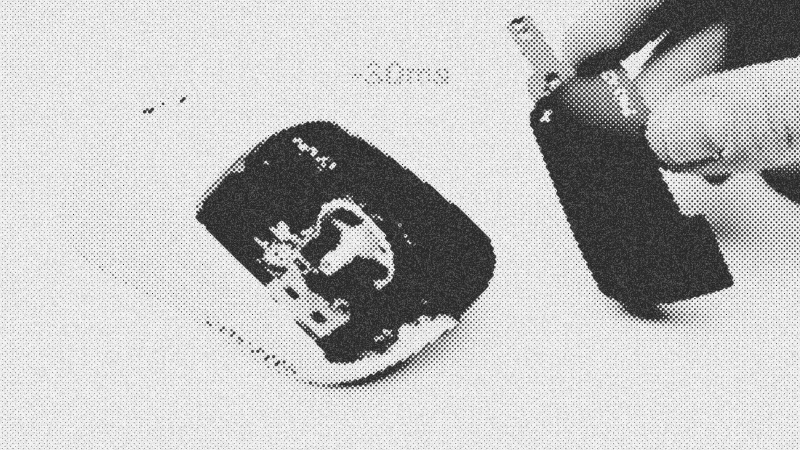
I put these claims to the test using a high-speed camera and a 720 Hz monitor. Testing with "bro-science" realism—measuring from the moment my finger moved to the flash on screen—showed staggering results. At level one, the end-to-end latency averaged under 10ms. When compared to the Endgame Gear OP1 8K, which is widely considered the fastest mouse on the market, the Logitech Superstrike was 27ms faster. The data doesn't lie: reducing pre-travel through analog sensing works.
Practical Performance and Final Verdict
While the tech is flawless, the utility is subjective. In real-world gaming, most of us already pre-tense our fingers, naturally closing that pre-travel gap. I found level one so sensitive it caused frequent misclicks, forcing me to adopt a passive, uncomfortable grip. I settled on level four for a balance of speed and confidence. If you’re coming from a Logitech G Pro X Superlight, this is a massive upgrade in trigger feel and raw response. However, don't expect it to magically fix your aim; it’s a tool for refinement, not a substitute for skill.
- Logitech Superstrike
- 43%· products
- Endgame Gear OP1 8K
- 14%· products
- Logitech
- 14%· companies
- Logitech G Pro X Superlight
- 14%· products
- Zero mouse
- 14%· products
Logitech weren't kidding.. - X2 Superstrike
Watchoptimum // 10:00
