The Dawn of a New Epoch: Neuralink and the Unfolding Narrative of Human Augmentation
Introduction: Bridging Ancient Aspirations with Modern Endeavors
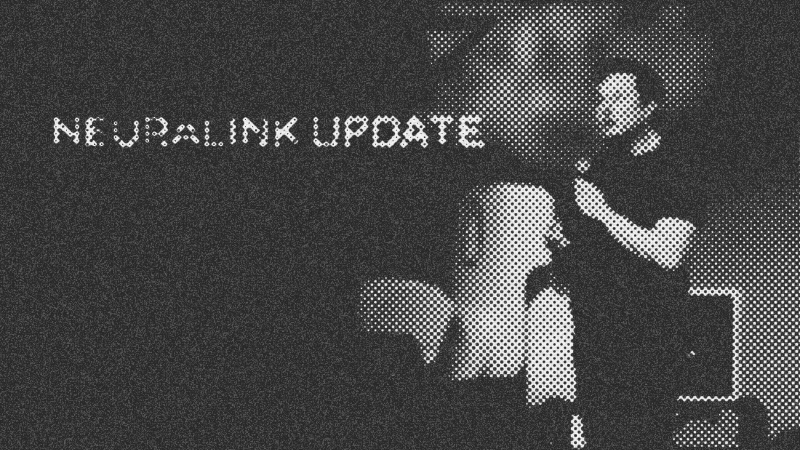
For millennia, humanity has grappled with the limitations of the physical form and the profound mysteries of the mind. From the earliest shamanic rituals seeking altered states of consciousness to the intricate surgical techniques of ancient Egypt aiming to prolong earthly existence, our species has relentlessly sought to transcend its biological constraints. The Neuralink Update of Summer 2025, a comprehensive exposition on the latest advancements in brain-computer interface technology, marks a pivotal moment in this enduring quest. It represents not merely a technical demonstration but a profound philosophical juncture, compelling us to reconsider the very definition of human experience, communication, and interaction with the world. This update, presented by Elon Musk and his team, offers a glimpse into a future where the direct interface between human thought and external systems shifts from speculative fiction to tangible reality, echoing the ancient drive to master our environment and ourselves through ingenious tools.
Key Concepts and Foundational Principles of Brain-Computer Interfaces
At its core, Neuralink pursues the direct translation of neural signals into actionable commands, a concept broadly defined as a Brain-Computer Interface, or BCI. The ancient world, though lacking our contemporary technological understanding, instinctively grasped the power of symbols, language, and ritual to shape perception and influence reality. Today's BCIs represent a sophisticated evolution of this inherent human desire for influence and control. The foundational principle involves recording electrical activity from the brain, interpreting these intricate patterns, and subsequently relaying them to external devices. DJ, leading the discussion on the progress and roadmap, elucidated the rapid iterative development that characterizes this field. It involves a monumental leap from abstract thought to concrete action, bypassing traditional motor pathways. This technology promises to restore lost function and potentially augment existing capabilities, mirroring the mythical aspirations of ancient heroes who wielded powers beyond ordinary human limits. It signifies a new epoch where the distinction between thought and execution blurs, offering unprecedented avenues for interaction with our increasingly complex digital and physical landscapes.
Detailed Explanation and Analysis: Decoding the Human Mind
The Architecture of Connection: Implant and Robot
The physical embodiment of this audacious vision resides within the Neuralink implant and the sophisticated robotic system designed for its placement. Julian detailed the implant itself, a miniaturized marvel of bio-compatible engineering. This device, surgically positioned within the cranial vault, houses thousands of ultra-fine threads, each capable of detecting minute electrical impulses from individual neurons. This represents a colossal undertaking, akin to painstakingly mapping every stream and river of an unexplored continent. The precision required for such an insertion is paramount, a task undertaken by the surgical robot, which John described. This robot is not merely a tool; it functions as a highly specialized artisan, capable of maneuvering the delicate threads with sub-micron accuracy, avoiding damage to vital brain structures. The design imperatives for both the implant and the robot focus on minimizing invasiveness, maximizing data throughput, and ensuring long-term biocompatibility—challenges that demand engineering rigor comparable to the construction of monumental ancient structures, yet on an infinitesimal scale. This precise placement ensures the fidelity of the neural data captured, laying the groundwork for meaningful signal translation.
Translating Thought into Action: Neural Decoding and Control
The true ingenuity of the Neuralink system lies in its capacity for neural decoding. Harrison outlined the complex algorithms and machine learning models that interpret the raw electrical signals emanating from the brain. These aren't simple on/off switches; they are intricate patterns, a language without explicit grammar, yet teeming with latent intent. The system learns to identify specific neural signatures corresponding to intended movements, thoughts, or desires. This process, a sophisticated form of 'mind-reading,' translates the brain's internal monologue into commands that external devices can comprehend. Elon Musk further elaborated on the practical applications in robot control and body reanimation, demonstrating how these decoded signals manifest as tangible control over external robotic limbs or even, in preclinical studies, stimulate paralyzed musculature. The ability to control a cursor, type text, or operate complex machinery solely through thought represents a new form of agency. It mirrors the ancient power of prayer or incantation, where spoken word, imbued with intent, sought to influence the material world, now replaced by direct neural volition.
Human Experience and Clinical Trajectories
The ultimate validation of any such technology resides in its impact on human lives. Sehej introduced the participants in Neuralink's ongoing clinical trials, offering poignant insights into their experiences. These individuals, often facing severe neurological conditions, serve as pioneers, their daily interactions with the BCI technology forming the primary source material for this emerging field. Their narratives provide invaluable qualitative data, revealing not just the functionality but the profound personal implications of regaining autonomy. Rooz then expounded upon the user experience, emphasizing the continuous refinement of the interface to make it intuitive and seamless. This involves minimizing cognitive load, reducing latency, and creating an interaction model that feels like a natural extension of self. The aim extends beyond mere functionality; it seeks to reintegrate individuals into aspects of life previously lost, whether through enhanced communication, restored mobility, or renewed independence. This human-centric approach grounds the ambitious technological endeavor in the lived reality of those it seeks to serve, providing a crucial cultural narrative for this transformative era.
Expanding Perceptions: Blindsight and Beyond
Perhaps one of the most intriguing frontiers explored within the Neuralink update involved the concept of 'blindsight,' presented by Joey. This research delves into the potential for sensory restoration and augmentation. Blindsight, a neurological condition where individuals respond to visual stimuli without consciously seeing them, offers a fascinating pathway for understanding how the brain processes perception. The application of BCIs in this area suggests the possibility of not only restoring lost vision through direct neural input but also, conceivably, of introducing entirely new sensory modalities. Ancient cultures frequently documented individuals with extraordinary sensory or prophetic abilities, often attributed to divine intervention or rigorous spiritual practices. While Neuralink's approach is rooted in neuroscience, its trajectory suggests a modern pathway to expanding human perception beyond conventional biological limits. This opens questions about the future of human senses, communication, and even our understanding of reality itself, hinting at a world where our internal experience could be directly shared or modified.
Implications and Relevance: Redefining the Human Equation
The advancements detailed in the Neuralink Update carry profound implications, reaching far beyond the clinical applications for which they are initially designed. From a historical and cultural perspective, this technology challenges long-held notions of identity, autonomy, and the very boundaries of the human organism. If our thoughts can directly control machines, and machines can, in turn, influence our sensory experience, where does the self truly reside? Ancient societies grappled with similar questions when new tools—from writing systems to advanced metallurgy—fundamentally altered their ways of life and perception. The printing press, for instance, democratized knowledge and catalyzed immense societal shifts. Neuralink represents a comparable, if not more radical, inflection point. It promises to redefine how we interact with technology, moving from external manipulation to internal integration. It also raises critical ethical considerations surrounding data privacy, cognitive liberty, and equitable access. As we chart this new course, we must draw upon the wisdom gleaned from past societal transformations, ensuring that technological progress serves humanity's broader well-being, preserving the rich, complex cultural narratives that define our species, rather than eroding them.
Conclusion: An Ongoing Unraveling of Human Potential
The Neuralink Update, Summer 2025, provides compelling evidence of a civilization on the cusp of an extraordinary transformation. The meticulous engineering of the implant, the sophisticated algorithms for neural decoding, the impactful experiences of participants, and the audacious exploration of sensory augmentation all point towards a future where the human brain interfaces directly with technology. This endeavor is not merely about curing ailments; it is about extending the very definition of what it means to be human. As a historian, I view these developments as new chapters being written in the grand narrative of human ingenuity and self-discovery. We are, in essence, excavating the mysteries of our own consciousness, much like archaeologists unearth ancient cities. The questions raised by Neuralink—about consciousness, agency, and the future of our species—are echoes of the fundamental inquiries that have preoccupied humanity since its dawn. The journey has only just begun, and its unfolding will undoubtedly be one of the most significant narratives of our age.
- Neuralink
- 40%· companies
- Neuralink Update
- 15%· companies
- Elon Musk
- 10%· people
- DJ
- 5%· people
- Harrison
- 5%· people
- Other topics
- 25%
Neuralink Update, Summer 2025
WatchNeuralink // 59:59
