Suspicious $580 million oil trade precedes Trump’s latest market whipssaw
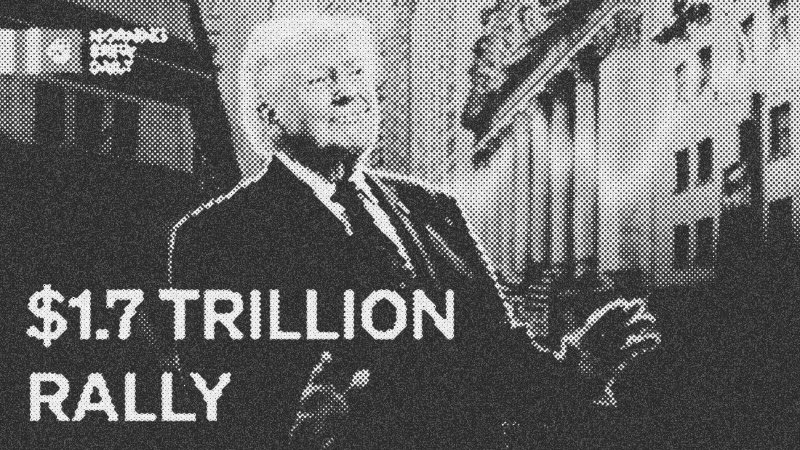
The financial world recently witnessed the return of the "TACO" trade—an acronym for "Trump Always Chickens Out"—as a single social media post from Donald Trump added $1.7 trillion to stock values while simultaneously tanking oil prices. After issuing a 48-hour ultimatum to Iran, the former President abruptly announced a five-day postponement of potential strikes, citing productive conversations that the Iranian government immediately labeled as fake news. This rapid reversal highlights the unprecedented power of executive communication to move global markets in minutes, but the real story lies in the suspicious activity occurring just before the notification hit the public.
Market front-running and the $580 million coincidence
Financial analysts are raising alarms over highly unusual trading patterns that occurred moments before the market-moving announcement. Data reveals that approximately 6,200 Brent and West Texas Intermediate (WTI) futures contracts changed hands at 6:49 a.m., exactly 15 minutes before the public post on Truth Social. These trades, valued at roughly $580 million, suggest that certain market participants may have had advance knowledge of the diplomatic "off-ramp."
Portfolio managers note that such large-scale trades are almost unheard of on a quiet Monday morning devoid of Federal Reserve speakers or major data releases. While the administration maintains the announcement was timed to stabilize market dynamics before the opening bell, the precision of the preceding trades suggests a pattern of front-running that undermines the integrity of energy and equity markets alike.
OpenClaw and the rise of the autonomous CEO
The obsession with efficiency is extending into the executive suite through a new open-source framework called OpenClaw. Mark Zuckerberg is reportedly developing a personalized AI agent to help manage Meta, aiming to flatten corporate hierarchies by using bots to bypass traditional layers of human reporting. This movement, which Nvidia CEO Jensen Huang describes as the "next ChatGPT," allows for a fleet of always-on agents to handle everything from bidding on eBay to managing smart home security.
In China, the phenomenon has reached a fever pitch, with usage rates nearly double those in the United States. The practice, colloquially known as "raising lobsters" due to the project's mascot, has seen engineers at Tencent headquarters manually installing the software for crowds of users. While some analysts dismiss the current iteration of AI agents as "janky" and insecure, the rapid adoption by tech giants signals a shift toward a world where humans act more as overseers of digital employees than hands-on operators.
Kitchen invasions and the smart fridge ad crisis
While AI is streamlining the office, Samsung is testing the limits of consumer patience in the home. The electronics giant recently launched a pilot program displaying advertisements on its smart refrigerators, targeting users with "contextual" housework-related content. For consumers who paid premium prices exceeding $1,000, the intrusion of marketing into the kitchen represents a violation of one of the few remaining ad-free sanctuaries in American life.
The pushback has been swift, with some tech-savvy homeowners now applying network-level ad blockers to their kitchen appliances. This conflict underscores a growing tension in the Internet of Things (IoT) era: companies view every screen as a potential revenue stream, while consumers expect that a high-end hardware purchase should exempt them from being treated as a product. Samsung claims turn-off rates for these ads are low, yet the psychological cost of the "screens everywhere" initiative remains uncalculated.
The masculine urge to monitor the situation
This influx of data, from market spikes to refrigerator ads, has birthed a cultural phenomenon known as "monitoring the situation." Originally coined by the late Anthony Bourdain, the phrase now describes a state of hyper-vigilant data consumption. Tools like World Monitor and prediction markets like Polymarket have turned global crises into a form of interactive entertainment, often referred to as the "Red Zonification" of news. Whether it is tracking flight movements during a collision at LaGuardia Airport or wagering on geopolitical strikes, the modern audience seeks a sense of agency by drowning in real-time information, even when that data offers more noise than signal.
- Samsung
- 8%· companies
- Anthony Bourdain
- 4%· people
- China
- 4%· places
- Donald Trump
- 4%· people
- Doug Burgum
- 4%· people
- Other topics
- 76%
Trump’s TACO trade returns on Monday
WatchMorning Brew Daily // 27:53

Morning Brew Daily, a daily talk show that covers the latest news on business, the economy, and everything else, with Neal Freyman and Toby Howell. Witty, informative and everything you need to start your day. Available on all podcasting platforms and Youtube. Listen to the podcast here: https://link.chtbl.com/MBD Follow us on Twitter: https://twitter.com/mbdailyshow Follow us on Instagram: https://www.instagram.com/mbdailyshow/ Follow us on TikTok: http://www.tiktok.com/@mbdailyshow Sign up for the Morning Brew Newsletter: https://www.morningbrew.com/daily/subscribe?utm_campaign=mbd_yt&utm_medium=multimedia&utm_source=youtube