The Architecture of Hope: Bryan Stevenson on Justice, Mercy, and the Power of Proximity
The Core Philosophy of Justice and Mercy
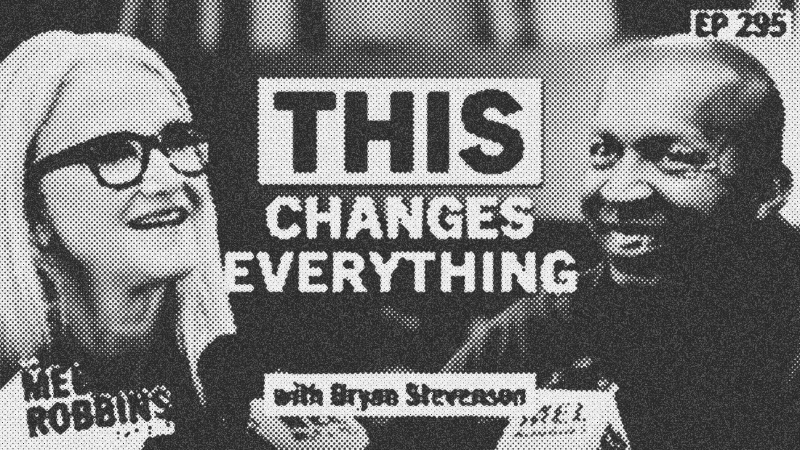
Justice is often viewed as a static destination or a set of binary outcomes within a legal framework. However, Bryan Stevenson, the visionary founder of the Equal Justice Initiative, suggests that justice is a constant, rhythmic struggle. It is a way of navigating the inevitable conflicts that arise in a world defined by a hierarchy of power. When those with less power are victimized or harmed without a path to recovery, injustice takes root. Conversely, those who wield power carry a moral obligation to ensure that harm is minimized and that the system remains responsive to human dignity.
Closely tied to this navigation is the concept of mercy. While many perceive mercy as a reward for demonstrated remorse, it is actually a reflection of the giver's character rather than the recipient's actions. Extending mercy does not negate accountability or the demand for respect; rather, it refuses to create a world of "us versus them." It is a commitment to tearing down the walls of harsh judgment that keep society fractured. True mercy recognizes that we all yearn for it when we fail, and therefore, we must be willing to offer it to others, even when their regret is not yet visible.
The Transformative Impact of Proximity
One of the most profound lessons in Stevenson's work is the requirement of proximity. His grandmother taught him that it is impossible to understand complex issues from a distance. If you want to solve a problem, you have to get close to it. In the context of social and legal systems, this means moving toward the marginalized, the excluded, and the suffering. When we remain distant, we rely on abstractions and labels to categorize people. We judge because it is easier than understanding.
Proximity changes the observer as much as it changes the situation. Stevenson recounts his first visit to a maximum-security prison while still a student at Harvard Law School. He went to inform a condemned man that his execution was not imminent for at least another year. That simple act of being present—of being the first person in two years to speak to the man who wasn't a guard or a prisoner—transformed the man's quality of life. They were the same age, shared the same birthday, and in that shared space, the labels of "law student" and "condemned" evaporated. Proximity allows us to hear the "songs" being sung in places of despair, melodies that teach us more about humanity than any textbook ever could.
The Stonecatcher Mindset
In a society fueled by fear and anger, the impulse is often to cast stones at those who fall. Stevenson introduces the concept of the "stonecatcher," inspired by the biblical account of the woman accused of adultery. While the self-righteous are eager to punish, the stonecatcher stands between the accuser and the accused. This role is exhausting and challenging, yet it is fundamentally empowering.
Catching a stone helps the target of the violence, but it also aids the person throwing the stone. Harsh judgment is a mistake that prevents the accuser from reaching their own state of grace or redemption. By intercepting that judgment, we offer the entire community a chance to recover. This mindset applies beyond the courtroom; it is a way of moving through the world that affirms the dignity of those whose humanity is being questioned. Every time we catch a stone, it becomes easier to catch the next one, turning compassion into a sustainable way of life.
Challenging the Narrative of Reduction
Our current legal and social institutions often reduce human beings to the worst thing they have ever done. If someone tells a lie, they are labeled a "liar." If they take something, they are a "thief." This reductionism is particularly damaging in the Criminal Justice System, where legislators often speak as if they can put a crime in prison. In reality, you cannot imprison a crime; you can only imprison a person.
People are not their crimes. They are complex individuals with histories that often include trauma, poverty, and abuse. Recognizing that every person is more than their worst act is not an excuse for bad behavior; it is a prerequisite for justice. This is especially critical when dealing with children. Stevenson highlights the tragedy of "super-predator" labels used in the 1980s, which led to children as young as eight or nine being tried as adults. Children are in a constant state of biological and emotional flux. To freeze them in a single moment of poor judgment is to deny the possibility of redemption that is inherent to the human experience.
The Legacy of Walter McMillan
Perhaps no case better illustrates the failure of distant judgment than that of Walter McMillan, the central subject of the book and film Just Mercy. In Monroeville Alabama—a town that paradoxically celebrates To Kill a Mockingbird—McMillan was railroaded for a murder he did not commit. Despite having 35 alibi witnesses, including a police officer, he was placed on death row even before his trial began.
The system used fear and coercion to fabricate a narrative, ignoring the physical reality of McMillan's innocence. Stevenson spent six years fighting the state's resistance, facing death threats and bomb threats along the way. The case reveals the "arrogance and gaslighting" inherent in a system that refuses to admit error. It took the courage of the community and the persistence of legal advocates to finally secure his release, proving that truth can prevail only when people are willing to stand up and say, "I'm here."
Hope as a Superpower
Hope is not a naive preference for optimism; it is an orientation of the spirit. Stevenson argues that hopelessness is the primary enemy of justice. When a community becomes hopeless, it permits injustice to persist. Hope is the energy required to speak when told to be quiet and to stand when told to sit down. It is the willingness to position oneself in a hopeless place and remain a witness.
Cultivating hope is an active process. It requires learning the stories of those who came before us—the enslaved, the lynched, and the segregated—who maintained their hope despite having far fewer resources. By reckoning with the misery of history, we find the resilience needed to build a more just future. This honesty is the only path to liberation. We cannot learn from mistakes we refuse to acknowledge, and we cannot find redemption in a history we choose to ignore.
Implications and the Path Forward
The lessons of justice and mercy have immediate applications for every citizen. We live in a time of high incarceration rates and deep social division, often fueled by fear and anger. Moving forward requires a transition from a punitive response to a health-centered and trauma-informed response, particularly regarding addiction and juvenile justice.
True citizenship involves taking on the burdens of those at risk. This might mean volunteering to help people transition out of prison, supporting conviction integrity units, or simply educating oneself through resources like those provided by the Equal Justice Initiative. The goal is not merely to change laws but to change the "justice quotient" of our hearts. When we commit to being learners and doers, we move closer to a world defined by love and equality rather than condemnation.
Conclusion
The journey toward a more just world is paved with the stories of those who refused to be reduced to their worst moments. From the quiet dignity of community members like Miss Williams to the legal victories of Bryan Stevenson, the message remains clear: we are all more than the worst thing we have ever done. By embracing proximity, catching stones, and maintaining an unyielding hope, we can transform the misery of our history into the glory of a redeemed future. The beauty of justice is waiting for us; we only need the courage to show up and claim it.
- Bryan Stevenson
- 9%· people
- Equal Justice Initiative
- 9%· companies
- Walter McMillan
- 9%· people
- ACLU
- 4%· companies
- Elizabeth Barthlet
- 4%· people
- Other topics
- 65%
The Exact Words You Need to Hear Today
WatchMel Robbins // 1:33:15

Mel Robbins is the creator and host of The Mel Robbins Podcast, one of the most successful podcasts in the world, and a #1 New York Times bestselling author. She has 40M followers and is known globally for practical tools on mindset and behavior change. The Wall Street Journal calls her a “billion-view podcaster,” and TIME says she gives millions “a reason to believe in themselves.” Her books are published in 63 languages. The Let Them Theory is a #1 bestseller across every major list and a top-selling book of 2025 with more than 8M copies sold. She also wrote The 5 Second Rule and The High 5 Habit, and has seven #1 Audible releases. Her company, 143 Studios, produces award-winning podcasts, books, courses, and events for partners like Starbucks, Ulta Beauty, JP Morgan Chase, LinkedIn, and Audible. She has been honored by TIME 100 Digital Voices, Forbes 50 Over 50, USA Today, Apple Podcasts, Spotify, and The Hollywood Reporter.