The Science of Skin: A Guide to Health, Aging, and Building a Lifetime Relationship With Your Largest Organ
The Living Mirror: Rethinking Skin as a Vital Organ
Most people view skin through the narrow lens of vanity. They treat it as a cosmetic surface to be decorated, polished, or fixed when it fails to meet an aesthetic standard. This perspective misses the fundamental truth: Skin is your largest organ and a highly sophisticated visible feedback system. Dr. Shereene Idriss, a board-certified dermatologist, argues that skin health is inseparable from internal physiological and emotional well-being. It is the only organ that reflects the state of your health, stress levels, and lifestyle habits directly to the outside world.
Aging is often blamed entirely on DNA, yet genetics only account for roughly 20% of how we age. The remaining 80% is determined by cumulative habits, including Sun Exposure, sleep quality, and diet. When you shift your perspective from "fixing a problem" to "building a relationship" with your skin, you move away from the frustration of fleeting trends and toward sustainable health. This internal-external connection means that taking care of your skin is an act of self-respect that impacts your overall confidence and how you show up in every area of your life.
The Essential Foundation: The Three-Step Routine
The multi-billion dollar beauty industry thrives on complexity, often marketing 12-step routines that are both expensive and unsustainable. Real results come from consistency, which is only possible with a simplified approach. Dr. Shereene Idriss identifies three core categories that every person needs, regardless of age or skin type: a gentle cleanser, a reliable moisturizer, and a broad-spectrum sunscreen.
Cleansing Without Stripping
The goal of a cleanser is to remove environmental debris and "the day" without damaging the skin's protective barrier. Many people over-cleanse, especially in the morning. If you cleansed thoroughly at night and applied your treatment products, a simple water rinse in the morning is often sufficient. Hot water is a common enemy; it acts like a degreaser on a pan, stripping away the essential oils your skin needs to remain hydrated. Using a fresh, clean Washcloth daily—think of it as fresh underwear for your face—ensures that you are physically removing residue without introducing bacteria from a damp, reused towel.
Moisture and Barrier Support
Moisturizers should be foundational. While many products boast ingredients like Collagen, these are often too large to penetrate the skin and act primarily as surface-level hydrators. A good moisturizer creates a seal that prevents transepidermal water loss. This is especially critical during Menopause, when estrogen levels drop and skin loses its ability to hold onto hydration, leading to a crepier texture.
The Non-Negotiable: Sun Protection
Sunscreen is the most powerful anti-aging tool at your disposal. Dr. Shereene Idriss emphasizes that there is no such thing as a "safe tan." Any pigment production triggered by UV rays is a sign of DNA damage. To protect the skin effectively, you must use a broad-spectrum SPF of at least 30. Broad-spectrum protection is vital because it guards against both UVB rays, which cause surface burns, and UVA rays, which penetrate deeper to break down collagen and elastin. SPF 30 technically allows you to stay in the sun 30 times longer than you would without protection before burning, but it requires regular reapplication to remain effective.
Navigating the World of Actives: Retinol, Vitamin C, and Beyond
Once the foundation is set, "actives" can be used to target specific concerns like hyperpigmentation, fine lines, or acne. However, the mantra for actives must be "low and slow." Overusing high-concentration products is a recipe for chronic inflammation, which actually accelerates the aging process.
Retinol, a vitamin A derivative, remains the gold standard for long-term skin health. It regulates cell turnover and stimulates collagen production. While prescription-strength retinoids like Tretinoin are powerful, they are often too aggressive for beginners. It is far more effective to use a lower-strength, over-the-counter retinol five nights a week than to use a prescription once a week and suffer through redness and peeling. Consistency beats intensity every time.
Vitamin C is another powerhouse, primarily used for evening out skin tone and providing antioxidant protection against environmental stressors. It helps fade Brown Spots and protects existing collagen from breaking down. For those with reactive skin, seeking out "inactive" or stabilized forms of Vitamin C is preferable to the highly pungent Ascorbic Acid, which can cause stinging and redness.
The Biological Reality of Aging: Peaks and Structural Shifts
Aging is not a slow, linear decline; it happens in distinct biological peaks. Understanding these shifts helps manage expectations and reduces the panic that often accompanies sudden changes in the mirror.
- The Late 20s to Early 30s: This marks the transition from a growth phase to a maintenance phase. You begin losing approximately 1% of your Collagen per year. The changes are subtle—perhaps a slight flattening of the cheeks or the appearance of fine lines that don't immediately bounce back.
- The Age 44 Shift: Recent research suggests a significant biomolecular shift occurs around age 44, where cells begin to age more rapidly. For women, this often coincides with perimenopause. Decreasing Estrogen levels lead to thinner skin, reduced oil production, and a loss of elasticity.
- The Structural Collapse: Jowls and sagging are not skin failures; they are structural failures. As we age, our bones undergo remodeling and thinning. The skeletal scaffold that holds our face up begins to shrink, causing the overlying fat pads to shift and drop. Because the skin has lost its elasticity, it drapes over this shrinking structure, creating the appearance of sagging. No firming cream can fix a bone and fat pad problem.
Debunking Skincare Myths and Wasted Investments
The market is flooded with products that provide instant gratification but zero long-term benefit. Makeup Wipes are a prime example. They don't actually clean the skin; they smear makeup and debris across the surface, often ramming it into the pores. Pore Strips provide a satisfying visual result, but they are physically aggressive and can lead to permanent textural changes and enlarged pores over time.
Dr. Shereene Idriss also warns against "preventative" Botox in very young patients. If there are no lines to treat, the motivation is usually fear-based rather than clinical. Starting too young can lead to a "frozen" look and a disconnect with one's natural expressions. Similarly, Collagen Supplements are often an expensive distraction. While a protein-rich diet supports collagen production, there is no guarantee that an ingested supplement will travel directly to the skin to erase wrinkles.
The Psychology of Skin: From Vanity to Confidence
Ultimate confidence does not come from having perfect skin; it comes from changing your relationship with the skin you have. High-magnification mirrors are often the enemy of self-esteem. Nobody interacts with you at a 10x zoom. When you obsess over every pore and minor imperfection, you lose sight of the "forest for the trees."
If you are struggling with a flare-up of Acne or a condition like Melasma—a hormonal pigmentation often exacerbated by IVF or pregnancy—the first step is to calm the skin down. This often requires stopping all actives and returning to the most basic routine. Protecting your mental health is as important as protecting your skin barrier. Recognizing that skin is a whole-person issue allows you to approach aging and skin conditions with grace rather than shame. By mastering the basics and maintaining consistency, you can navigate the aging process with a sense of control and a reliable guide.
- Dr. Shereene Idriss
- 21%· people
- Vitamin C
- 11%· products
- Acne
- 5%· products
- Botox
- 5%· products
- Chris Jenner
- 5%· people
- Other topics
- 53%
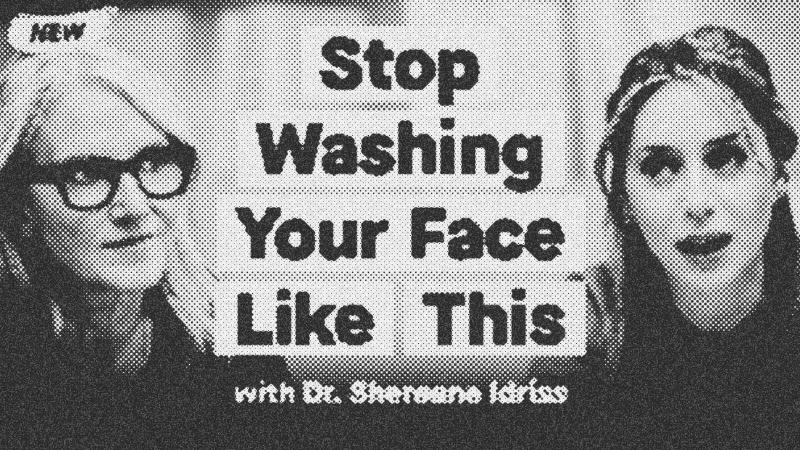
#1 Dermatologist: The Ultimate Skincare Routine for Amazing Skin
WatchMel Robbins // 1:16:22

Mel Robbins is the creator and host of The Mel Robbins Podcast, one of the most successful podcasts in the world, and a #1 New York Times bestselling author. She has 40M followers and is known globally for practical tools on mindset and behavior change. The Wall Street Journal calls her a “billion-view podcaster,” and TIME says she gives millions “a reason to believe in themselves.” Her books are published in 63 languages. The Let Them Theory is a #1 bestseller across every major list and a top-selling book of 2025 with more than 8M copies sold. She also wrote The 5 Second Rule and The High 5 Habit, and has seven #1 Audible releases. Her company, 143 Studios, produces award-winning podcasts, books, courses, and events for partners like Starbucks, Ulta Beauty, JP Morgan Chase, LinkedIn, and Audible. She has been honored by TIME 100 Digital Voices, Forbes 50 Over 50, USA Today, Apple Podcasts, Spotify, and The Hollywood Reporter.