Goldman: why your willpower isn't the problem with emotional eating
The deceptive myth of willpower in eating habits
We often treat our relationship with food as a moral battleground. If you finish the bag of chips or reach for a second helping when you aren't physically hungry, you likely label it a failure of discipline. Dr. Rachel Goldman, a clinical psychologist at NYU, argues that this perspective is fundamentally flawed. Willpower is a finite resource, and your eating patterns are rarely about a lack of it. Instead, they are deeply rooted in the mind-body connection—a complex interplay where your thoughts, emotions, and physiological responses dictate your behavior.
Emotional eating is a survival mechanism, not a character flaw. It is the act of turning to food to soothe an internal state, whether that state is boredom, anger, sadness, or even extreme joy. When we use food as a primary coping tool, we are often trying to fill an emotional void or quiet a stressful mind. This behavior frequently stems from internalized messages from diet culture that tie our self-worth to body size and food choices. By shifting the focus from "being good" to understanding the "why" behind the bite, we can begin to dismantle the shame that keeps the cycle in place.
Solving the biological puzzle of the restrict-binge cycle
One of the most destructive patterns many of us fall into is the cycle of restriction and subsequent overeating. You might skip breakfast or lunch to "make up" for a heavy dinner the night before, thinking you are taking control. In reality, you are setting a biological trap. When you under-fuel your body, it enters survival mode. This triggers a physiological response where your brain increases "food noise"—obsessive, intrusive thoughts about eating—because it perceives a threat to its survival.
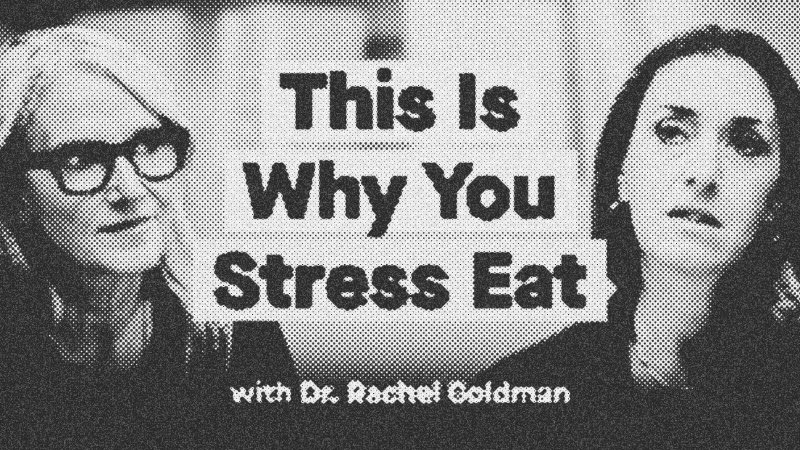
This restriction doesn't just make you hungry; it makes you impulsive. When you finally allow yourself to eat, you aren't responding to physical hunger; you are reacting to a state of deprivation. This often leads to a loss of control, followed by intense guilt and shame, which then prompts you to restrict again. Breaking this cycle requires the counterintuitive step of eating regularly, even when you don't feel "worthy" of the calories. By providing consistent nourishment, you quiet the survival signals in your brain and reduce the intensity of cravings.
Three essential questions for the kitchen pause
To move from reactive eating to intentional responding, you must learn the art of the pause. Dr. Rachel Goldman suggests that whenever you find yourself mindlessly opening cabinets or the refrigerator, you should stop and ask three specific questions. First, ask: "When was the last time I ate?" This helps you determine if you are experiencing genuine physiological hunger, which comes on gradually and is satisfied by almost any food.
Second, ask: "Was what I ate satisfying?" You can be physically full but emotionally empty if you've been eating only "safe" or restrictive foods. Third, and most importantly, ask: "What is actually going on right now?" This question forces you to look past the hunger and identify the underlying emotion. Are you stressed from a work call? Are you lonely? Are you exhausted? Identifying the emotion allows you to address the actual need. If you are lonely, a cookie won't fix it; a phone call to a friend might. If you still want the food after the pause, eat it mindfully, but the pause itself breaks the automaticity of the habit.
Orthorexia and the hidden dangers of healthy obsessions
In our pursuit of wellness, it is easy to cross the line from health-conscious to disordered. Dr. Rachel Goldman highlights the rise of orthorexia, a term describing an obsession with healthy eating that becomes rigid and restrictive. Unlike other eating disorders focused primarily on quantity, orthorexia focuses on the perceived "purity" of food. This can manifest as refusing to eat any processed ingredients, becoming obsessive about organic labels, or eliminating entire food groups without a medical necessity.
The warning sign that a healthy habit has turned toxic is the level of distress it causes. If missing a gym session or being unable to find a "clean" meal at a social gathering ruins your day or causes significant anxiety, you have crossed a line. Disordered eating isn't always about being thin; it is often about a desperate need for control in an unpredictable world. True health includes psychological flexibility—the ability to enjoy a meal with friends without a side of judgment or obsessive calculation.
Reframing GLP-1 medications as medical treatment
The conversation around GLP-1 medications like Ozempic or Wegovy is often clouded by the terminology of weight loss. Dr. Rachel Goldman emphasizes that these should be viewed as anti-obesity or anti-diabetes treatments rather than "diet drugs." For individuals with a biological predisposition to obesity, these medications can level the playing field by quieting the constant food noise that makes sustainable habits nearly impossible for them to maintain through willpower alone.
However, there is a risk of using these tools as a high-tech crash diet. Using medication to lose weight for a specific event without doing the underlying mindset and habit work is just another form of temporary restriction. Lasting change requires a combination of biological support (when medically necessary) and psychological shifts. You cannot medicate your way out of a poor relationship with your body; you must still learn to listen to your body’s signals and treat yourself with the compassion required for long-term health.
The raisin exercise and the power of slow chewing
Practical tools are the bridge between insight and action. One of the most effective ways to rebuild your connection with your body is mindful eating, exemplified by the "raisin exercise." This involves taking a single piece of food and engaging all your senses—observing its texture, smelling it, and finally placing it in your mouth without immediately chewing. This slows down the eating process and allows your brain and stomach the 10 to 20 minutes they need to communicate satiety.
Another simple yet transformative practice is the "fork rule": take a bite, put the fork down, and chew until the food is completely liquid before picking the fork back up. Most of us eat so quickly that we bypass our body's fullness signals entirely. By slowing down, you not only enjoy your food more, but you also allow your physiology to work as intended. You begin to trust that your body will tell you when it has had enough, which is the cornerstone of moving away from the shame of "overeating."
Cultivating resilience through self-compassion
Your greatest power lies in recognizing that you are not broken. The shame you feel about your eating habits is often the very thing that keeps you stuck in those habits. Growth happens when you replace judgment with curiosity. When you slip up, instead of saying, "What is wrong with me?" try saying, "That was interesting; I wonder what triggered that reaction?"
You can hit the reset button at any moment. You don't have to wait for Monday or the New Year to start being kind to yourself. Resilience is built one intentional step at a time, often through small "tweaks" rather than massive, overwhelming changes. Whether it’s taking three deep breaths before a meal or choosing to eat breakfast even when you aren't sure you "should," these small acts of self-care accumulate. You deserve to live a life where your worth is not measured by a scale, but by your ability to show up for yourself with empathy and presence.
- Dr. Rachel Goldman
- 29%· people
- orthorexia
- 14%· habits
- emotional eating
- 7%· habits
- food noise
- 7%· habits
- GLP-1
- 7%· products
- Other topics
- 36%
NYU Psychologist: The Truth About Why You Can't Stop Eating (and What Actually Works)
WatchMel Robbins // 1:17:37

Mel Robbins is the creator and host of The Mel Robbins Podcast, one of the most successful podcasts in the world, and a #1 New York Times bestselling author. She has 40M followers and is known globally for practical tools on mindset and behavior change. The Wall Street Journal calls her a “billion-view podcaster,” and TIME says she gives millions “a reason to believe in themselves.” Her books are published in 63 languages. The Let Them Theory is a #1 bestseller across every major list and a top-selling book of 2025 with more than 8M copies sold. She also wrote The 5 Second Rule and The High 5 Habit, and has seven #1 Audible releases. Her company, 143 Studios, produces award-winning podcasts, books, courses, and events for partners like Starbucks, Ulta Beauty, JP Morgan Chase, LinkedIn, and Audible. She has been honored by TIME 100 Digital Voices, Forbes 50 Over 50, USA Today, Apple Podcasts, Spotify, and The Hollywood Reporter.