Oakley Robbins reveals how to escape eighteen months of misery
The Silent Agony of Waiting for Your Life to Start
Many of us live with a quiet, persistent ache. We wake up, walk through our days, and feel entirely out of place. It is a slow, grinding form of unhappiness that does not scream for attention but quietly drains our vitality. We look at our careers, our relationships, or our current geographic coordinates and conclude that the environment is the enemy. We tell ourselves that if we could just transfer, relocate, or escape, our true lives would finally begin. But when we pack our bags and cross state lines, we often find that the shadow of our discontent followed us right through the door.
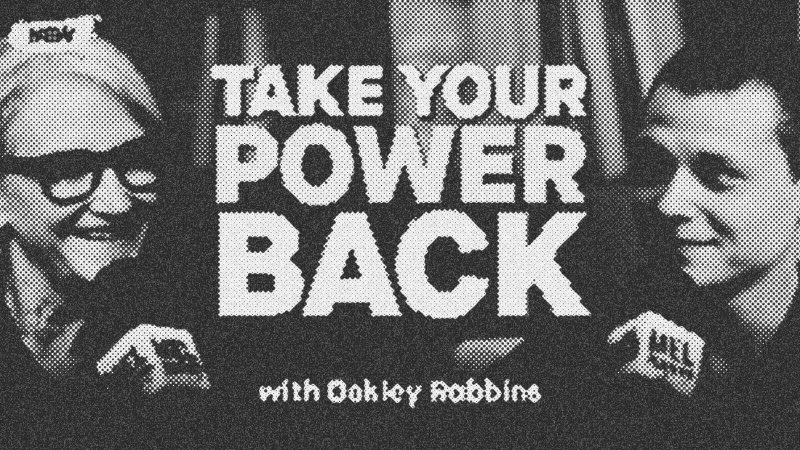
This is the precise psychological trap that Oakley Robbins fell into during his first eighteen months of college. After a high school experience defined by deep social connection, academic triumph, and a sense of purpose, he found himself dropped into a new campus, completely miserable. Day after day, he retreated to his dorm room, convinced that the environment itself was toxic. He was waiting for a savior, a magic friend, or a sudden stroke of fortune to pull him out of the mud.
What he did not realize—and what many of us refuse to admit when we are stuck—is that he was actively participating in his own misery. He was holding himself back from the life right in front of him. When you are unhappy, the most difficult and necessary question you must ask is simple: Is it the situation that is making you miserable, or is it how you are choosing to show up?
Stop Measuring Your Present with a Fantasized Past
You cannot build a new life when your hands are full of old memories. The human brain loves to build alters to the past. We take the memories of an old job, a previous partner, or our hometown and polish them until they shine with an unnatural brilliance. We erase the stress, the boring days, and the frustrations, leaving behind a flawless fantasy. Then, we hold this impossible standard over our current reality and wonder why our present life feels so dull.
This comparison is a form of self-sabotage. In the podcast, Mel Robbins and her son unpack this exact behavioral loop. Oakley spent his freshman year comparing every new classmate to his childhood friends, every college sports team to his high school glory days, and his small dorm room to the comfort of his family home. By judging every new experience against a romanticized past, he guaranteed his own loneliness. He gave the people around him an unfair start, deciding before he even knew them that they could never measure up.
When you spend your energy looking backward, you lose the capacity to see what is right in front of you. Every time you think about how much better things used to be, you pull your attention away from the current moment. This comparison does not just make you sad; it makes you judgmental. You close your arms, tilt your head back, and look at your current life through a lens of criticism. You shut down potential connections before they even have a chance to breathe.
Are You Shrinking or Leaning In?
When we are unhappy, our instinct is to retreat. We pull our energy inward, shrink our presence, and isolate ourselves from the world. We tell ourselves that we are just protecting our energy, but in reality, we are quietly quitting our lives. This physical and emotional withdrawal creates a self-fulfilling prophecy of isolation. You stay in your room because you have no friends, and you have no friends because you stay in your room.
To break this cycle, you have to look at your energy. Are you shrinking, or are you expanding? When Oakley was struggling, he dreaded the weekends. While his classmates went out, he locked himself in his dorm, using his long-distance relationship as an excuse to avoid the discomfort of trying to fit in. He was waiting for things to click, hoping happiness would fall from the sky.
This passive waiting is a trap. If you want your life to feel different, you have to put yourself in the path of opportunity. Happy people do not just get lucky; they put themselves in positions where luck can find them. This is what Stanford professor Tina Seelig calls the science of luck. It is the habit of taking small, intentional actions that cause you to collide with new people and experiences. You must uncross your arms, walk into the room, and assume that someone incredible is waiting to meet you. If you sit in the corner waiting for someone to rescue you, you will be waiting for a very long time.
Burn the Exits and Throw Yourself In Entirely
It is impossible to build a home when you keep one foot out the door. Many of us maintain emotional exits in our lives. We stay in touch with our ex-partners, keep looking at job boards while pretending to commit to our current roles, or visit our hometowns every single weekend. We tell ourselves that we are keeping our options open, but what we are actually doing is splitting our energy. You cannot give one hundred percent of yourself to your present chapter if you are constantly looking for a way out.
For Oakley, his relationship was his ultimate emotional exit. By running back to his hometown girlfriend and spending hours on the phone every weekend, he avoided the hard work of building a community at school. He had to make the incredibly painful decision to end the relationship and go entirely no contact to burn that exit. It was not because the relationship was bad, but because the connection acted as a safety net that kept him from ever learning how to stand on his own two feet.
Think about your own life. What exits are you keeping open? Are you constantly driving back to your old city? Are you mentally living in a fantasy of what could have been? When you refuse to close the exits, you rob your current situation of any real chance to succeed. You have to commit. You have to put both feet in the dirt of your current reality and decide that you are going to make it work, even if it is uncomfortable, even if it is scary.
If You Change Nothing, Nothing Will Change
We often treat our unhappiness as a waiting room. We sit, watch the clock, and wait for our external circumstances to magically shift. But the harsh, beautiful truth of personal growth is that nobody is coming to save you. Your environment will not change until you change how you show up to it. If you change nothing about your habits, your thoughts, or your actions, your tomorrow will look exactly like your yesterday.
Oakley's transformation did not happen because his college suddenly improved, or because the students became friendlier. It happened because he got off his high horse, stopped comparing, and started saying yes to everything. He rejoined the sports teams he had abandoned, reached out to acquaintances for lunch, and pushed through the awkwardness of early conversations. He took total responsibility for his own happiness.
If you have gone through the checklist—if you have stopped comparing, expanded your energy, given the situation a full year, and thrown yourself in one hundred percent—and you are still miserable, then you have your answer. It is the situation, and it is time to walk away. You can make that decision with absolute clarity and no regrets because you know you did everything in your power to make it work. But if you have not done those things, you cannot blame the job, the school, or the relationship. The power to change your life is already in your hands, waiting for you to take the first step.
- Harville Hendrix
- 20%· people
- Mel Robbins
- 20%· people
- Oakley Robbins
- 20%· people
- The Mel Robbins Podcast
- 20%· podcasts
- Tina Seelig
- 20%· people
Create a Happier Version of Yourself: Redirect Your Energy for Positive Thinking
WatchMel Robbins // 1:01:01

Mel Robbins is the creator and host of The Mel Robbins Podcast, one of the most successful podcasts in the world, and a #1 New York Times bestselling author. She has 40M followers and is known globally for practical tools on mindset and behavior change. The Wall Street Journal calls her a “billion-view podcaster,” and TIME says she gives millions “a reason to believe in themselves.” Her books are published in 63 languages. The Let Them Theory is a #1 bestseller across every major list and a top-selling book of 2025 with more than 8M copies sold. She also wrote The 5 Second Rule and The High 5 Habit, and has seven #1 Audible releases. Her company, 143 Studios, produces award-winning podcasts, books, courses, and events for partners like Starbucks, Ulta Beauty, JP Morgan Chase, LinkedIn, and Audible. She has been honored by TIME 100 Digital Voices, Forbes 50 Over 50, USA Today, Apple Podcasts, Spotify, and The Hollywood Reporter.