Mel Robbins says these seven phrases silence bedtime brain spin
You climb under the covers, pull the blanket to your chin, and sigh with relief. The house is quiet. The day's demands have finally ceased. But the moment your head touches the pillow, a loud, chaotic broadcast begins inside your mind. The unfinished to-do list, that awkward text message you sent at noon, and worst-case scenarios about the future all rush into the silence.
This late-night mental ambush is incredibly common. During the day, physical movement and constant distractions act as a cognitive anesthetic. You jump from meetings to errands, keeping your subconscious backlog at bay. But the moment your body becomes still, your thoughts catch up. Without a screen or a conversation to distract you, you find yourself trapped with a racing mind. This evening anxiety is not a personal failure, but a habituated cycle. With the right tools, you can break this loop and rebuild your relationship with sleep.
Why Quietness Amplifies Your Subconscious Fears
When the outer world goes quiet, your brain does not simply turn off. Instead, it transitions into a state where it processes outstanding emotional and cognitive tasks. If you have spent your day running from stress, your brain uses bedtime to catch up on the backlog. This often results in a wave of late-night rumination.
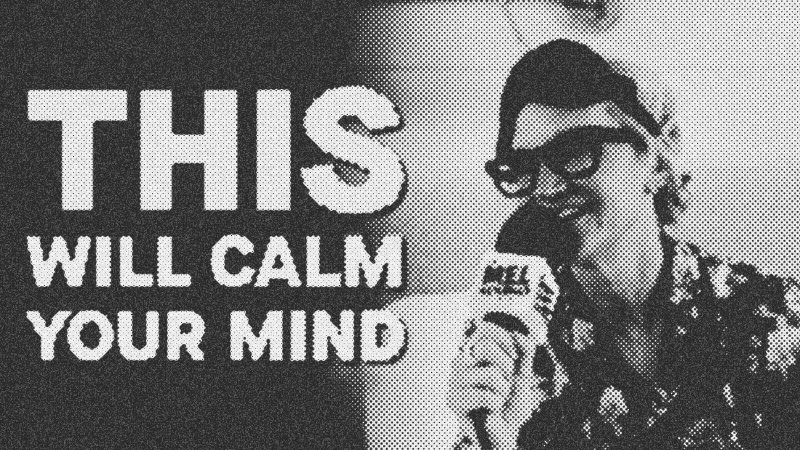
According to clinical psychologist Dr. Lisa Damour, experiencing distress during challenging times is actually a sign of mental health. Emotional distress is a natural response to difficult circumstances, not a pathology. When we try to fight or pathologize these uncomfortable feelings at midnight, we build anxiety on top of anxiety.
To alter this cycle, we must change our underlying cognitive settings. Dr. Aaliyah Crum, director of the Stanford Mind and Body Lab, has shown through her research that our mindsets directly influence our physiological and emotional states. Simply changing how you view a situation alters how your body responds to it. By shifting your mental settings from a state of emergency to a state of safety, you allow your nervous system to transition out of fight-or-flight and into deep rest.
Seven Bedtime Sentences to Rewire Your Night
To break the loop of nightly rumination, you can practice a deliberate protocol of seven phrases. These statements combine Stanford mindset research, Harvard sleep science, and clinical psychology to guide your brain from panic to physical rest.
1. Acknowledge the Overwhelm
Begin by validating your current emotional state. Tell yourself: "It is okay for me to feel overwhelmed based on everything that is going on."
Trying to force yourself to feel happy or calm when you are genuinely stressed only creates internal friction. Acknowledging your stress removes the secondary layer of guilt. By naming your emotion, you signal to your brain that your feelings are a normal, healthy response to a busy life.
2. Affirm Your Capacity to Cope
Once you have validated your feelings, establish your competence. Say to yourself: "I can manage this."
In her clinical research with patients facing serious medical diagnoses, Dr. Aaliyah Crum discovered that believing a situation is manageable drastically reduces physical symptoms of stress and improves coping abilities. Conversely, viewing a challenge as an unmanageable catastrophe spikes cortisol levels. Remind yourself of your history of resilience. You have navigated every difficult day of your life up to this point; you have the capacity to handle this one too.
3. Put a Pin in Active Problem-Solving
Draw a firm boundary for your mind by stating: "I don't need to solve this right now."
Your bedroom is not a workspace. At midnight, your cognitive capacity is depleted, making problems look twice as large and half as solvable as they actually are. By telling your brain that you are putting a pin in the problem until morning, you teach your mind that every thought is not an emergency requiring immediate action.
4. Give Yourself Credit for the Effort
Adopt the mindset of self-compassion by telling yourself: "I did my best today."
Many of us end our days by scanning for what we failed to accomplish. Shifting this habit requires a change in perspective. Renowned brain coach Jim Kwik points out that if you only have forty percent of your energy to give on a brutal day, and you give that forty percent, you have given one hundred percent of your available resources. You deserve credit for showing up, regardless of the output. Give yourself permission to stop grading your performance and accept your effort.
5. Reclaim Your Right to Rest
Declare your transition into sanctuary by stating: "Now is my time to rest."
Harvard Medical School sleep researcher Dr. Rebecca Robbins emphasizes the physical necessity of claiming your wind-down time. Throughout the day, your energy is directed toward work, family, and external obligations. Bedtime is your exclusive opportunity to restore. Remind yourself that rest is not a reward you earn only after completing every task; it is a biological requirement that enables you to function.
6. Prime the Morning with Optimism
Set a positive expectation for the next day by saying: "Tomorrow is going to be a good day."
When you go to sleep bracing for stress, your brain remains on high alert, scanning for danger throughout the night. World-renowned brain expert Dr. Daniel Amen utilizes positive morning priming to shape cognitive focus, but applying this setting at night is equally powerful. Anticipating a positive tomorrow signals safety to your nervous system, letting your body relax into deep sleep.
7. Transfer Control Back to the Body
Finally, release your grip on control and say: "I give myself permission to drift off to sleep."
Sleep is not something you can actively force; it is a state you must allow to happen. By explicitly giving yourself permission to let go, you take the pressure off your mind and hand control back to your biological sleep drive. Trust that your body knows exactly how to rest when you stop standing in its way.
The Physiological Power of Shifting Your Settings
Protecting your sleep is not just about avoiding morning fatigue; it is a critical health requirement. Dr. Rangan Chatterjee, a prominent health and well-being expert, emphasizes that even small improvements in sleep quality cause major physiological changes. Getting just twenty to thirty minutes of additional rest significantly lowers systemic inflammation, balances blood sugar, and improves emotional regulation the following day.
If you find your mind continuously returning to outstanding tasks even after repeating these phrases, try keeping a notebook on your nightstand. Baylor University researchers found that writing down a physical list of unfinished tasks before bed helps people fall asleep faster than those who do not. Putting your worries onto paper allows your brain to officially check the box and stop repeating the information in an active mental loop.
Reclaiming Your Bed as a Sanctuary
You possess the ability to reset your cognitive settings. Your thoughts are not objective realities; they are merely proposals from an anxious brain looking for problems to solve. When you crawl into bed tonight and the mental chatter begins, remember that you do not have to participate in the argument.
Acknowledge your feelings, establish your competence, and set a boundary around your evening. By intentionally utilizing these seven phrases, you calm your nervous system and reclaim your bed as a place of genuine recovery. True growth does not come from working yourself to exhaustion; it comes from having the wisdom to rest.
- Dr. Aaliyah Crum
- 13%· people
- Dr. Daniel Amen
- 13%· people
- Dr. Lisa Damour
- 13%· people
- Dr. Rangan Chatterjee
- 13%· people
- Dr. Rebecca Robbins
- 13%· people
- Other topics
- 38%
Try This One Habit Tonight To Make Tomorrow Easier
WatchMel Robbins // 55:46

Mel Robbins is the creator and host of The Mel Robbins Podcast, one of the most successful podcasts in the world, and a #1 New York Times bestselling author. She has 40M followers and is known globally for practical tools on mindset and behavior change. The Wall Street Journal calls her a “billion-view podcaster,” and TIME says she gives millions “a reason to believe in themselves.” Her books are published in 63 languages. The Let Them Theory is a #1 bestseller across every major list and a top-selling book of 2025 with more than 8M copies sold. She also wrote The 5 Second Rule and The High 5 Habit, and has seven #1 Audible releases. Her company, 143 Studios, produces award-winning podcasts, books, courses, and events for partners like Starbucks, Ulta Beauty, JP Morgan Chase, LinkedIn, and Audible. She has been honored by TIME 100 Digital Voices, Forbes 50 Over 50, USA Today, Apple Podcasts, Spotify, and The Hollywood Reporter.