Mel Robbins outlines eight rules to stop your daily exhaustion
The Weight of Carrying Everything for Everyone
You are tired. It is not the simple physical fatigue that a good night of sleep can fix. It is a deep, bone-weary exhaustion that comes from carrying too much, thinking too much, and constantly worrying. You are running yourself into the ground trying to stay on top of everything, managing everyone else's emotions, and holding yourself to an invisible standard of perfection. You act as though you must have everything figured out before you are allowed to rest.
This kind of over-functioning is a quiet trap. In our fast-paced culture, we wear busy as a badge of honor, but it slowly drains our spirit. We treat every text message, every minor workplace request, and every shift in a family member's mood as an absolute emergency. When you operate in this constant state of high alert, you leak your precious energy all day long. You do not have to earn the right to rest, nor do you need to have your entire life resolved before you begin taking care of yourself. Real, meaningful growth begins the moment you decide to put down the heavy burdens that were never yours to carry in the first place.
The Melting Ice Cube and the Power of the Pause
To understand why we feel so depleted, we must look at how we relate to time and energy. Life is like a melting ice cube sitting on a counter. The ice melts steadily whether we pay attention to it or not. When we spend our days racing to the next milestone, constantly criticising where we are, we miss the actual experience of living. We miss the current version of our friends, our children, our parents, and ourselves. The antidote is not a forced, artificial gratitude, but a deliberate dropping into the present moment. It is the capacity to look around, even in the middle of a stressful week, and recognize what is going well right now.
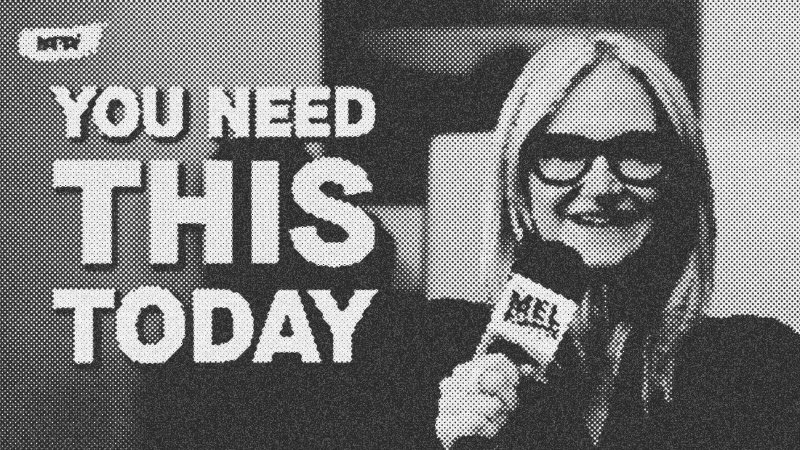
Protecting this presence requires an underrated life skill: the intentional pause. In The Mel Robbins Podcast, host Mel Robbins emphasizes that you are not overwhelmed because you cannot handle life; you are overwhelmed because you are handling everything, all of the time. When a demanding text, a difficult email, or a tense household mood threatens to pull you in, you must pause and ask a fundamental question: Is this worth my energy?
Most daily friction is simply not worth your peace. When you refuse to react, explain, or prove yourself to every passing storm, you protect your inner resources. Peace is not something you stumble upon in a quiet room; it is an active boundary you choose to protect every single day.
Drawing Healthy Boundaries and letting Them Go
Much of our exhaustion stems from our habit of absorbing other people's emotional states. We treat their disappointment as our failure and their anger as an instruction manual we must follow. However, other people's emotions are merely information, not instructions. What people say and do is almost always a reflection of their own struggles, past wounds, and stress levels—it has virtually nothing to do with you.
This is where we must apply the Let Them theory, a concept explored deeply in Mel Robbins's book, The Let Them Theory. Letting people be who they are—even when they are disappointed, cold, or committed to misunderstanding you—is the ultimate form of boundary-setting. It does not mean you lack compassion. Instead, it means you respect other adults enough to grant them the dignity of their own experiences and the space to process their own feelings.
When you stop trying to manage the reactions, moods, and opinions of everyone around you, you reclaim your personal power. Your boundaries are not designed to punish others or force them to change; they are internal reminders of what you will and will not tolerate. If people get upset when you draw a line, it is not a sign that your boundary is wrong. It is clear evidence that the boundary is working.
Stop Waiting to Feel Ready to Live Your Life
We often delay our own happiness by waiting for perfect conditions. We tell ourselves that once we feel more confident, less anxious, or fully healed, we will finally take action. But waiting for emotional clarity before taking action is an illusion. Change does not happen before the experience; the experience itself is what creates the change.
If you want to heal, you have to live your way into it. If you are sad, do it sad. If you are anxious, do it anxious. If you are uncertain, step forward in that uncertainty anyway. The simple act of taking a step restores your self-respect and proves to your brain that you can handle hard things.
We also tend to forget that our greatest breakthroughs almost always follow our most intense periods of struggle. The moments when you feel lost, broken, or down in the gutter are often the fertile soil from which your next chapter grows. No one is coming to save you from your current situation, but here is the incredibly liberating truth: no one is coming to stop you either. The only person who can truly hold you back, or set you free, is the person looking back at you in the mirror.
The Magic of an Ordinary Tuesday
We often obsess over the monumental events—the dream vacations, the major promotions, or the perfect romantic partnerships. But the reality is that your life is primarily made up of ordinary, average Tuesdays. It is constructed from the small, repetitive moments of waking up, eating breakfast, doing laundry, answering emails, and interacting with your family. If you can only find joy in the extraordinary highlights, you will spend the vast majority of your life waiting to be happy.
Creating a good life does not require a massive, dramatic reinvention of your entire existence. It requires making small, positive choices in the middle of a mundane day. It is sending a kind text to a friend, stepping outside for five minutes of fresh air, or choosing to look up at a beautiful, cloudy sky. By taking charge of your attitude and effort on an average Tuesday, you build a sustainable foundation of resilience. You do not need perfect conditions to start living deeply. You simply need the courage to make one small, intentional choice right now.
- Carla Harris
- 14%· people
- Corey Allen
- 14%· people
- Joseph Coughlin
- 14%· people
- Mel Robbins
- 14%· people
- Rich Webster
- 14%· people
- Other topics
- 29%
8 Simple Reminders You Need to Hear Right Now
WatchMel Robbins // 1:00:51

Mel Robbins is the creator and host of The Mel Robbins Podcast, one of the most successful podcasts in the world, and a #1 New York Times bestselling author. She has 40M followers and is known globally for practical tools on mindset and behavior change. The Wall Street Journal calls her a “billion-view podcaster,” and TIME says she gives millions “a reason to believe in themselves.” Her books are published in 63 languages. The Let Them Theory is a #1 bestseller across every major list and a top-selling book of 2025 with more than 8M copies sold. She also wrote The 5 Second Rule and The High 5 Habit, and has seven #1 Audible releases. Her company, 143 Studios, produces award-winning podcasts, books, courses, and events for partners like Starbucks, Ulta Beauty, JP Morgan Chase, LinkedIn, and Audible. She has been honored by TIME 100 Digital Voices, Forbes 50 Over 50, USA Today, Apple Podcasts, Spotify, and The Hollywood Reporter.