The Science of Motivation: Balancing the Brain’s Pleasure-Pain Seesaw
The Biological Mechanics of Human Drive
Motivation is not a character trait or a simple matter of willpower. It is a biological process driven by Dopamine, a neurotransmitter that serves as the brain's common currency for reward and reinforcement. Anna Lembke, a professor at Stanford University School of Medicine, explains that dopamine acts as a bridge between neurons, facilitating the electrical circuits that dictate our behavior. While often associated with pleasure, dopamine is more accurately the engine of seeking. It makes humans the ultimate seekers, never satisfied with current circumstances and always hunting for the next survival-critical resource.
In the modern era, this evolutionary survival mechanism has become a liability. We live in a world of overabundance where the things that trigger dopamine—food, social connection, novelty—are available at the touch of a button. This constant access leads to a state of compulsive overconsumption. When we reach for our phones the moment we wake up or scroll through endless short-form videos, we are not just wasting time; we are fundamentally altering our brain's chemistry. This neurological shift creates a paradox: the more we seek easy pleasure, the less capable we become of experiencing genuine joy or finding the motivation to perform necessary, difficult tasks.
The Pleasure-Pain Balance: The Seesaw Metaphor
To understand why we feel unmotivated and restless, we must examine the relationship between pleasure and pain. Neuroscientists have discovered that these two sensations are collocated in the brain and work through an opponent process mechanism. Imagine a seesaw or a teeter-totter in the brain's reward pathway. When we experience something pleasurable, like eating a potato chip or receiving a social media like, the seesaw tips toward the side of pleasure. However, the brain's primary goal is homeostasis—the maintenance of a level baseline.
As soon as the balance tilts toward pleasure, the brain releases what Anna Lembke calls "neuroadaptation gremlins." These gremlins hop onto the pain side of the seesaw to bring it back to level. The problem is that these gremlins do not hop off once the balance is restored. They stay on until the seesaw tilts an equal and opposite amount toward the side of pain. This is the "come down" or the slight feeling of letdown we experience after a high. In our current culture, we rarely allow the gremlins to leave. Instead, we reach for another hit of pleasure to level the balance, eventually leading to a chronic state of pain-heavy imbalance.
Neuroadaptation and the Spectrum of Addiction
Addiction is often misunderstood as a moral failing or a condition reserved for those using illicit substances. In reality, addiction exists on a spectrum of compulsive use despite harm. Because of the seesaw mechanism, repeated exposure to a pleasurable stimulus causes the initial deflection toward pleasure to get weaker and shorter, while the after-response to pain gets stronger and longer. This is known as neuroadaptation. Over weeks and months, the gremlins set up camp on the pain side, meaning we eventually need our "drug of choice" just to feel normal, not to feel good.
This cycle applies to a staggering range of behaviors in the digital age. While people can be addicted to Heroin or Alcohol, millions now struggle with addictions to Social Media, Video Games, online shopping, and even other people. Anna Lembke notes that digital media is particularly potent because of its algorithmic nature. Algorithms provide "drugified uncertainty," feeding us exactly what we like with just enough novelty to keep us in a loop of seeking. This creates a "grip" on our attention, where we feel a sense of fine-tuned control over our perception-action loops even as we lose agency over our lives.
The Vulnerability of the ADHD Brain
Individuals with ADHD may be at higher risk for these compulsive loops due to baseline differences in dopamine transmission. Imaging studies suggest that people with ADHD have lower levels of dopamine firing and fewer receptors in the reward pathway at rest. This reward insensitivity creates a natural vulnerability to seeking high-potency, quick-hit distractions to reach a state that feels like homeostasis. For this demographic, the modern firehose of dopamine is particularly dangerous, as the brain is already primed to seek the stimulus that the environment now provides in infinite quantities.
The Protocol for Recovery: The Dopamine Detox
Breaking the cycle of compulsive overconsumption requires a deliberate reset of the pleasure-pain balance. This is commonly referred to as a "dopamine detox" or an abstinence trial. The goal is to abstain from the specific drug or behavior for long enough—typically 30 days—to allow the neuroadaptation gremlins to hop off the seesaw. While the first two weeks are often characterized by withdrawal symptoms like anxiety, irritability, and insomnia, those who persist for three to four weeks generally find that their joy set point resets.
Success in a dopamine detox is rarely a matter of willpower alone. Anna Lembke advocates for "self-binding strategies"—physical or chronological barriers that prevent consumption. This might include deleting apps, keeping phones out of the bedroom, or using "grayscale" settings to make digital screens less reinforcing. By making a plan the night before, we bypass the part of the brain that will inevitably negotiate for pleasure when the morning cravings hit. When the brain starts making excuses for why the experiment is "stupid" or unnecessary, that is the clearest sign that the pleasure-pain mechanism is out of whack and the detox is working.
Intentional Discomfort as a Tool for Happiness
If seeking easy pleasure leads to a pain-heavy state, the counterintuitive solution is to seek "right-sized pain" to trigger pleasure. This is the concept of hormesis—the idea that small amounts of stress or injury can trigger the body’s healing and regulating mechanisms. When we engage in vigorous exercise, take a cold plunge, or tackle a difficult work project, we are pressing on the pain side of the seesaw first. The brain responds by releasing endogenous opioids and upregulating dopamine to restore balance.
This is why the "runner’s high" exists. By paying for our dopamine upfront through effort and discomfort, we receive a more sustainable, level reward that does not result in a subsequent crash. Anna Lembke suggests that we should intentionally insert moments of discomfort throughout our day—whether that is standing in line without a phone, having a difficult conversation, or performing tedious chores. These "mental calluses" build our tolerance for the ordinary frictions of life, making us more resilient and, ultimately, more motivated to pursue long-term goals over short-term distractions.
The Essential Role of Boredom
In a world where every moment of downtime is filled with digital stimulation, we have lost the ability to be bored. Yet, boredom is the "midwife of invention." When we sit in quiet without a screen, we are forced to confront our own thoughts and existential questions. This is painful for a brain used to being overstimulated, but it is necessary for creativity and self-discovery. Boredom allows the mind to move at the pace of mindfulness, providing a grounding effect that constant distraction destroys.
Allowing ourselves to be bored is a form of exposure therapy. It teaches us that discomfort is not dangerous and that we can survive our own restlessness. When we remove the frictionless, cheap pleasures that we use to procrastinate, we eventually find ourselves in a large, empty space. In that space, the brain eventually decides that doing the actual work—writing the paragraph, paying the bill, cleaning the closet—is more appealing than sitting in total stasis. This is how true motivation is recaptured: not by waiting for a feeling of inspiration, but by removing the exits that allow us to flee from the work.
Reclaiming Presence in a Distracted World
Ultimately, managing dopamine is about regaining presence. When we are constantly checking location apps, scrolling feeds, or seeking reassurance from others, we are not living in our own lives; we are using external stimuli to modulate our internal distress. Anna Lembke notes that even healthy behaviors like reading or human connection can become "drugified" when used as a reflexive escape from reality.
By establishing boundaries with technology and intentionally leaning into the hard things, we reset our neurological hardware. We move away from the vortex of craving and toward a state where we can again take joy in modest, natural rewards. The goal is not to live a life devoid of pleasure, but to ensure that pleasure remains the spice of life rather than the baseline. As we recalibrate our seesaw, we find that we are more resilient, more focused, and more capable of showing up for the lives we were meant to lead.
- Anna Lembke
- 32%· people
- ADHD
- 11%· products
- Alcohol
- 5%· products
- Amazon
- 5%· companies
- Court of Thorns and Roses
- 5%· books
- Other topics
- 42%
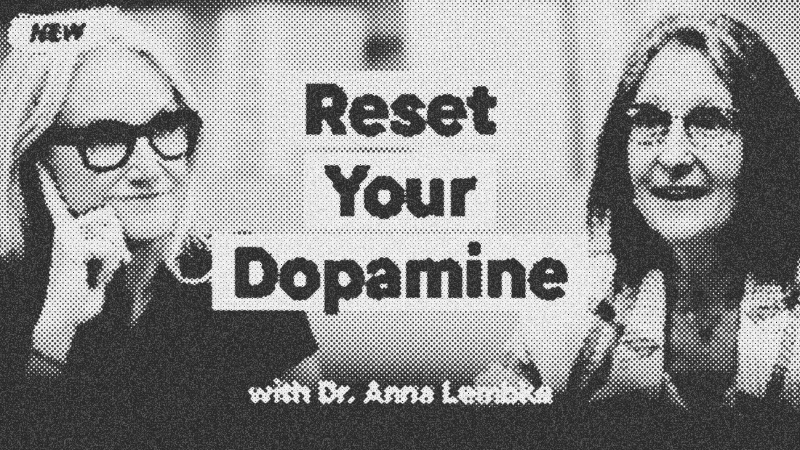
The Science of Self Control: Find Motivation, Increase Your Focus, and Hack Dopamine
WatchMel Robbins // 1:19:24

Mel Robbins is the creator and host of The Mel Robbins Podcast, one of the most successful podcasts in the world, and a #1 New York Times bestselling author. She has 40M followers and is known globally for practical tools on mindset and behavior change. The Wall Street Journal calls her a “billion-view podcaster,” and TIME says she gives millions “a reason to believe in themselves.” Her books are published in 63 languages. The Let Them Theory is a #1 bestseller across every major list and a top-selling book of 2025 with more than 8M copies sold. She also wrote The 5 Second Rule and The High 5 Habit, and has seven #1 Audible releases. Her company, 143 Studios, produces award-winning podcasts, books, courses, and events for partners like Starbucks, Ulta Beauty, JP Morgan Chase, LinkedIn, and Audible. She has been honored by TIME 100 Digital Voices, Forbes 50 Over 50, USA Today, Apple Podcasts, Spotify, and The Hollywood Reporter.