Designing the Architect: A Masterclass in Systemic Habit Formation
The Architecture of Behavioral Success
Most people view self-improvement as a test of moral character. When a New Year's resolution falters by February, the immediate reaction is self-flagellation. We blame a lack of willpower, a deficit in discipline, or a fundamentally lazy personality. This perspective is not only counterproductive but factually incorrect. Behavior change is less about the person and more about the architecture of their daily life. If you are struggling to change, the problem is not you; the problem is your system.
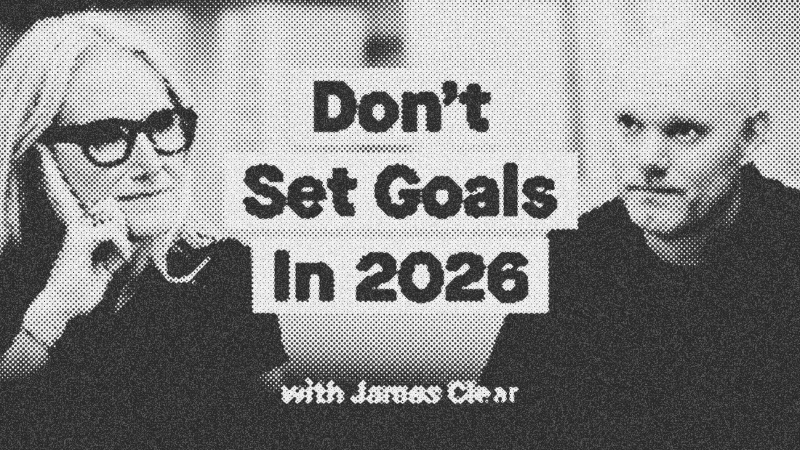
James Clear, author of Atomic Habits, posits that we do not rise to the level of our goals, but rather fall to the level of our systems. A goal is a singular event—a finish line you cross once. A system is the collection of daily habits that carry you toward that destination. If there is a mismatch between your desired outcome and your daily routine, the routine will win every single time. To change your life, you must stop obsessing over the finish line and start obsessing over the starting blocks.
Tools for the Journey
- The 1% Rule Framework: The mathematical understanding that small improvements compound into massive transformations over time.
- The Four Laws of Behavior Change: A psychological blueprint consisting of: Make it Obvious, Make it Attractive, Make it Easy, and Make it Satisfying.
- Identity-Based Thinking: Shifting the focus from what you want to achieve to who you want to become.
- Environment Design: Tools to manipulate your physical surroundings to reduce friction for good habits and increase it for bad ones.
- The Two-Minute Rule: A strategy for overcoming procrastination by scaling any habit down to its smallest possible starting point.
The compounding Power of the 1% Rule
We often convince ourselves that massive success requires massive action. We put pressure on ourselves to make some earth-shattering improvement that everyone will talk about. However, the most effective path to transformation is through the aggregation of marginal gains. If you get 1% better each day for one year, you end up thirty-seven times better by the time you're done. Conversely, if you get 1% worse each day, you decline nearly to zero.
This compounding effect is why habits are the "compound interest of self-improvement." On any given day, the difference between a good choice and a bad one seems negligible. Reading one page of a book doesn't make you a genius today. Eating a salad doesn't make you fit today. Because the results aren't immediate, we often let our habits slide. But over months and years, these tiny choices determine the trajectory of your life. Time magnifies whatever you feed it. If you have good habits, time becomes your ally; if you have bad ones, time is your enemy.
Identity-Based Habits: Changing the Core
Most people focus on outcomes: "I want to lose weight" or "I want to write a book." This is outcome-based habit formation. The deeper, more effective approach is identity-based. Imagine two people refusing a cigarette. The first says, "No thanks, I'm trying to quit." This person still identifies as a smoker who is trying to be something else. The second says, "No thanks, I'm not a smoker." This is a small but profound shift. The behavior is now aligned with their identity.
Your habits are how you embody your identity. Every action you take is a vote for the type of person you wish to become. You don't need a majority of votes to win an election; you just need more than the other guy. You don't need to be perfect; you just need to cast more votes for your desired identity than for your old one. If you want to be a healthy person, ask yourself, "What would a healthy person do?" and then cast that vote. Over time, the evidence of your actions will convince your brain that you are, in fact, that person.
The Four Laws of Behavior Change
To build a habit that actually sticks, you must navigate the four stages of the habit loop: Cue, Craving, Response, and Reward. Clear's four laws provide a practical way to manipulate these stages.
- Make it Obvious: Most of our cues are invisible. We walk into the kitchen and eat a cookie because they are on the counter. If you want to drink more water, put a bottle on your desk. If you want to practice guitar, put it in the middle of the living room. Design your environment so the cues for your good habits are right in front of your face.
- Make it Attractive: We are more likely to do things that we find pleasurable. You can use "temptation bundling" by linking an action you need to do with an action you want to do. Only allow yourself to watch your favorite show while you are on the treadmill. This creates a positive association with the difficult task.
- Make it Easy: Human nature follows the path of least resistance. Reduce the friction between you and the good habit. If you want to go to the gym, pack your bag the night before. Conversely, increase friction for bad habits. If you want to stop watching TV, take the batteries out of the remote and put them in another room.
- Make it Satisfying: The first three laws increase the odds you'll perform the habit this time. The fourth law increases the odds you'll repeat it next time. Because the brain prizes immediate rewards over delayed ones, find a way to give yourself a small, immediate win. A habit tracker where you cross off the day can provide the visual satisfaction needed to keep the streak alive.
Troubleshooting and Long-Term Maintenance
Even with a perfect system, life happens. You will get sick, you will travel, and you will have bad days. The secret to long-term success isn't perfection; it's the ability to bounce back. The rule to live by is: Never miss twice. Missing once is an accident. Missing twice is the start of a new habit. If you fall off the wagon, pour all your energy into getting back on track immediately.
Another common pitfall is the confusion between motion and action. Motion is planning, strategizing, and learning. It feels like progress, but it doesn't produce a result. Action is the behavior that leads to the outcome. Researching the best workout plan is motion; doing five push-ups is action. Don't let the quest for the "perfect" plan prevent you from taking the first step. You must standardize before you can optimize. You have to establish the habit of showing up before you can worry about how well you're performing.
Conclusion: The Horizon of Change
By implementing these systems, you shift your focus from a distant, intimidating goal to a manageable, daily process. You stop worrying about the number on the scale and start celebrating the fact that you are the type of person who doesn't miss a workout. The benefit of this systemic approach is that it provides a sense of control in an unpredictable world. While you cannot control luck or randomness, you can control your inputs. When you fix the inputs, the outputs eventually fix themselves. You aren't just changing what you do; you are changing who you are.
- Atomic Habits
- 13%· books
- BJ Fogg
- 13%· people
- Ed Latimore
- 13%· people
- James Clear
- 13%· people
- Mel Robbins
- 13%· people
- Other topics
- 38%
The Science of Making & Breaking Habits: How to Change Your Life in 1 Month
WatchMel Robbins // 1:26:19

Mel Robbins is the creator and host of The Mel Robbins Podcast, one of the most successful podcasts in the world, and a #1 New York Times bestselling author. She has 40M followers and is known globally for practical tools on mindset and behavior change. The Wall Street Journal calls her a “billion-view podcaster,” and TIME says she gives millions “a reason to believe in themselves.” Her books are published in 63 languages. The Let Them Theory is a #1 bestseller across every major list and a top-selling book of 2025 with more than 8M copies sold. She also wrote The 5 Second Rule and The High 5 Habit, and has seven #1 Audible releases. Her company, 143 Studios, produces award-winning podcasts, books, courses, and events for partners like Starbucks, Ulta Beauty, JP Morgan Chase, LinkedIn, and Audible. She has been honored by TIME 100 Digital Voices, Forbes 50 Over 50, USA Today, Apple Podcasts, Spotify, and The Hollywood Reporter.